Sock Options You Can Specify
Logo, color, yarn, knit structure, grip, sizing and packaging — the options available across every sock line we make, and the trade-off behind each one. Product-specific specs are covered on each product page.
Bring a sketch, a competitor sock, or a finished tech pack; we’ll tell you what’s missing.
Die Optionen im Überblick
Every sock line we make can be specified on the points below. Pick one to jump to the detail.
Logo-Techniken
Von auffälligen Logos bis hin zu dezenten Texturen – unsere individuellen Branding-Techniken erwecken Ihr Design zum Leben – ohne Kompromisse bei Komfort und Leistung. Wählen Sie die Methode, die zu Ihrem Markt und Ihrer Produktvision passt.
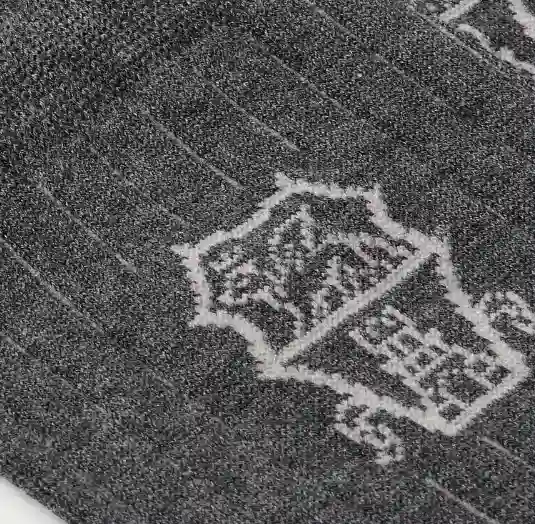
Jacquard-Stricken
Integriert Ihr Design nahtlos in den Sockenstoff und sorgt so für einen hochwertigen, farbechten Look.
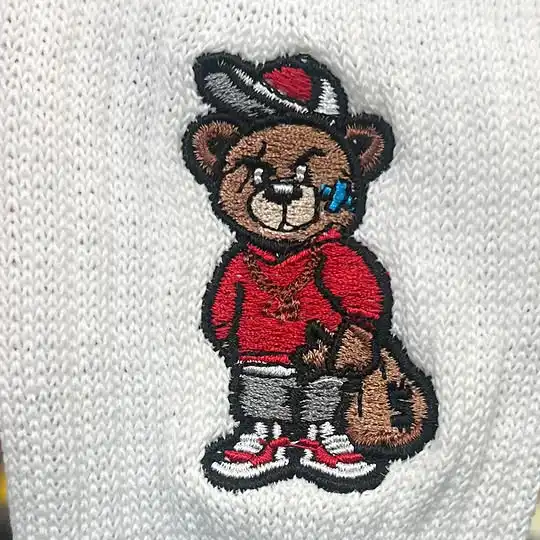
Stickerei
Verleiht ein erhabenes, luxuriöses Gefühl – ideal für Firmengeschenke und hochwertige Einzelhandelskollektionen.
Sublimationsdruck
Liefert lebendige, vollfarbige Kunstwerke, die nicht reißen oder verblassen – ideal für detaillierte Designs.
Gewebtes Etikett
Fügt Markenetiketten direkt an Manschetten oder Verpackungen hinzu, um eine fertige, verkaufsfertige Präsentation zu erzielen.
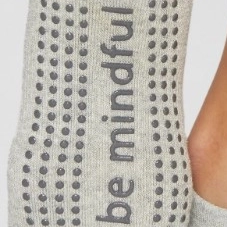
Silikon-Logo
Kombiniert rutschfesten Griff mit Ihrem Logo – beliebt für Sportsocken und Funktionssocken.
Reflektierendes Logo
Verbessert die Sichtbarkeit bei schwachem Licht durch Lichtreflexion – ideal für Sicherheits-, Nachtsport- oder Arbeitskleidungsanwendungen.
Which technique fits your product
The six above are not interchangeable. What decides between them is how much detail your logo carries, whether it can be felt against the skin, and what it costs at your volume.
| Technik | Am besten geeignet, | Detail it holds | Feel on skin | Kosten bei Volumen |
|---|---|---|---|---|
| Jacquard-Strickerei | Retail sock lines, repeat SKUs | Blocky — no fine gradients | Flat, knitted in | Unterste |
| Stickerei | Corporate gifting, premium retail | Medium — clean edges | Raised, sits on top | Mid |
| Sublimationsdruck | Full-color artwork, photographic designs | Highest — gradients and small text | Printed, no added texture | Mid — needs a light base yarn |
| Gewebtes Etikett | Cuff branding, retail presentation | Fine, but small | Attached, can be felt | Niedrig |
| Silikon-Logo | Grip socks, performance lines | Medium — bold shapes | Raised, adds grip | Mid |
| Reflektierendes Logo | Workwear, night sports, safety lines | Medium | Leichte Textur | Mid |
Techniques can be combined on one sock — a jacquard body with an embroidered cuff mark, for example. What limits it is area, not technique: a mesh vent panel or a silicone print takes away the surface a jacquard logo needs. Tell us where the logo sits and how many colors it carries, and we will tell you which route holds the detail.
Farbabstimmung
Yarn is dyed to your Pantone code by the dyehouse, and the lab dip comes back for your approval before anything is knitted. What happens here is the check — and holding that approved standard for every run after it.
How a color is approved
Send a Pantone code for each yarn position, not one code for the sock. The yarn is dyed against it and the lab dip comes to you for sign-off before bulk starts.
Nothing goes into production on a screen match.
How it is checked before knitting
Approved dyeings are compared against your standard in a color assessment cabinet, under D65 daylight, TL84 store lighting and UV.
The reason for switching sources is metamerism: a yarn that matches your standard in daylight can shift under the lighting of the store it will be sold in. That is worth catching before the run, not after.
Where the code cannot be hit
Fluorescent shades are not dyed to code — they come from pre-dyed specialty yarn, currently fluorescent yellow, green and orange.
Metallic and lurex yarns work the same way: the color comes with the yarn, not from the dye lot.
Why one code can look like three
Cotton, polyester and nylon take dye differently. A blended sock knitted to one code across all three fibers will show a slight difference between them.
This is normal — decide on it at lab dip stage, not at delivery.
Locking the standard for the next run
Ask that the approved lab dip is recorded on the specification, so a later run is checked against the same reference rather than against a fresh sample.
Dyeing is carried out by the dyehouse, not in our knitting plant. Color fastness and other laboratory tests can be arranged through a third-party lab on request.
Yarn & Material Options
Schluss mit dem Rätselraten bei Garnmischungen. Dieser 1-minütige Leitfaden zeigt, welche Fasern den Komfort, die Leistung und den Preis bieten, den Ihre Großabnehmer erwarten.
Natürlicher Komfort
Repräsentative Fasern:
gekämmte Baumwolle, Bambusviskose
- Atmungsaktiv
- Hautfreundlich
- Umweltfreundlich
Typische Anwendungsbereiche :
Freizeitkleidung, Businesskleidung, Einsteigersport
💰 Preisstufe: Budget-freundlich
Langlebig und schnelltrocknend
Repräsentative Fasern:
Polyester, Nylon, recycled polyester
- Schnell trocknend
- Hohe Abriebfestigkeit
- Feuchtigkeitstransportierend
- Dauerhafte Leistung
Typische Anwendungsbereiche :
Laufen, Radfahren, Arbeitskleidung, Sport
💰💰 Preisstufe: bestes Preis-Leistungs-Verhältnis
Elastische Unterstützung
Repräsentative Fasern:
Lycra® elastisch
- Hervorragende Dehnung
- Verbesserte Passform
- Hervorragender Rebound
- Verhindert das Verrutschen der Manschetten
Typische Anwendungsbereiche :
Kompressionsstrümpfe, Sportsocken, Sportunterstützung, Einheitsgrößen
💰💰 Preisstufe: Mittelklasse
Leistungs-Add-Ons
Repräsentative Fasern:
mit Silber/Kupfer angereichert, Graphen, recyceltes Nylon/Polyester, Bio-Baumwolle, antistatische Faser, mit ätherischen Ölen angereichert, Antirutschgarn
- Antimikrobielle Geruchskontrolle
- Verbesserter Grip und Traktion
- Thermoregulierung
- Hautpflegende Wirkung
Typische Anwendungsbereiche :
Medizinische Reha, Outdoor-Abenteuer, Premium-Produkteinführungen
💰💰 💰 Preisstufe: Premium
3 Schritte zur Materialauswahl in 60 Sekunden
1. Definieren Sie die Funktion
Entscheiden Sie sich: Alltagskomfort, sportliche Unterstützung oder fortschrittliche technische Leistung erforderlich.
2. Wichtige Vorteile abgleichen
Nutzen Sie unsere Matrix, um Fasern auszuwählen, die Ihren KPIs entsprechen
3. Kosten und Einzelhandel abwägen
Gleichen Sie die Materialkosten mit dem Marktpreis ab, um die Bruttomarge zu maximieren.
Kernstrukturen und Leistungszonen der Socken
Seven knit structures, and what each one commits you to. These are the parts of a sock that are decided before knitting starts — changing them later means a new sample, not a new setting.
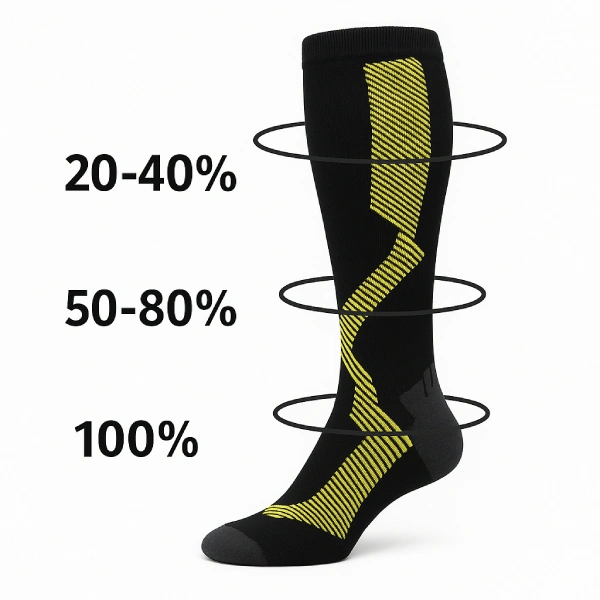
Abgestufte Kompression
- You set the mmHg band and the length
- Knitted to spec, not applied afterwards
- Changes the fit at cuff and calf
- Used on medical, travel, maternity, recovery
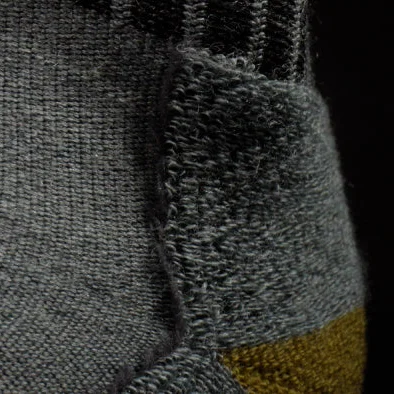
Frotteekissen/Polsterung
- You set the zones: full foot, heel and forefoot, or thin all-over
- Adds warmth and bulk
- Changes how the sock sits inside the shoe
- Used on work, hiking, running, winter
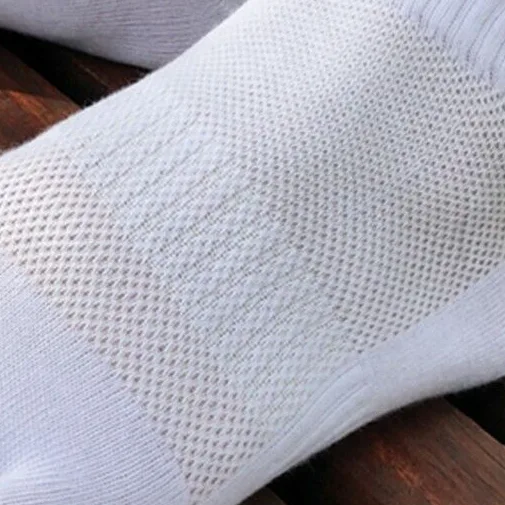
Mesh-Belüftungspanele
- Open-structure panels over the instep
- Knitted in, not cut or added
- Reduces the area available for a jacquard logo
- Used on running, cycling, sports
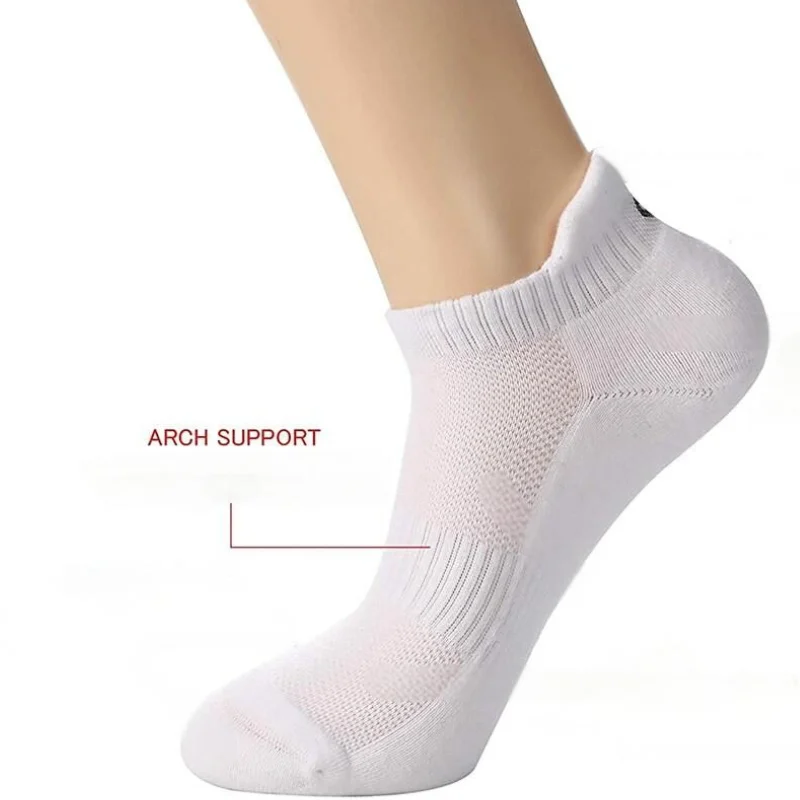
Fußgewölbe-Stützband
- High-density elastic band across the midfoot
- A knit structure, not a printed marking
- You set the band width and tension
- Used on running, work, plantar fasciitis
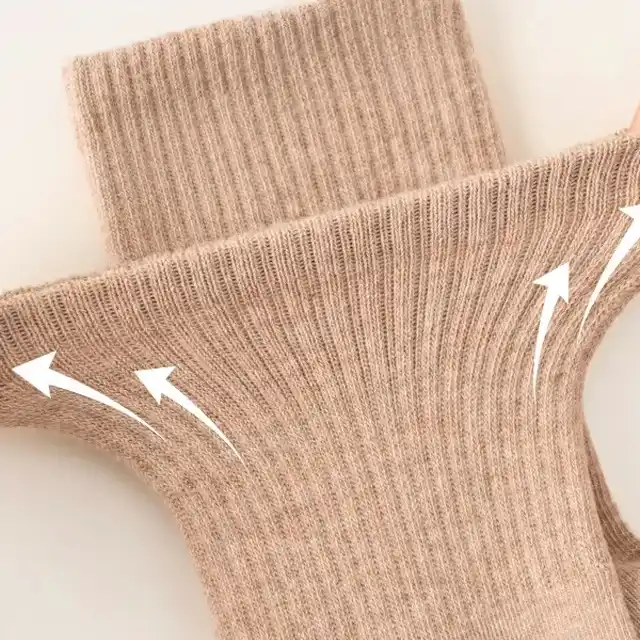
Elastische Rippen
- Cuff and leg ribbing decides whether the sock stays up
- You set rib depth and cuff height
- Affects how the sock reads on a retail shelf
- Used on everyday, dress and sports lines
Handgekettelte (nahtlose) Zehenpartie
- Toe closed by hand instead of by machine
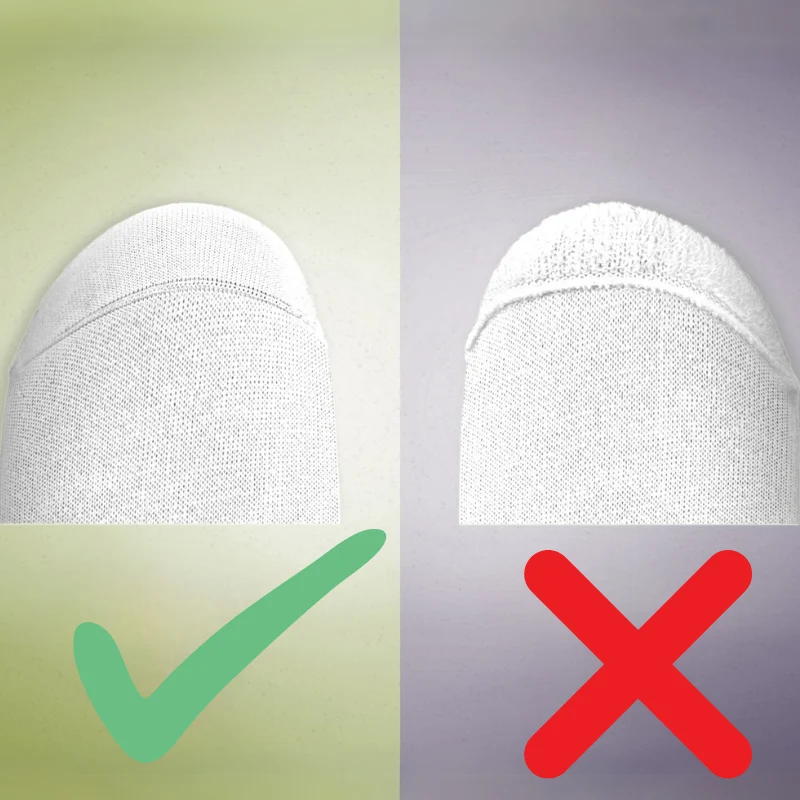
- Removes the ridge that runs across the toes
- Slower and dearer per pair
- Used on running, diabetic and toe-sensitive lines
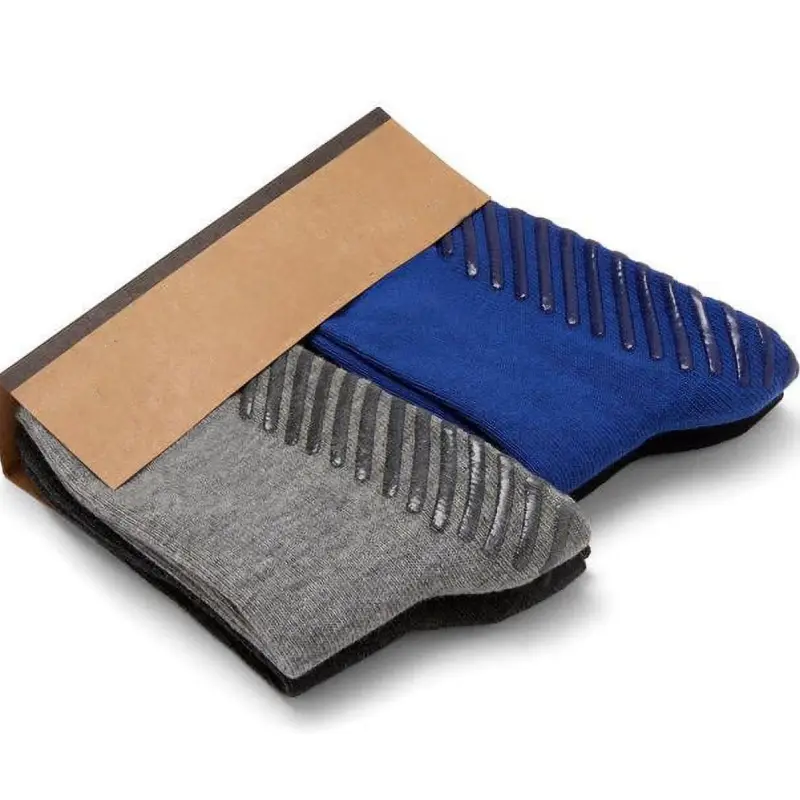
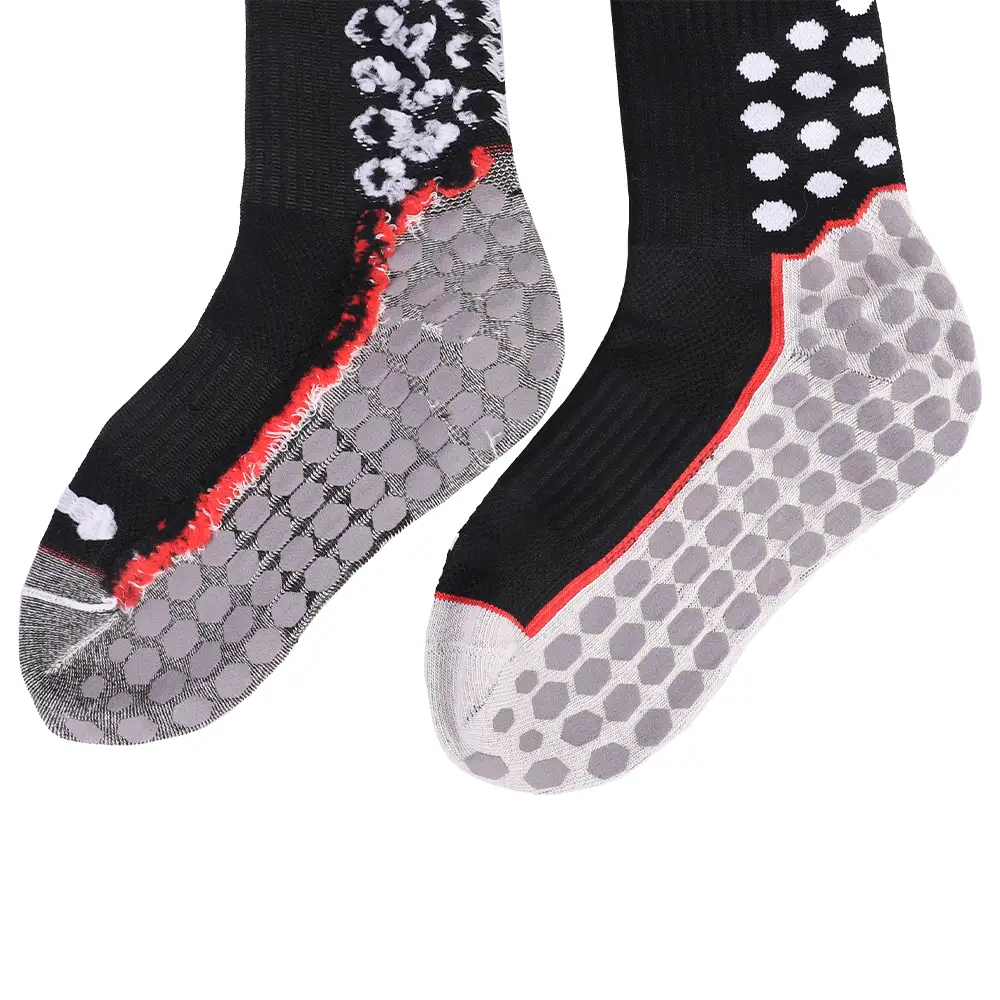
Double-Layer Silicone Grip
- Silicone on the sole for grip against the floor
- Silicone on the inside face so the sock does not rotate on the foot
- Both faces on one sock
- Used on pilates, trampoline and hospital lines
Strukturvergleich nach Sockentyp
| Strukturmerkmal | Sportlich | Kompression | Freizeit/Kleidung | Technik/Outdoor |
|---|---|---|---|---|
| Abgestufte Kompressionszonen | ★ ★ | ★ ★ ★ | ★ | ★ ★ |
| Frotteekissen / Polsterung | ★ ★ ★ | ★ ★ | ★ | ★ ★ ★ |
| Mesh-Belüftungspanele | ★ ★ ★ | ★ ★ | ★ | ★ ★ ★ |
| Fußgewölbe-Stützband | ★ ★ ★ | ★ ★ ★ | ★ | ★ ★ ★ |
| Gerippte Manschette / Elastische Rippen | ★ ★ | ★ ★ ★ | ★ ★ | ★ ★ |
| Handgekettelte (nahtlose) Zehenpartie | ★ ★ | ★ ★ ★ | ★ ★ | ★ ★ ★ |
Größenbereichsoptionen
Start with your existing size chart, target market, or a physical reference sock. We can use the information you already have to define the size specifications needed for sampling.
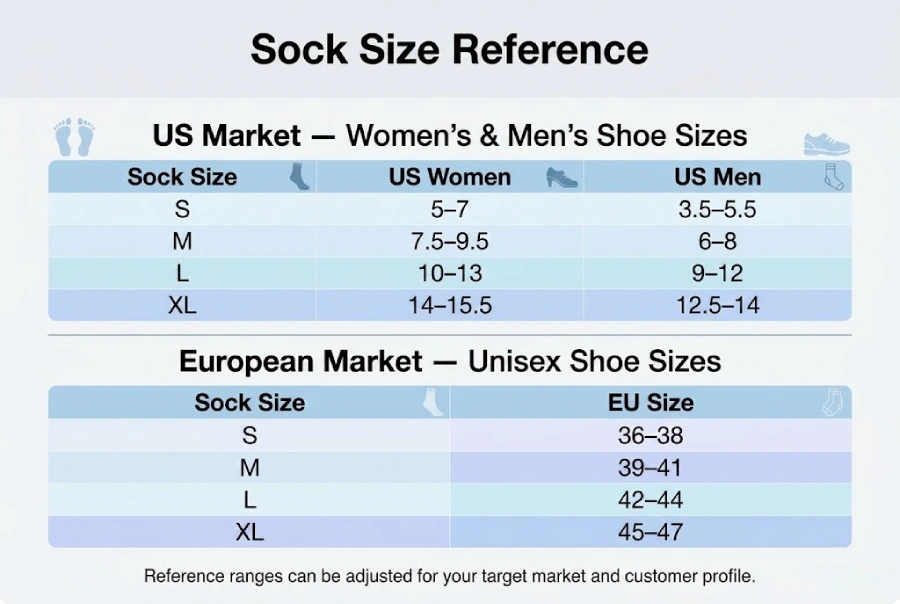
Size Range Reference
01 New Size Range
Build a Size Range for Your Target Market
If you don't already have a size chart, share your target market, customer group, and sock type. We can use these details as the starting point for developing a practical size range.
US and European markets use different shoe-size systems, so the same sock program may require different size labels and coverage depending on where the product will be sold.
Von vorne anfangen? Share the market you plan to sell in and the type of sock you are developing, and we can review the size range before sampling.
02 Reference Sock
Reproduce an Existing Sock From Your Reference
Already have an approved sock or reference sample? Send us the physical sample together with your target size, construction, material, and branding requirements.
We can review the original dimensions and construction, reproduce the key specifications, and prepare a development sample for your approval before bulk production.
For knee-high and compression styles: Foot length, leg length, and cuff width are three key finished-sock measurements used when reproducing an existing size.
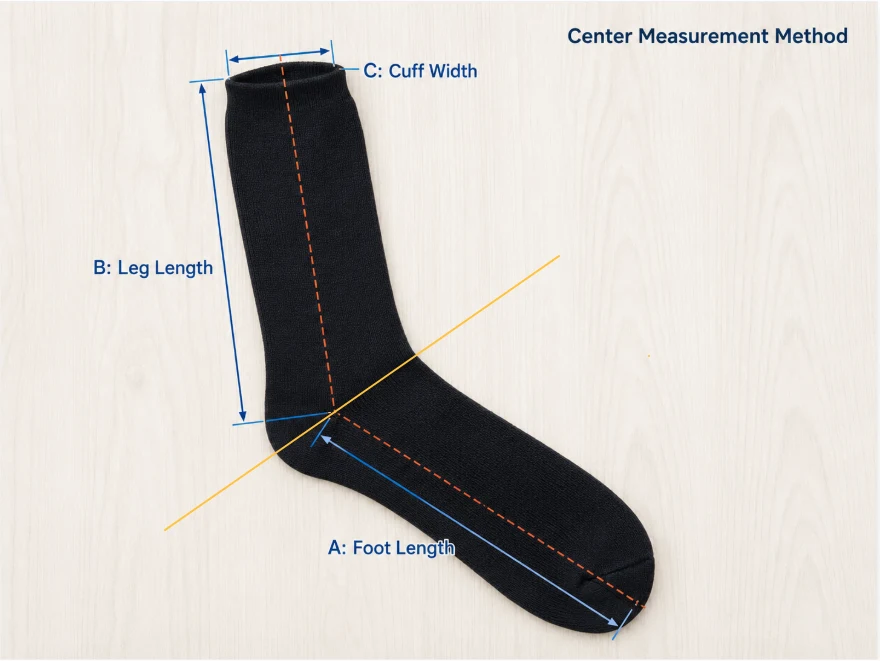
Finished-Sock Measurements
Have a size chart, tech pack, or reference sock? Send us what you already have. If you're starting from scratch, share your target market and sock type, and we'll help define the specifications needed for sampling.
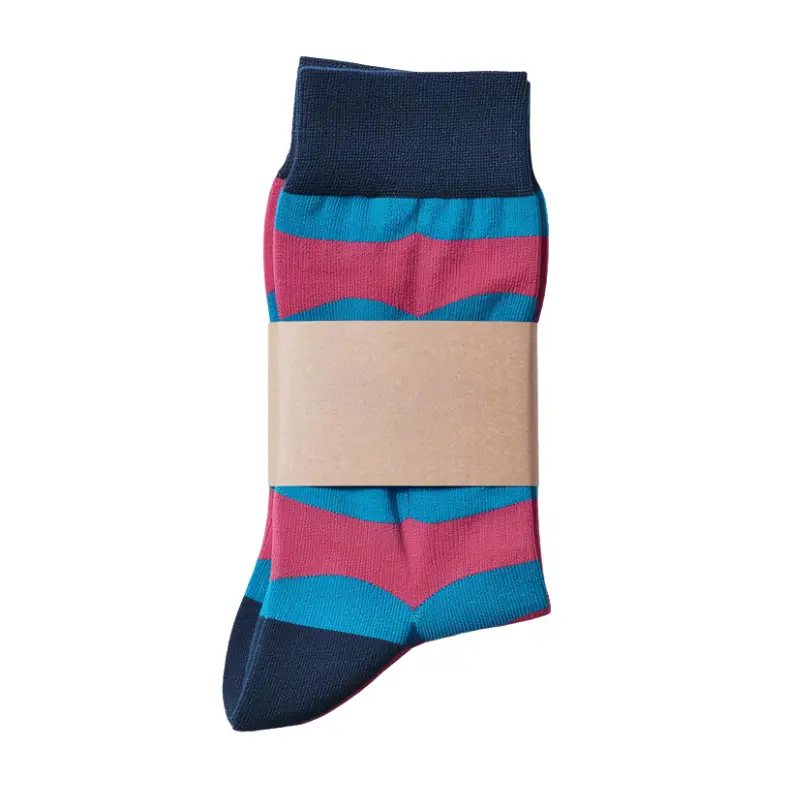
Verpackungsoptionen
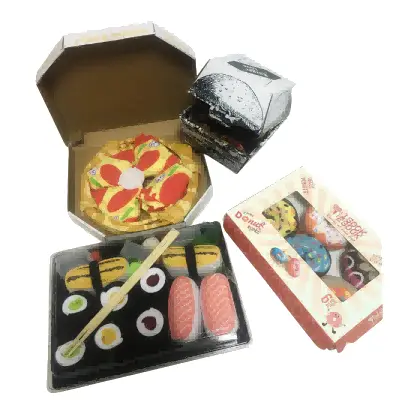
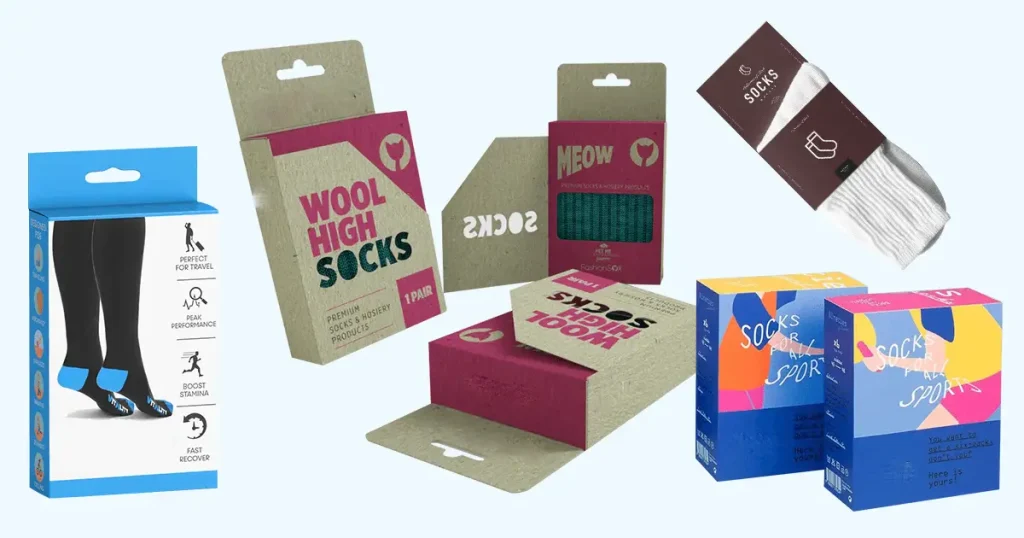
Von der individuellen Präsentation im Einzelhandel bis hin zu Lösungen für den Massenversand bieten wir eine umfassende Palette an Verpackungsoptionen, um Ihre spezifischen Anforderungen zu erfüllen und Ihr Markenerlebnis zu verbessern.
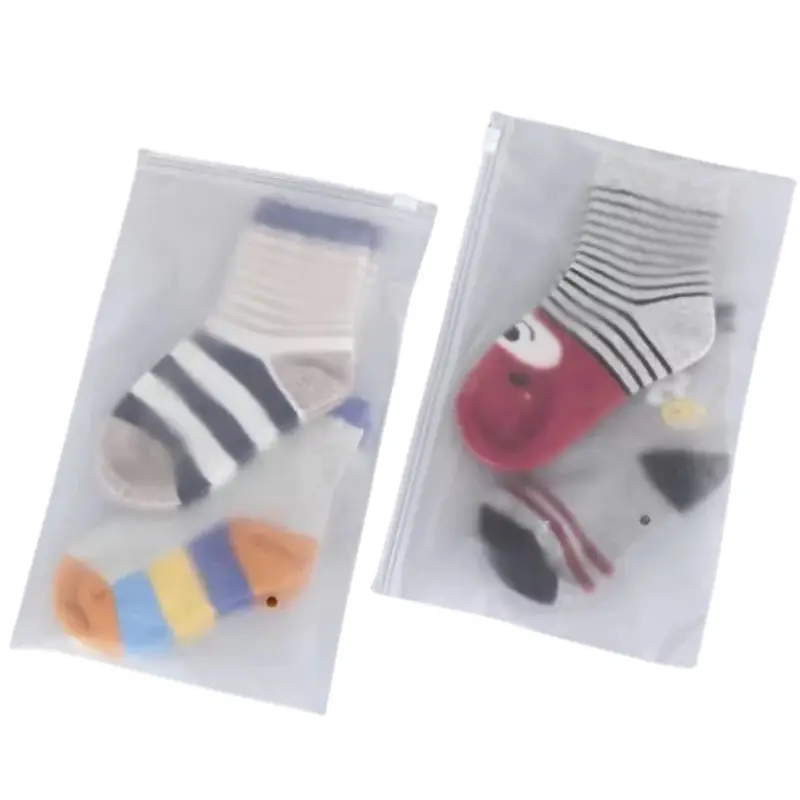
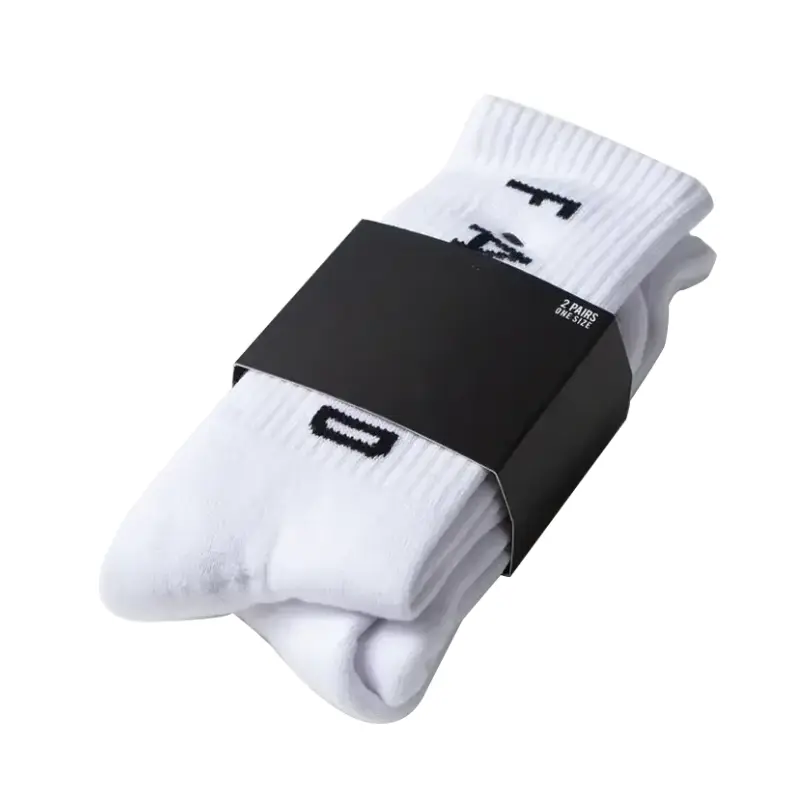
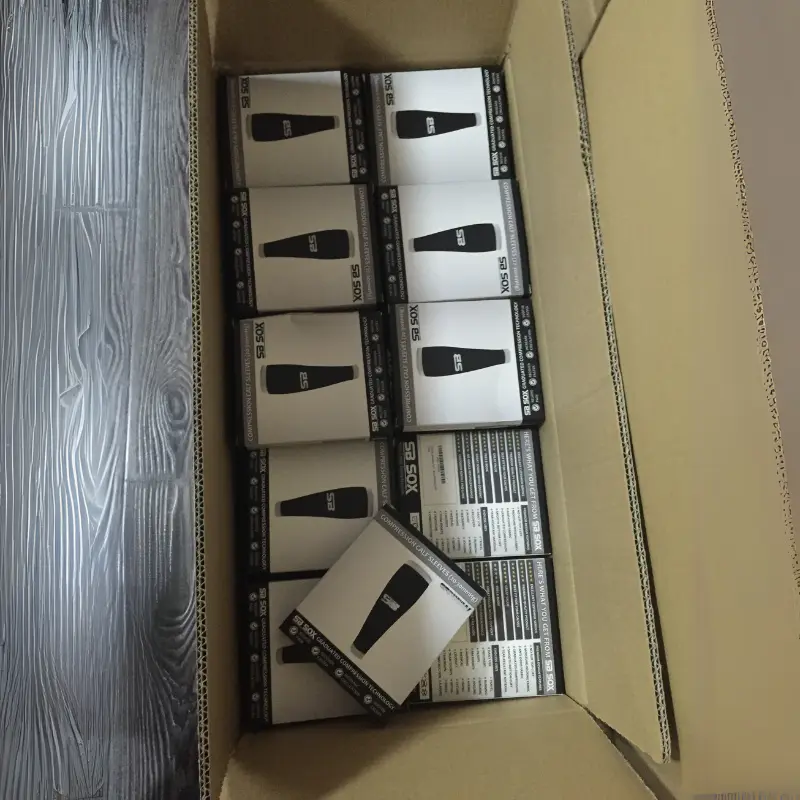
Einzelpaar-Verpackungsoptionen
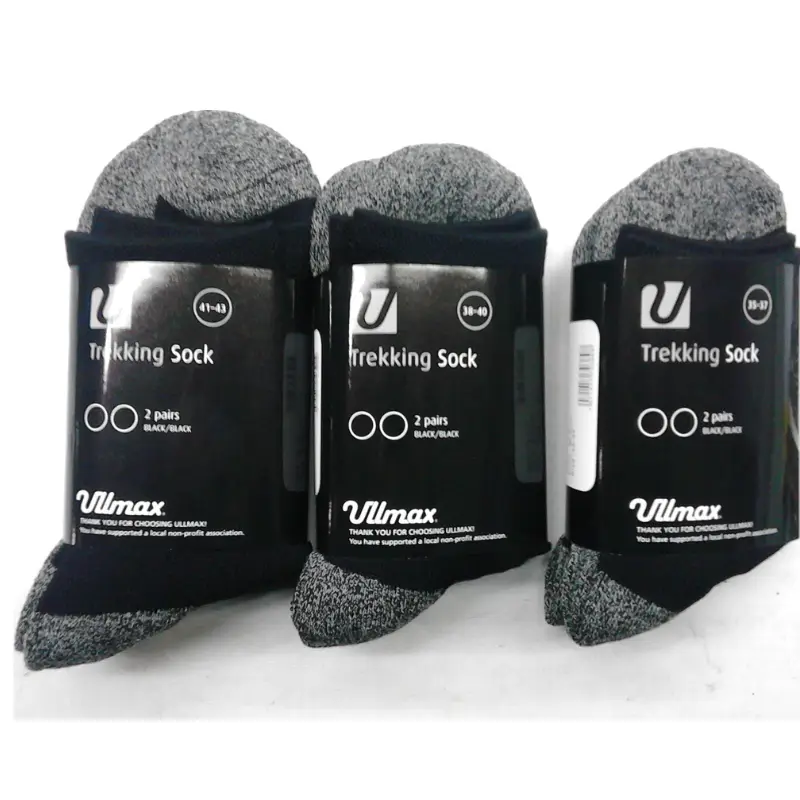
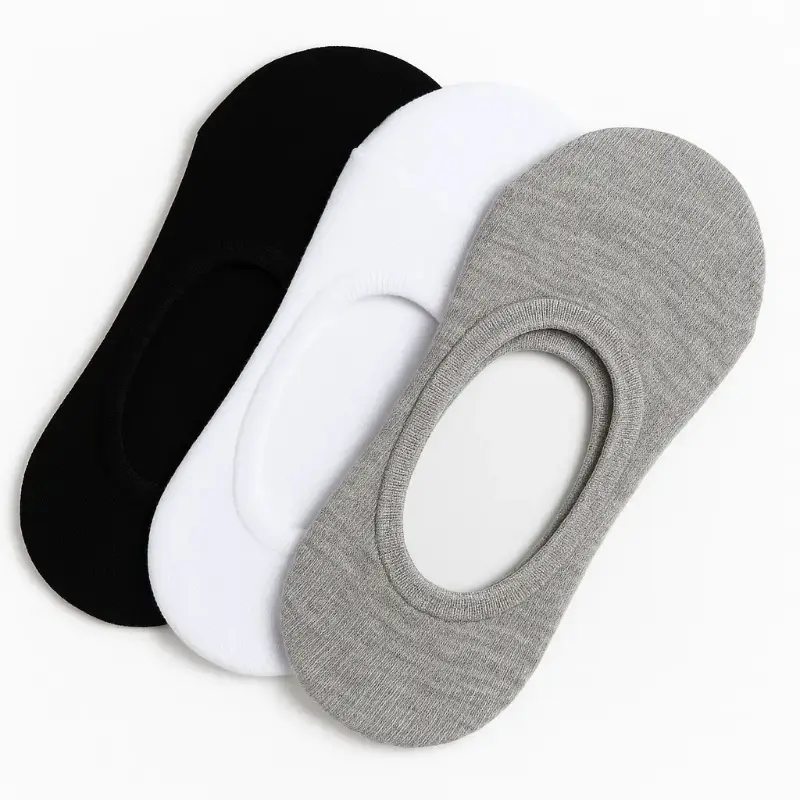
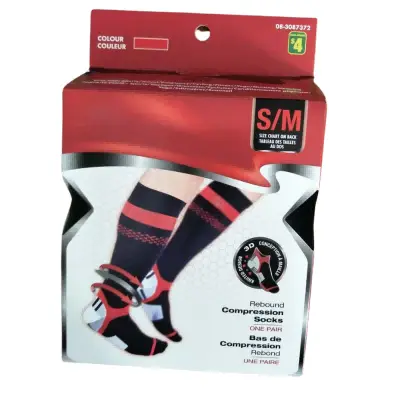
Bauchband
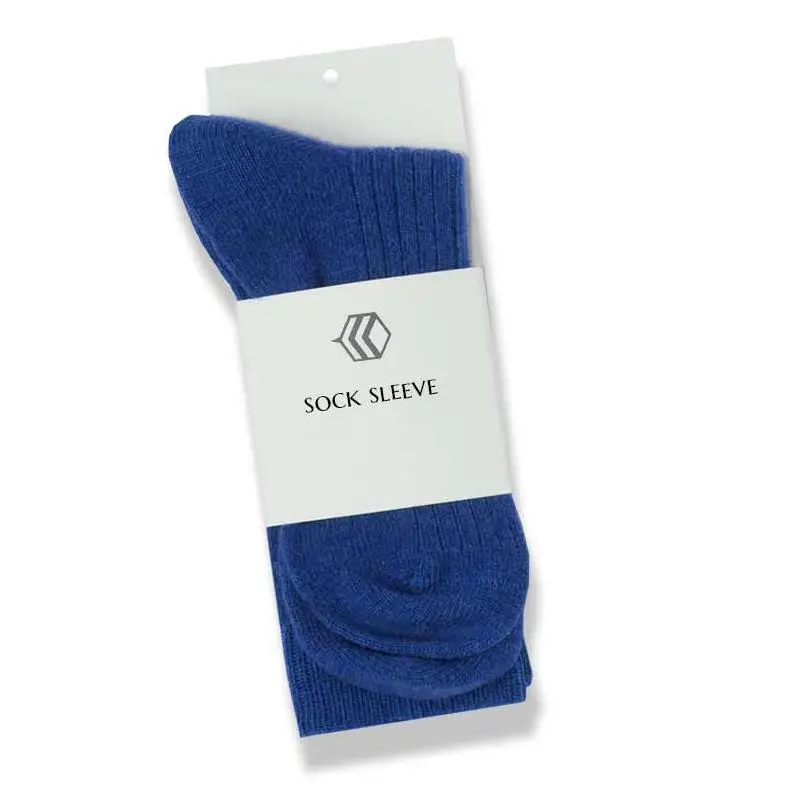
Sockenärmel
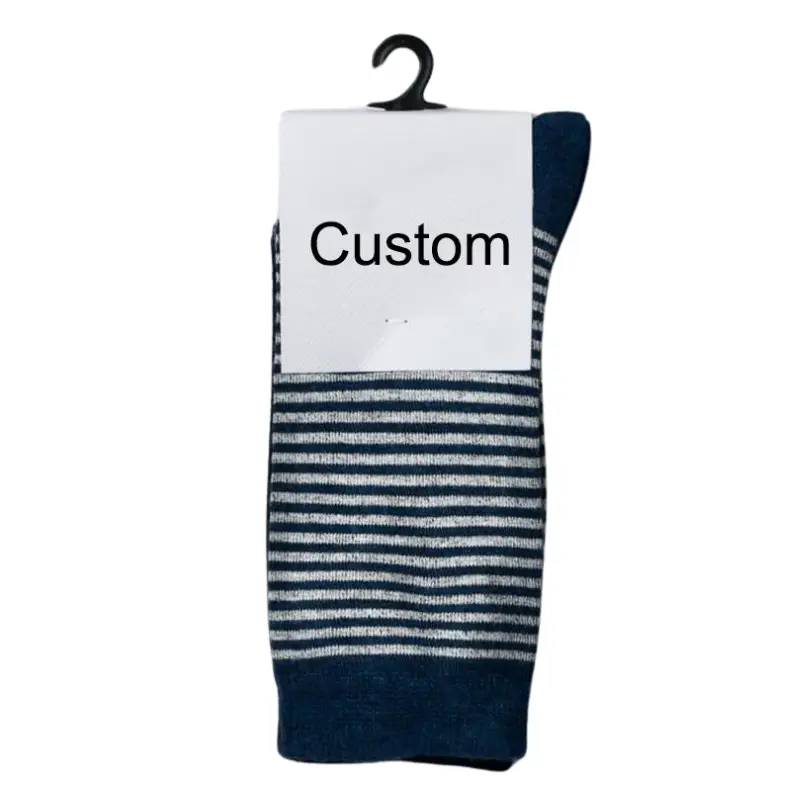
Hauptkarte
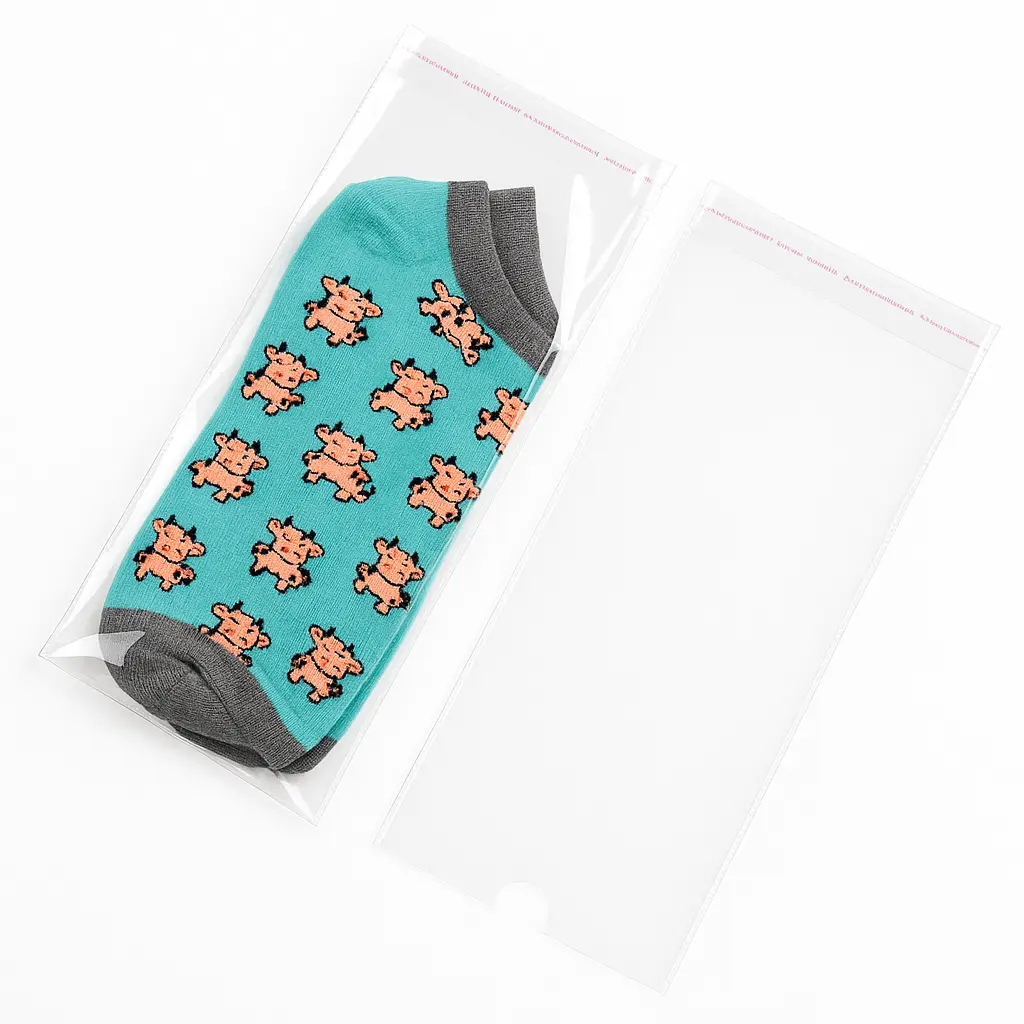
Opp Beutel
Farbtasche
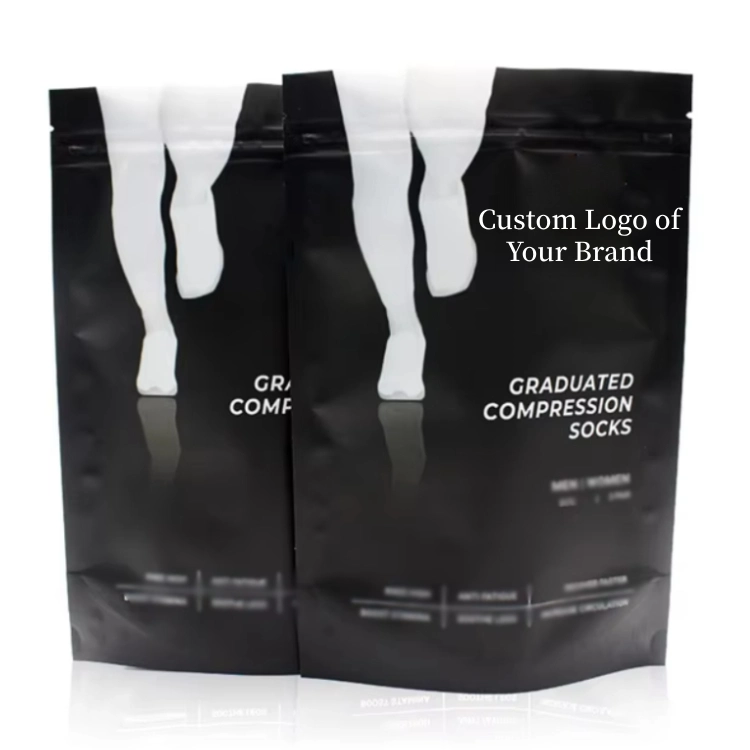
Reißverschlusstasche
Mehrpaar-Verpackungslösungen
2er-Pack
4er-Pack
3er-Pack
Multipack mit Einlegekarte
Premium-Geschenkbox-Optionen
Color Box
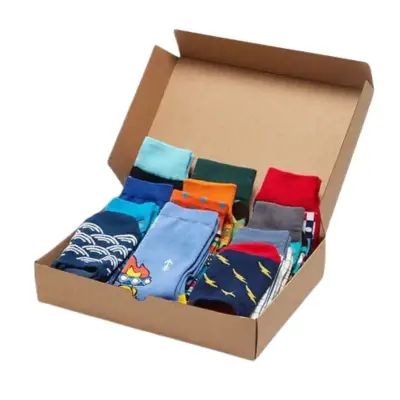
Geschenkboxen
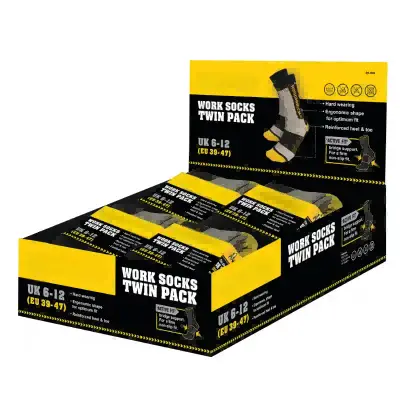
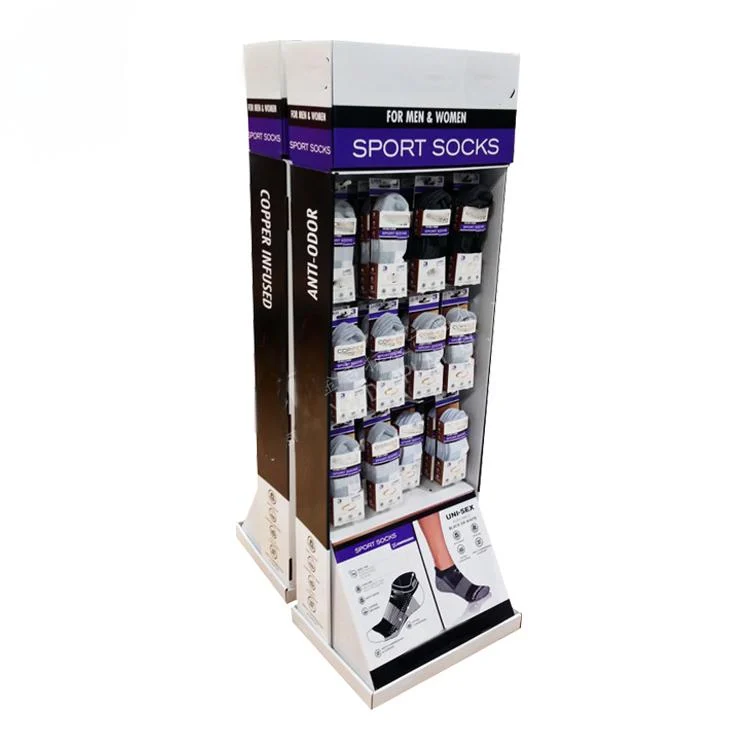
Vitrine
Kreativbox
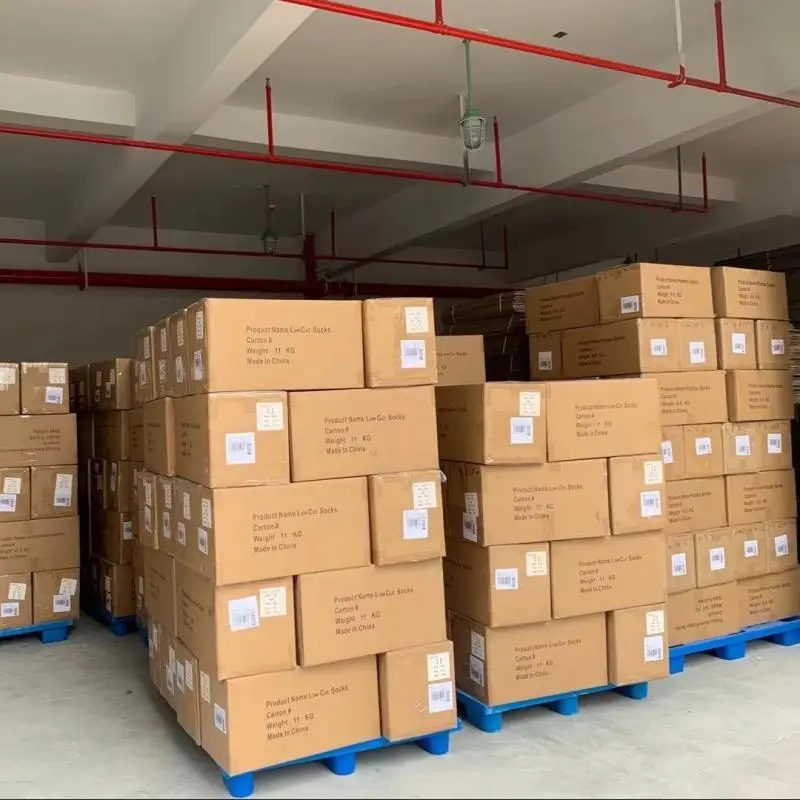
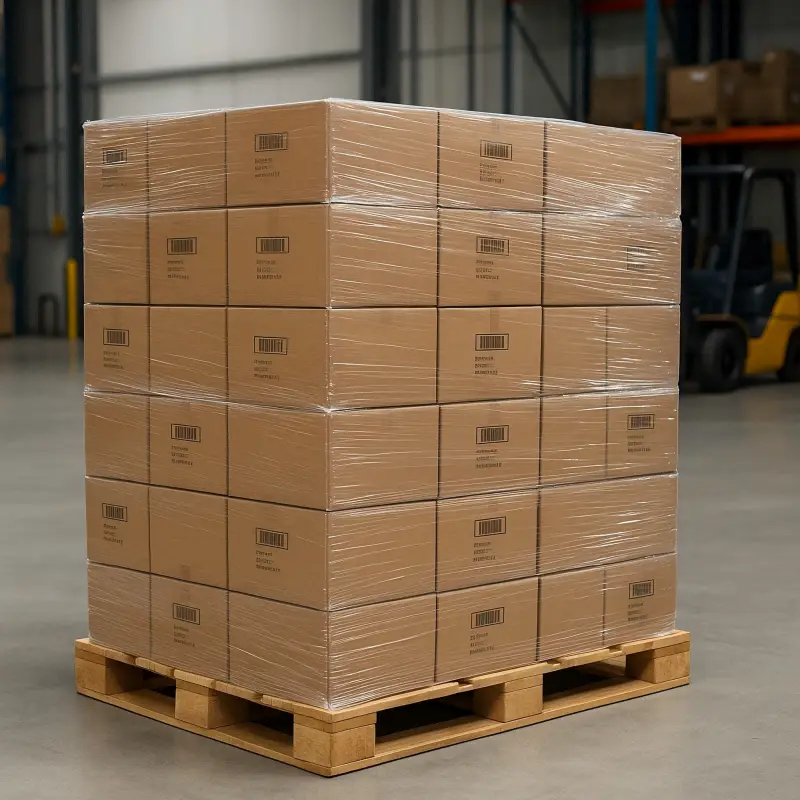
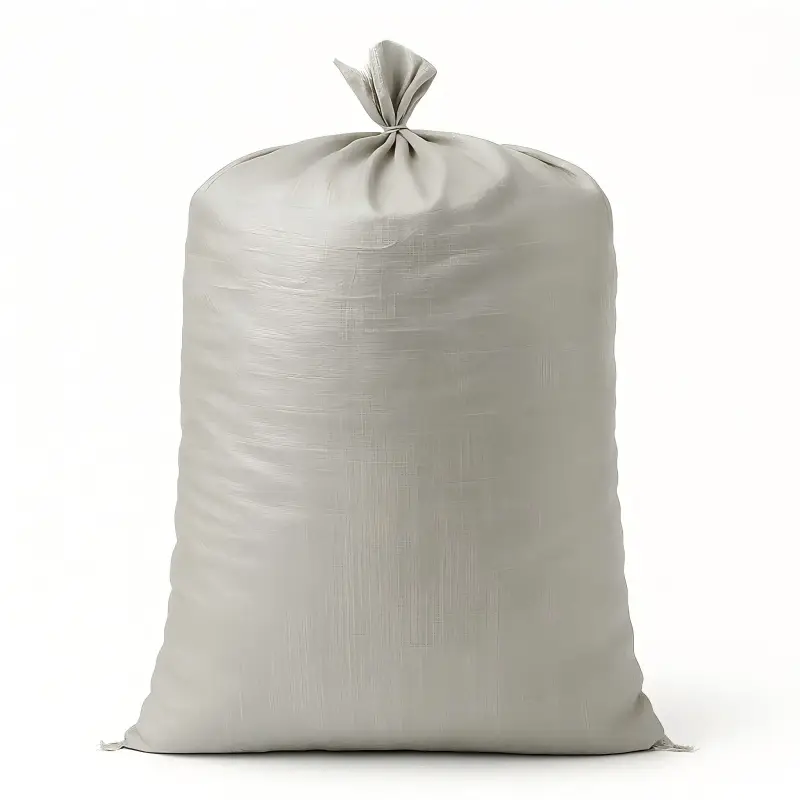
Lösungen für den Massenversand
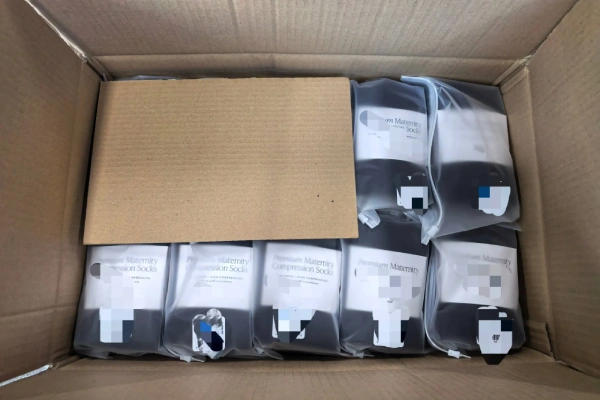
Kartonschachtel
Umkarton
Palettenverpackung
Verpackung in Großgebinden
Vitrine
| Produkt | Weight / Pair (with OPP) |
Karton-Größe (L × B × H) |
Pairs / Carton | CBM / Carton | CBM per 1000 Pairs | 20GP (~28 CBM) |
40HQ (~68 CBM) |
|---|---|---|---|---|---|---|---|
| Trampoline Socks (Kids) | 25 g | × × 58 39 39 cm | 600 | 0.088 | 0.15 CBM | ~190,000 Paare | ~462,000 Paare |
| Trampoline Socks (Adult) | 45 g | × × 58 39 39 cm | 350 | 0.088 | 0.25 CBM | ~110,000 Paare | ~269,000 Paare |
| Plantar Fasciitis Socken | 40 g | × × 58 39 39 cm | 350 | 0.088 | 0.25 CBM | ~111,000 Paare | ~270,000 Paare |
| Running / Cycling Socks | 55 g | × × 58 39 39 cm | 250 | 0.088 | 0.35 CBM | ~79,000 Paare | ~192,000 Paare |
| Calf Sleeve (Footless) / Shin Socks (without guard) | 60 g | × × 58 39 39 cm | 250 | 0.088 | 0.35 CBM | ~79,000 Paare | ~192,000 Paare |
| No-show Compression Socks | 65 g | × × 45 33 45 cm | 250 | 0.067 | 0.27 CBM | ~104,000 Paare | ~254,000 Paare |
| Soccer / Pilates Grip Socks | 70 g | × × 58 39 39 cm | 200 | 0.088 | 0.44 CBM | ~63,000 Paare | ~154,000 Paare |
| Kniehohe Kompressionsstrümpfe | 85 g | × × 58 39 39 cm | 150 | 0.088 | 0.59 CBM | ~47,000 Paare | ~115,000 Paare |
| Wool / Work Socks | 120 g | × × 58 45 53 cm | 200 | 0.138 | 0.69 CBM | ~40,000 Paare | ~98,000 Paare |
| Thigh-high Soccer Grip Socks | 130 g | × × 45 33 45 cm | 120 | 0.067 | 0.56 CBM | ~50,000 Paare | ~122,000 Paare |
Hinweis: Figures shown are for reference only. Final packing may vary depending on yarn thickness, size range, packaging method, and customization requirements.
From Options to a Spec Sheet
Every option above becomes one line on a production specification. This is the full list of what has to be decided before we can quote — the fields you already know, and the ones we can fill in for you.
| Feld | Was Sie entscheiden | Where it is set |
|---|---|---|
| Style & length | Crew, quarter, ankle, no-show, knee-high | Your product line page |
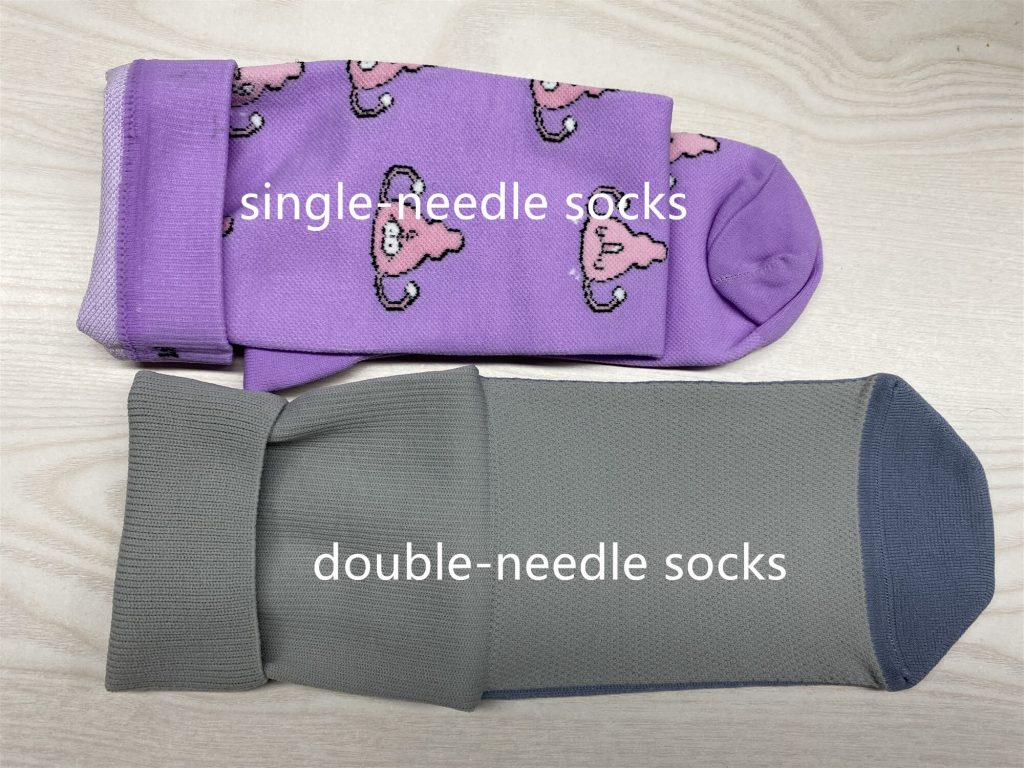
| Nadelanzahl | Coarser or finer gauge, 120N to 320N depending on the sock | Knit structures, above |
| Garnmischung | Fiber mix and percentages | Material guide, above |
| Farbe, | A Pantone code for each yarn position — not one code for the sock | Color matching, above |
| Logo- und Markenanpassung | Technique, placement, size, number of colors | Logo options, above |
| Knit zones | Cushion, mesh, arch band, toe closure, rib depth, grip | Knit structures, above |
| Größenbereich | Your chart, your target market, or a physical reference sock | Size development, above |
| Verpackungs- | Inner pack, outer pack, carton spec, barcode placement | Packaging, above |
| Die Menge | MOQ follows the product line, not the project | Your product line page |
| Zertifizierungsanforderungen | Which certificate your buyer asks to see | Zertifizierungsanforderungen |
Send us what you have — a sketch, a competitor sock, or a finished tech pack — and we will come back with the gaps filled in.
Real brands, real production runs
From single inquiry to top US maternity brand — 100,000+ pairs annually
Won the project by shipping a material sampling kit (bamboo / polyester / cotton-nylon). Engineered soft-touch lurex for metallic stripe effect, matched Pantone Mauve Chalk & Cream, scaled from R&D to consistent mass production.
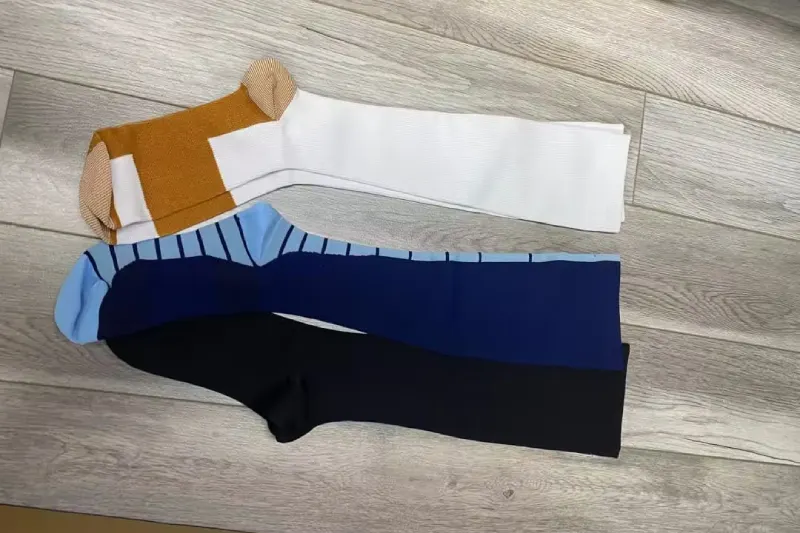
Reverse-engineered a 20–30 mmHg sock to match the original feel — and won the reorder
Client needed a new factory to reproduce the same fit and feel of their existing sock — recolored blue → black/grey, with “20-30” and size knitted on the sole. After sample approval, they bundled in matching calf compression sleeves.
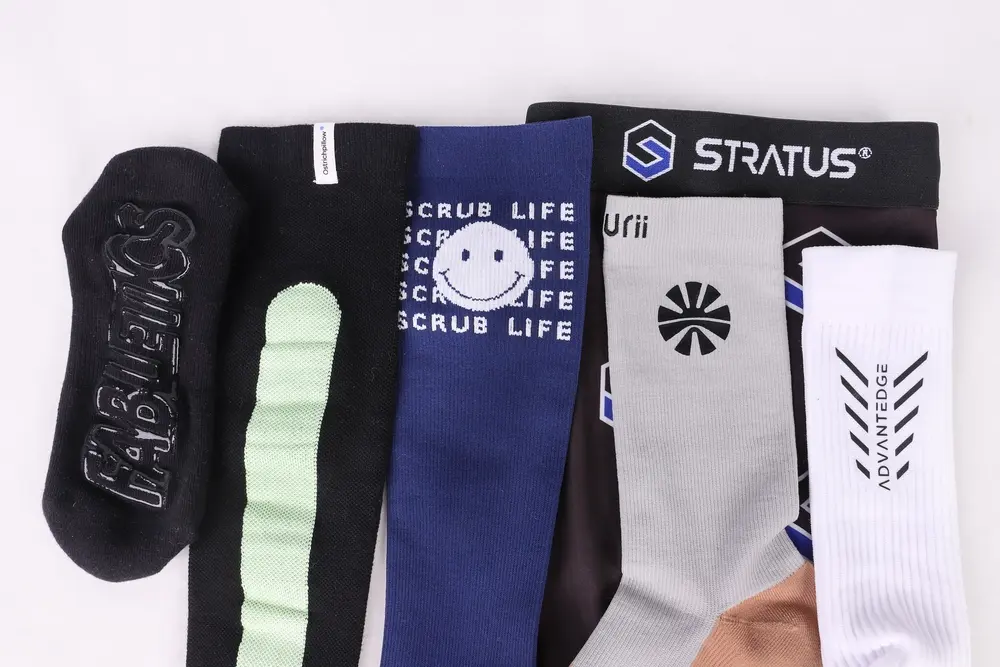
Spezifikationsfragen
The questions that come up while a specification is being built. Company, factory and delivery questions are answered on the Startseite.
Can you reproduce a sock we already sell?
Yes — send us a physical pair. We take it apart, count the needles, identify the yarn positions and rebuild the specification from it. This is how most moves from a previous supplier start.
Was benötigen Sie von uns, um zu beginnen?
The minimum is a sketch and a target retail price. Ideal is vector artwork (AI or EPS), a Pantone code for each yarn position, and a reference sock. If you only have a photo we can still quote — we will just be more conservative about which logo technique will hold the detail.
Can we combine more than one logo technique on one sock?
Yes. A jacquard body with an embroidered cuff mark is common. What limits it is area, not technique: a mesh vent panel or a silicone print takes away the surface a jacquard logo needs.
Do color choices change the price or the lead time?
The number of yarn colors in one knit does. Standard shades are dyed to your code by the dyehouse and confirmed on a lab dip before bulk; fluorescent and metallic yarns are sourced pre-dyed and add to the lead time. Send the code early — color is the most common cause of a re-sample.
Was ist das MOQ?
MOQ follows the product, not the project. Standard custom socks start at 500 pairs, one color one size. Grip, football, trampoline, work and wool lines each carry their own minimum — the figure on the product page is the one that applies to you.
Can we specify recycled or lower-impact materials?
Recycled polyester and other recycled yarns can be sourced on request, and lower-impact dye processes can be arranged through the dyehouse subject to your color and fastness requirements. Tell us the requirement and we will confirm what is achievable on your specification.
Sind Sie bereit, Ihr Projekt richtig zu starten?
Unser erfahrenes Team begleitet Sie durch jeden Schritt des Prozesses, vom Entwurf bis zur Lieferung, und hilft Ihnen, häufige Fehler zu vermeiden und außergewöhnliche, individuelle Socken herzustellen.
Go Deeper on the Specs
Logo technique, packaging and needle count each get a full guide below — the trade-offs, cost differences and limits that don’t fit in the tables above. Worth reading before you send us a tech pack.
Six ways to put a logo on a sock, and what each one can and cannot hold — the trade-offs behind the table above.
Retail shelf, gifting, hospital supply and e-commerce each need a different pack. What changes, and what it costs.
From 120N to 320N: how the count changes hand-feel, how fine a logo the knit can hold, and the unit price.