
Custom Work & Safety Socks Manufacturer
Custom work socks designed for your brand and budget. From a first 1,000-pair program — splittable into 500 pairs per color or per size — through large-volume production runs.
Work Sock Styles, Engineered by Function
- Extra-thick terry cushioning over the toe box
- Seamless toe closure to reduce friction at the toe box
- Amortiguación por zonas para una comodidad excepcional con una tapa de acero
- Built for construction, manufacturing, utilities
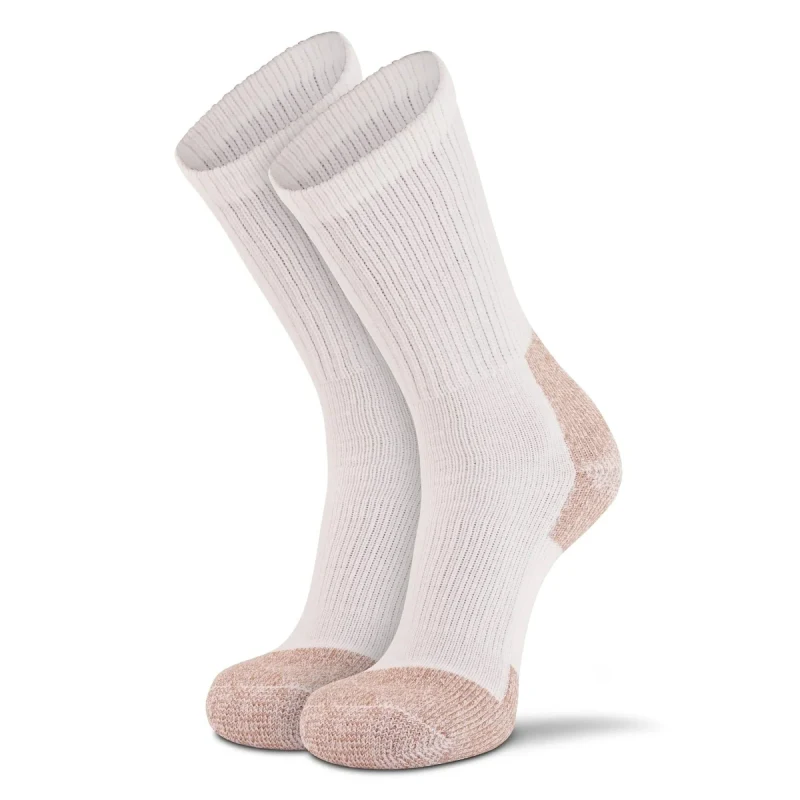
Calcetín deportivo acolchado con puntera de acero
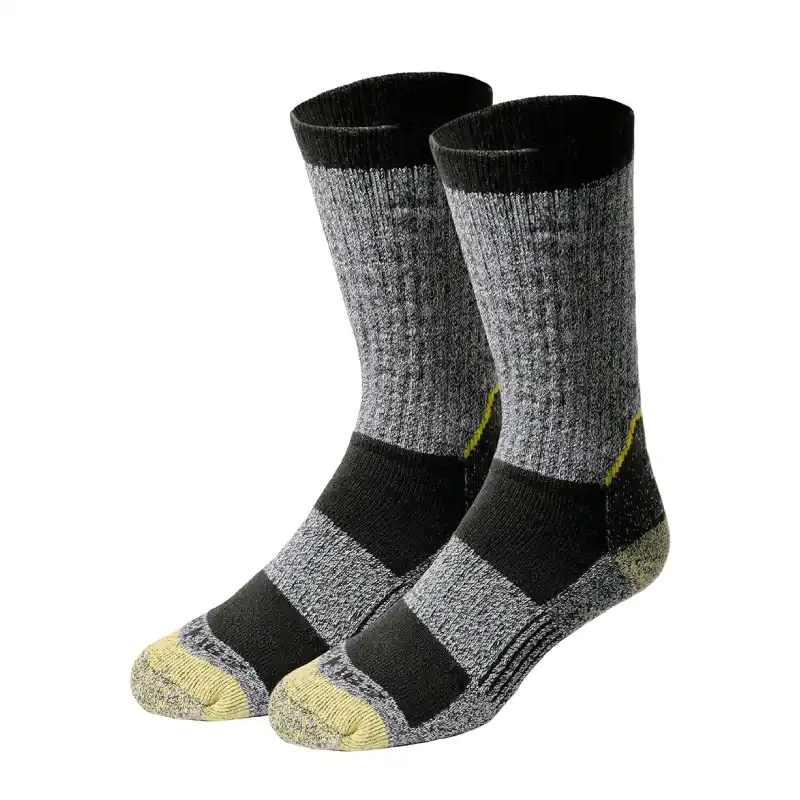
Calcetín de seguridad con puntera reforzada
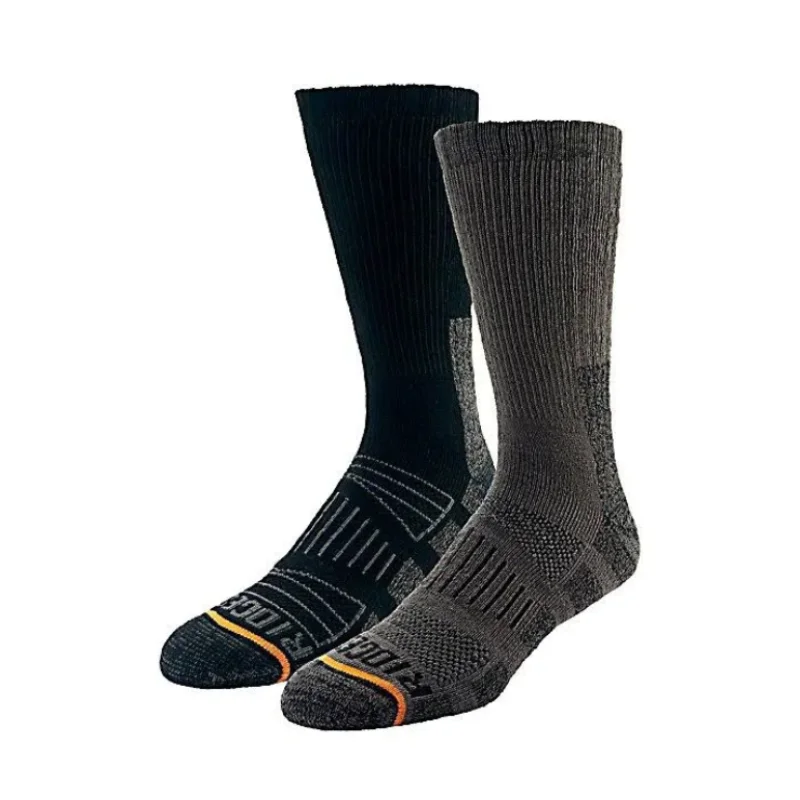
Calcetín industrial Cushion-Zone
High-density knit and abrasion-reinforced zones for long shifts on hard ground — with moisture-moving blends for hot, high-sweat sites.
- High-density knit for extended abrasion life
- Reinforced heel, toe and underfoot zones
- Moisture-moving blends for hot, high-sweat shifts
- Built for construction, warehousing, logistics
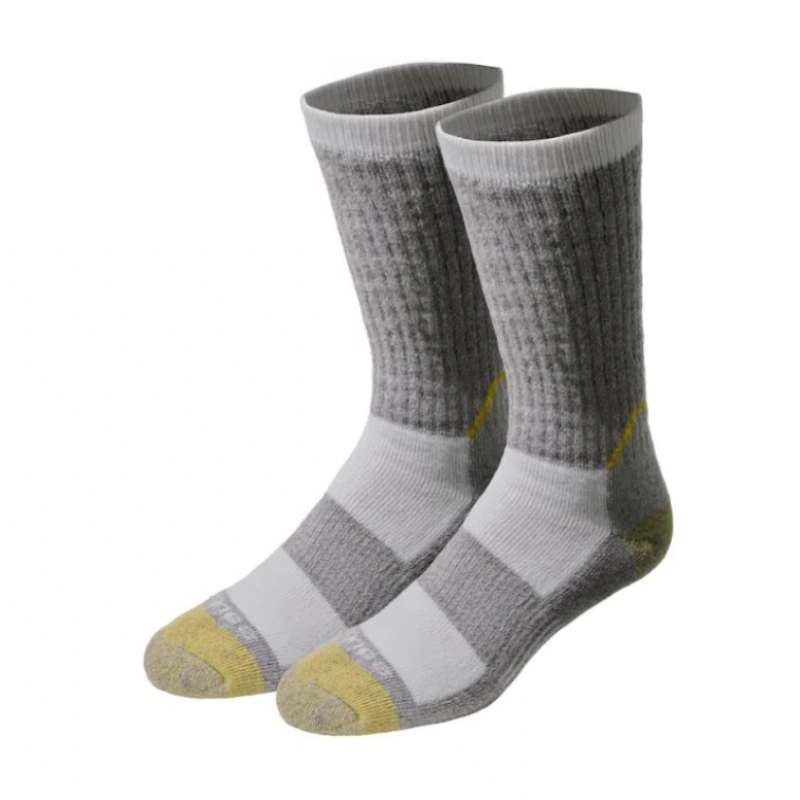
Calcetín resistente al desgaste de alta densidad
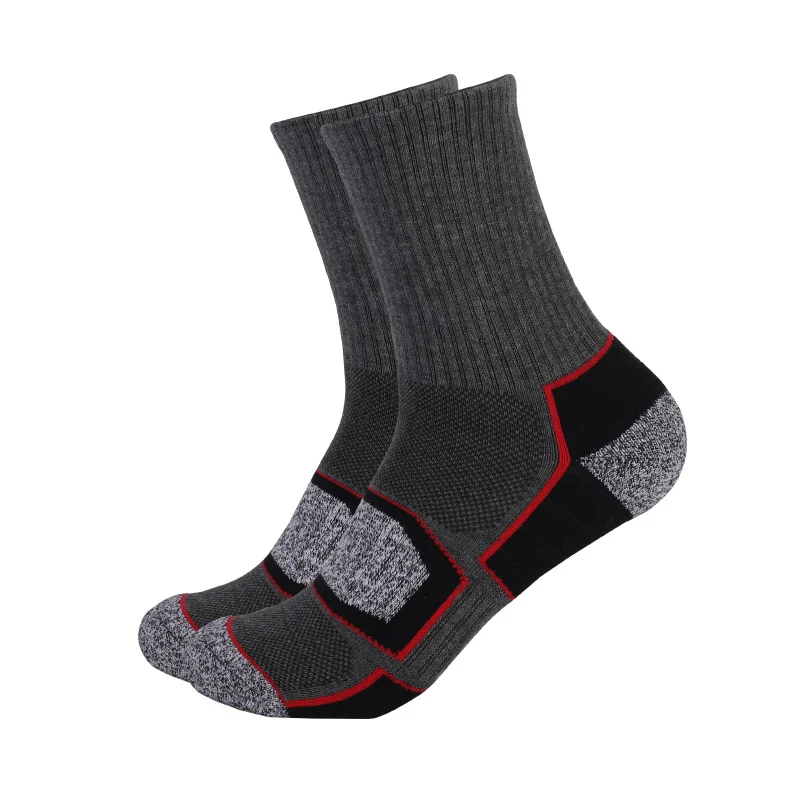
Calcetín para botas de trabajo de alta resistencia
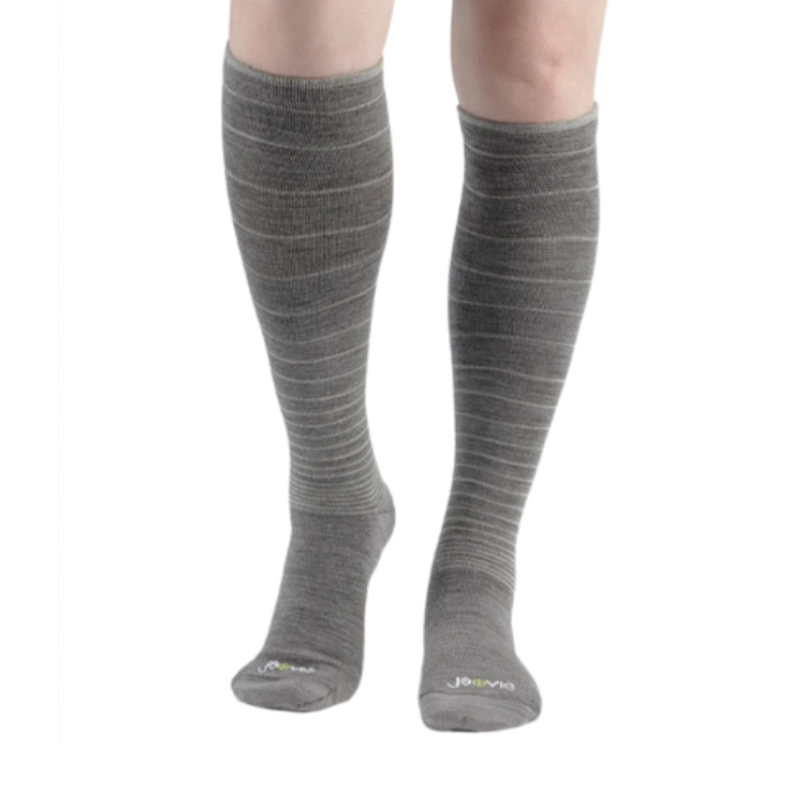
Calcetín de trabajo de bambú con control de humedad
Thermal work socks for outdoor operations in cold, damp conditions — warmth and breathability for field technicians and cold-storage crews.
- Merino wool insulation for low temperatures
- Calidez y transpirabilidad equilibradas.
- Moisture-resistant, cold-proof construction
- Built for cold storage, outdoor and utility work
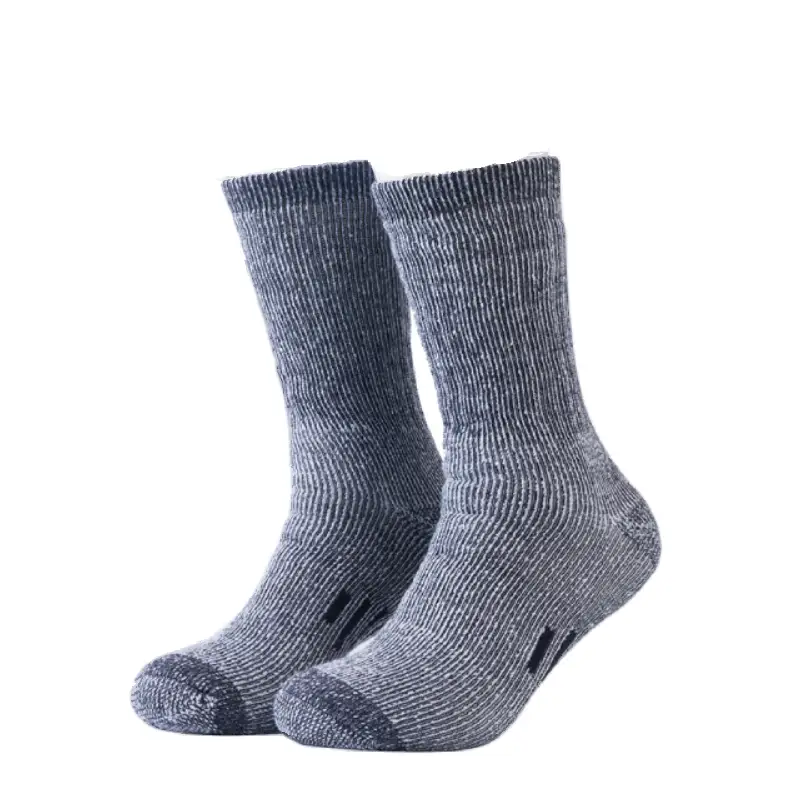
Calcetín de trabajo de lana merino
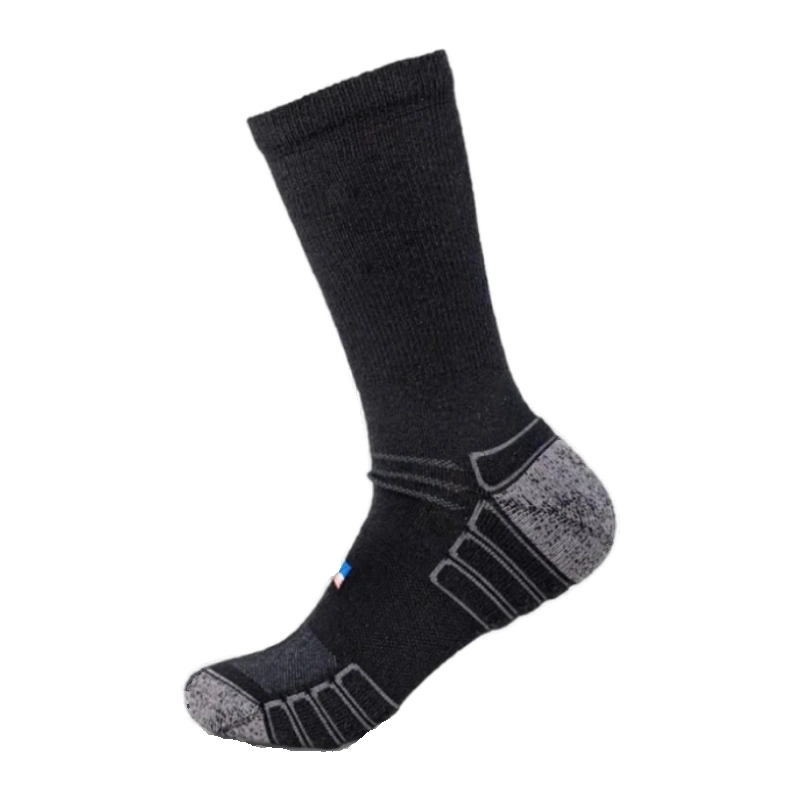
Calcetín térmico de trabajo de lana para invierno
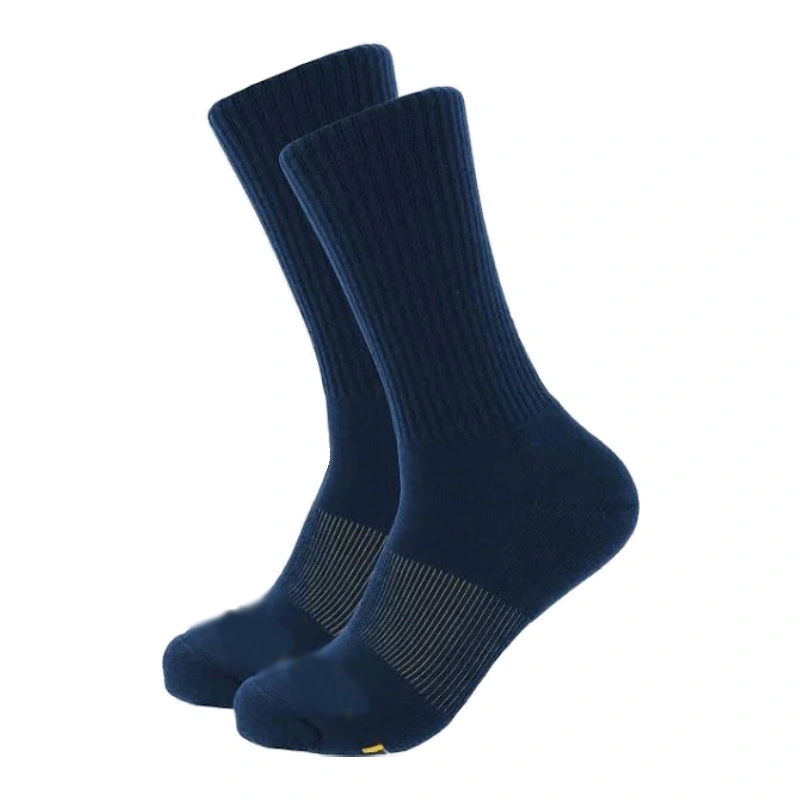
Calcetín de trabajo cálido para clima frío
Work socks knitted with conductive yarn to provide a path to ground, designed to be worn with ESD footwear in static-sensitive environments.
- Conductive yarn for path-to-ground
- Odor-resistant, all-shift comfort
- Pairs with ESD shoes and heel grounders
- Built for electronics assembly, controlled environments
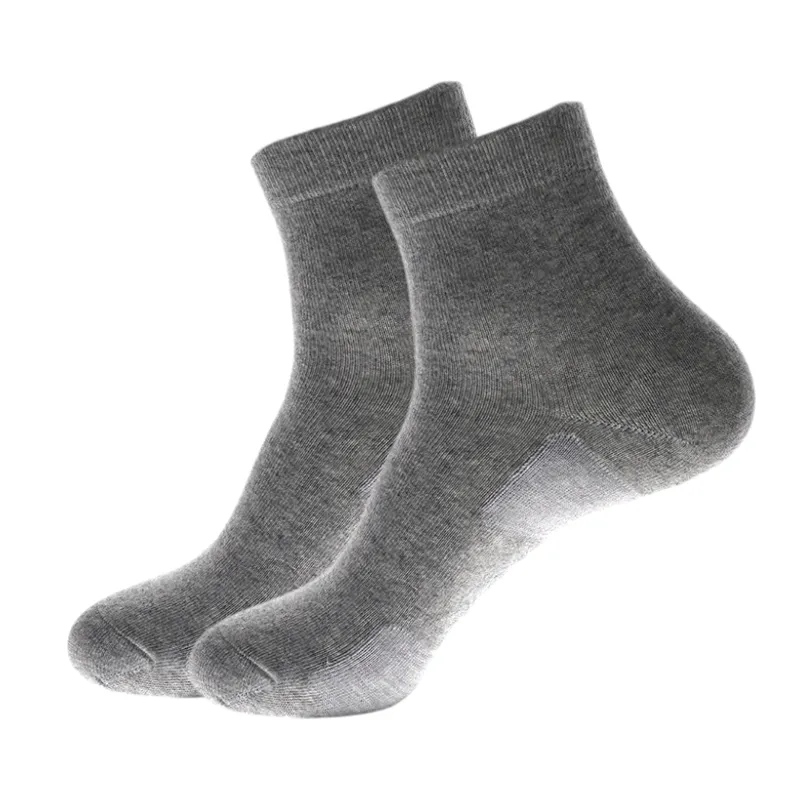
ESD Anti-Static Crew Sock
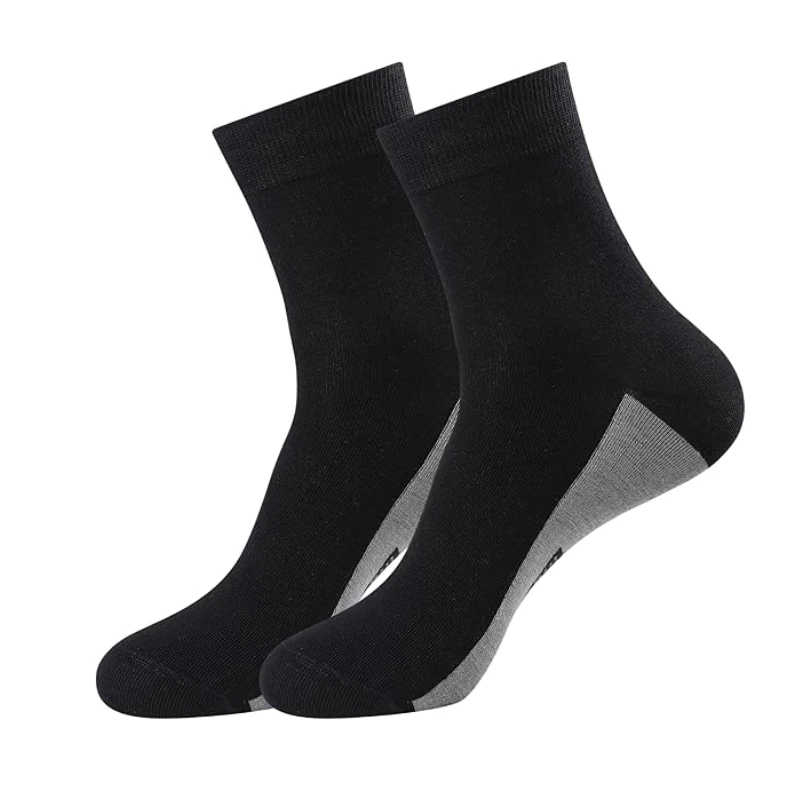
Conductive Yarn ESD Work Sock
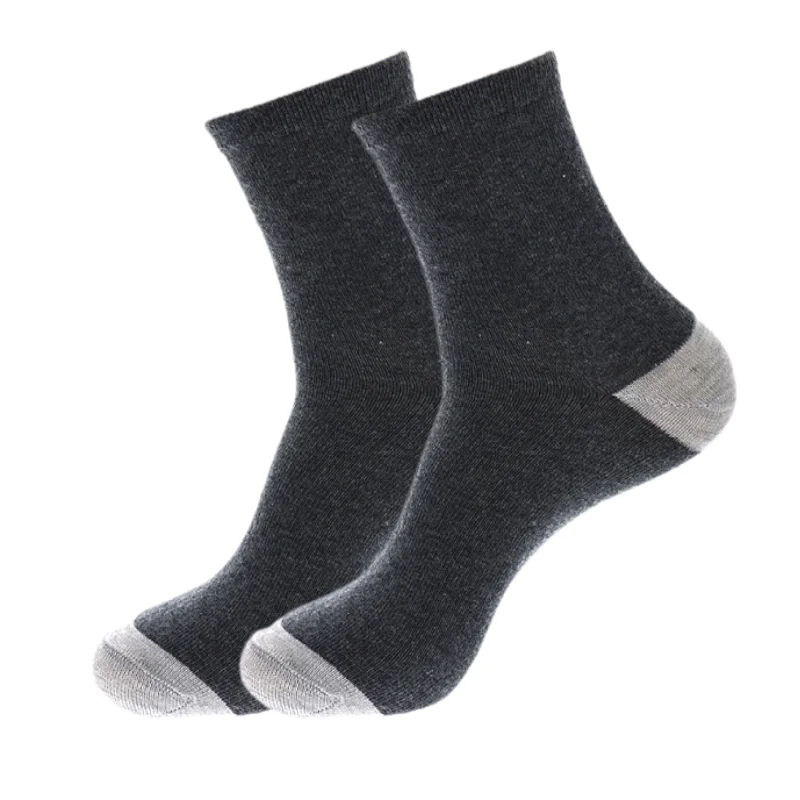
ESD Cushioned Anti-Static Sock
Industrial Safety Socks: What Changes Inside the Boot
A safety boot is a closed, low-ventilation environment. The sock is the layer that decides how that environment feels over a full shift. These are the five failure modes we design against, in the words of the people wearing them.
1 · Trapped sweat and odor
Sealed safety boots hold moisture in. Cotton-rich blends hold that moisture and dry slowly, so the sock is a damp layer by the end of the shift.
my feet and my boots are REALLYYYYYY foul
Lo que cambiamos
Moisture-moving merino, acrylic or polypropylene blends, a mesh instep and air channels to move moisture off the skin. Silver- or copper-ion yarn is available where odor control is part of the spec.
2 · Heel and Achilles friction
Rubbing at the heel and Achilles leaves raw, blister-prone hot spots — and workers change how they walk to avoid them.
my Achilles heel will sometimes rub with the boot and leave a rash/burn
Lo que cambiamos
Low-friction facing yarn through the heel and Achilles contact zone, a locked heel pocket, and reinforcement where the boot collar sits. Boot shaft height decides how far up that coverage has to run.
3 · Wearing through at toe and heel
Low-cost socks blow out at the toe and heel within weeks. The worker absorbs both the discomfort and the reorder cost.
I wear through them very fast and my feet just feel destroyed
Lo que cambiamos
Abrasion-reinforced toe and heel — high-tenacity nylon where the spec calls for it — with a defined needle count (144N / 168N / 200N) and a cushioned footbed. Abrasion and pilling can be verified through a third-party lab when your spec calls for it.
4 · Socks sliding down in pull-on boots
In pull-on and logger boots a tired cuff lets the sock bunch at the ankle — pressure, rubbing, and constant hitching all shift.
merino blend socks keep my feet drier … I have not had a single blister
Lo que cambiamos
An over-the-calf option with a wide, multi-strand spandex cuff, matched to the boot shaft height. Cuff recovery is confirmed on the approved sample. Fiber choice follows wearer tolerance — synthetic-rich builds where animal fibers are unsuitable.
5 · Failing the ground test on dry mornings
In cleanrooms and ESD-controlled zones, workers fail the pre-shift ground test on dry winter mornings — the conductive path through the sock is part of why.
The shoe works with a person by developing a ‘sweat’ layer through the sock
Lo que cambiamos
Conductive-yarn placement developed around the ESD footwear and flooring already in use on your site, plus low-lint filament polyester where the environment calls for it.
How to Spec Your Work Socks
Step 1: Match Function to Work Environment
| Ambiente de trabajo | Necesidad primaria | Construcción recomendada | Mezcla típica |
|---|---|---|---|
| Construction / steel-toe bootsjobsite work, steel installations, road construction | Impact cushioning + abrasion resistance | Thick toe-box terry + reinforced heel | 60% algodón / 35% nailon / 5% spandex |
| Electronics / assemblyelectronics manufacturing, assembly lines, chemical plants | Anti-static (ESD) path to ground, low lint | Conductive yarn footbed, low-lint construction | 85% cotton or polyester / 5% silver thread / 10% spandex |
| Almacenamiento / logísticafulfillment centers, last-mile delivery, warehouse teams | All-day anti-fatigue + moisture control | Shock-zone cushioning + moisture-wicking | 70% algodón / 25% poliéster / 5% elastano |
| Outdoor / cold weatheroutdoor construction, utility maintenance, cold storage, winter fieldwork | Warmth + moisture resistance | Merino / heavy-gauge thermal knit | 40% wool / 25% acrylic / 20% nylon / 15% spandex |
| Healthcare / care environmentscare staff, rehab and elderly-care facilities | All-day cushioning + odor management | Cushioned footbed, skin-friendly blends | 80% bamboo viscose / 15% nylon / 5% spandex; optional silver-ion yarn |
| High-heat / flammable areaswelding, foundry, petrochemical | Resistencia al fuego | Flame-retardant yarn, worn inside a certified FR system | Specified per requirement |
Blends shown are recommended starting points, not fixed formulas — the final composition is set against your requirement in the production specification.
Step 2: Choose Material by Budget & Feel
| Material | Propiedades | Uso recomendado |
|---|---|---|
| Mezcla de algodón | Suave, transpirable y rentable. | General everyday work |
| Lana merina | Thermoregulating, odor-resistant, durable | Outdoor / long shifts |
| Viscosa de bambú | High moisture absorption, soft next-to-skin handle | Hot, high-sweat environments |
| Synthetic (nylon/poly + spandex) | Abrasion-resistant, holds shape | Heavy-duty / high-wear roles |
| Functional yarns (conductive / FR / copper) | Anti-static / flame-retardant / antibacterial | Specialty safety applications |
Not sure where to start? Begin with two questions — what’s the work environment, and are there safety requirements like ESD or flame resistance? Send us those and our design team returns a recommended build and mockup within 24 hours.
ISO 9001:2015 certification and OEKO-TEX® certified yarns ease global market entry — full documentation available on request.
When One Work Sock Is Not Enough
Most programs start with one core sock. The question is when a second construction earns its place in the range — and when you are just adding SKUs.
Industrial en general
Cushioned footbed, reinforced toe and heel, steel-toe comfort compatibility.
Hot / high-sweat
Mesh instep, air channels, high-wick fiber, quick-dry structure.
Cold / wet
Merino or alpaca blends, over-the-calf coverage, low-friction facing.
ESD-controlled
Conductive toe/heel grid, low-lint filament polyester for cleanrooms.
FR / thermal-risk
Flame-retardant yarn, built as an accessory worn inside a certified FR system.
Split the line when any of these is true
- Your crews wear different boot systems — shaft height and internal volume change the sock, not just the size run.
- Temperature or humidity between sites is far enough apart that one fiber blend cannot serve both.
- A site carries a defined ESD or FR requirement. These are compliance routes, not comfort upgrades — treat them as their own specification unless your test scope says otherwise.
- The wearers are a genuinely different group — different shift length, different task load, different reorder cycle.
These are development routes, not fixed sock specifications. The final construction depends on the footwear system already in use, site requirements, and the test or compliance scope you define. Once the route is set, yarn blend, knit density, reinforcement, sizing, branding and QC scope are finalized in the production specification.
Más soluciones específicas para la industria
Hostelería, saneamiento, agricultura, petroquímica, aeroespacial y más: adaptamos los calcetines a su entorno.
Customize Every Detail of Your Work Socks
From color and branding to functional yarns, every element is built to your spec — turn our work-sock platform into your own private-label line.
Colores y logotipos personalizados
Match your workwear line with precise Pantone color matching, plus knitted or embroidered logos in the cuff or footbed — for uniform consistency and easy identification in shared laundry.
Tamaños personalizados
Full size range with left/right pre-shaped options available.
Selección de Materiales
Blend cotton, merino, bamboo, and functional yarns (ESD / flame-retardant / antibacterial) to your exact spec.
Función personalizada
Engineer in anti-static, flame-retardant, reflective, or antibacterial yarns bajo pedido.
Soluciones de embalaje personalizadas
Desde presentaciones minoristas individuales hasta soluciones de envío a granel, ofrecemos una amplia gama de opciones de embalaje para satisfacer sus necesidades específicas y mejorar su experiencia de marca.
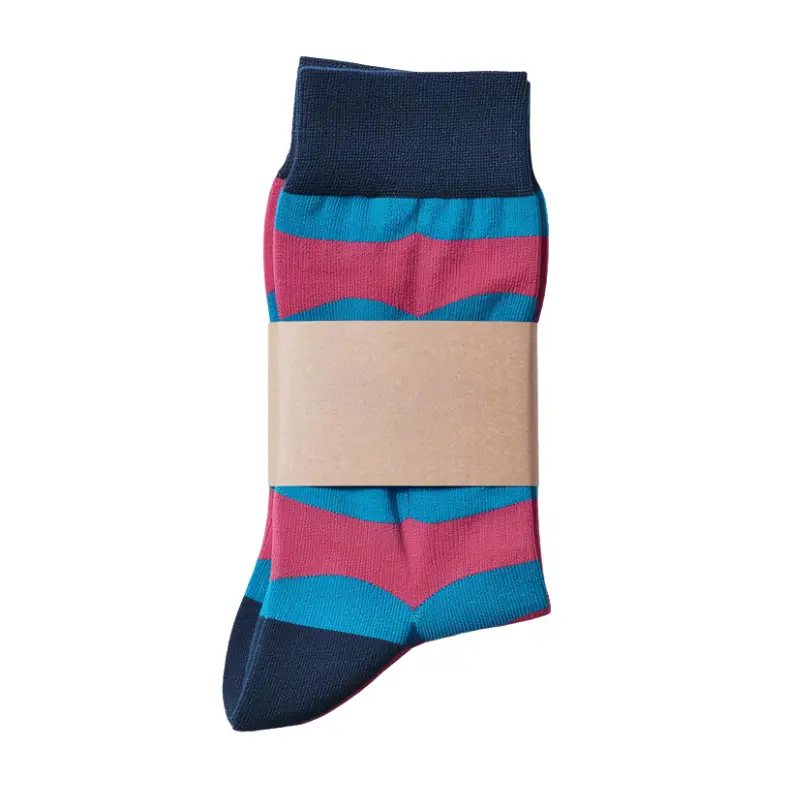
Banda estomacal
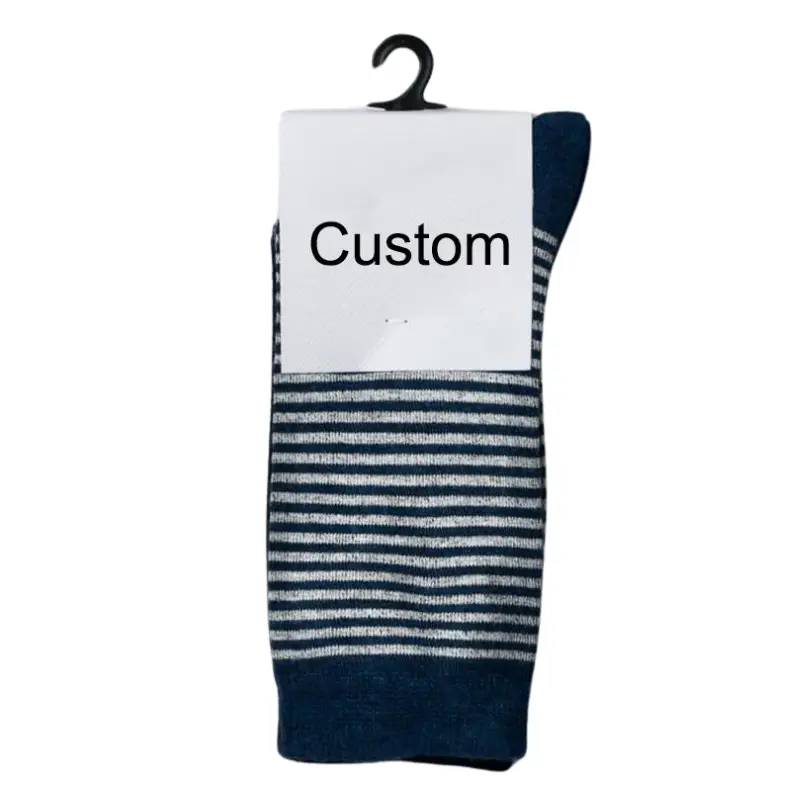
Tarjeta de cabeza
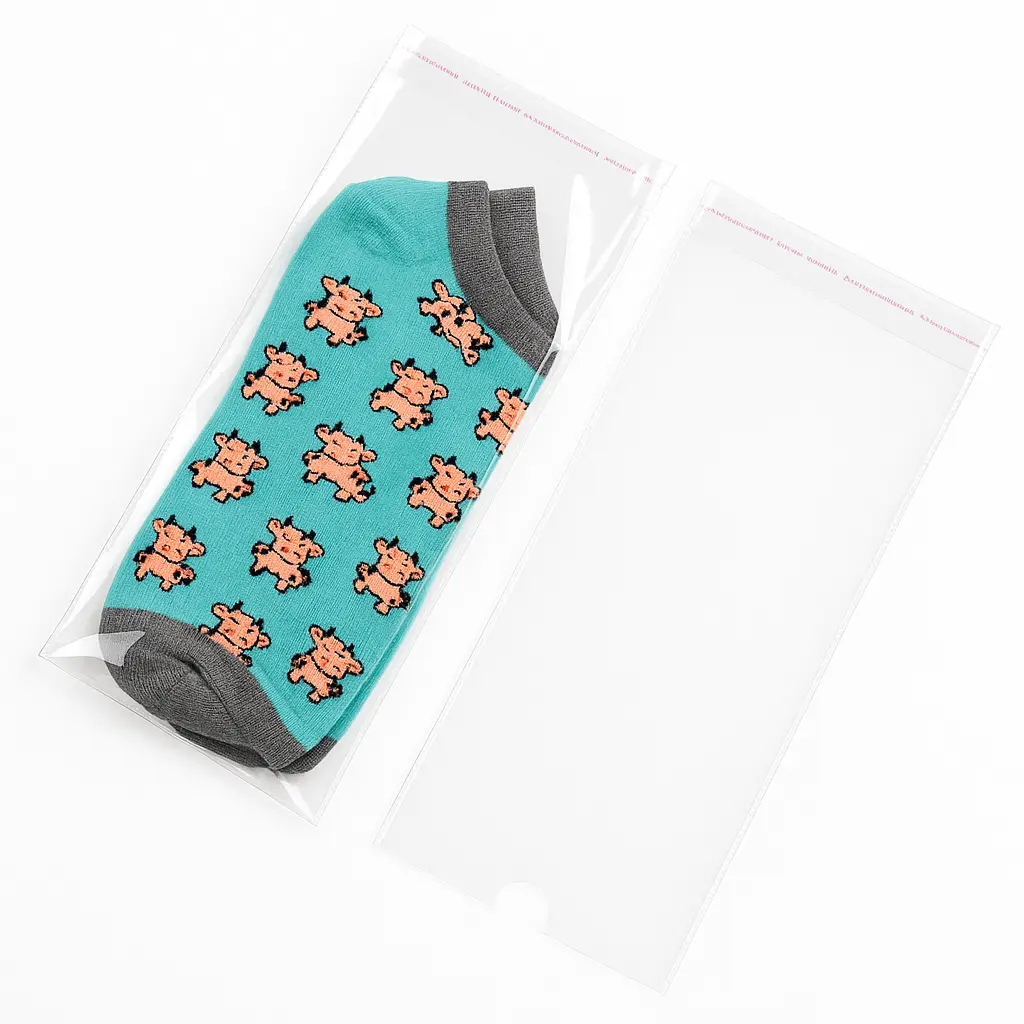
Bolsa de polipropileno
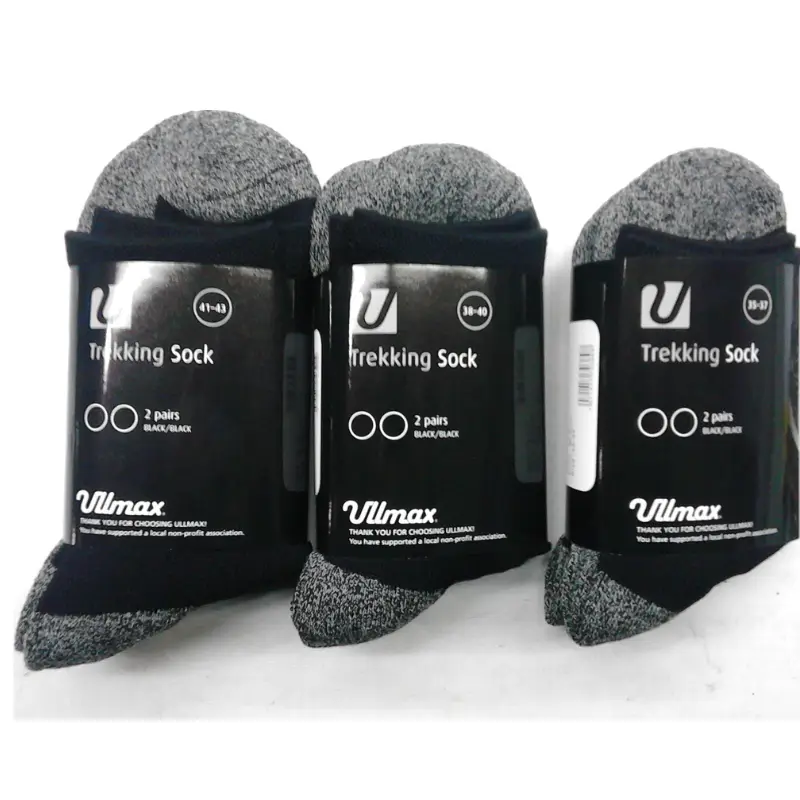
Multi-Pack
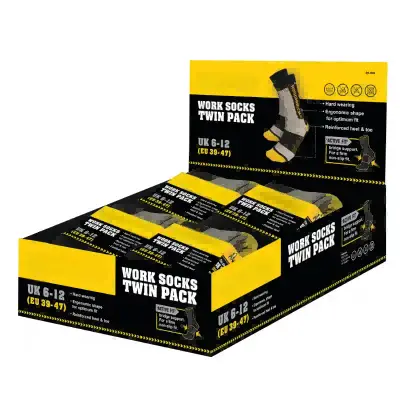
Caja de presentación
Soluciones de envío a granel
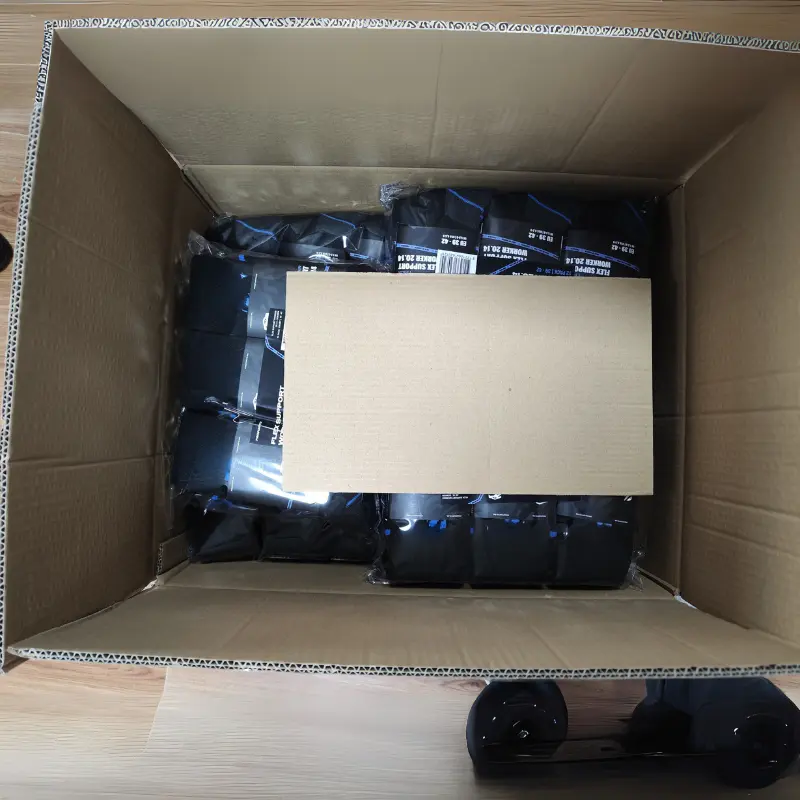
Caja de carton
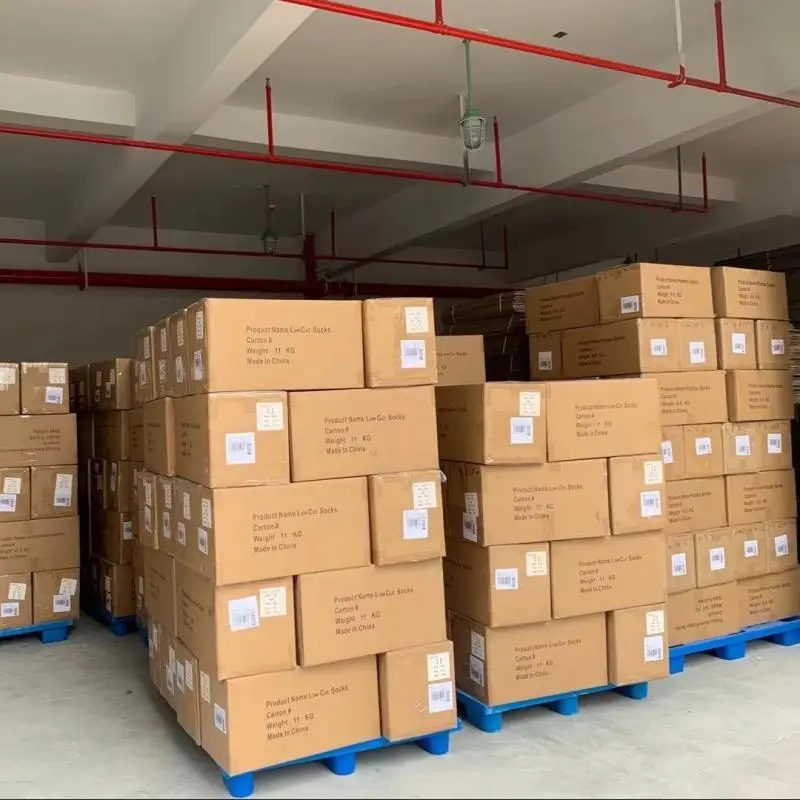
Caja Principal
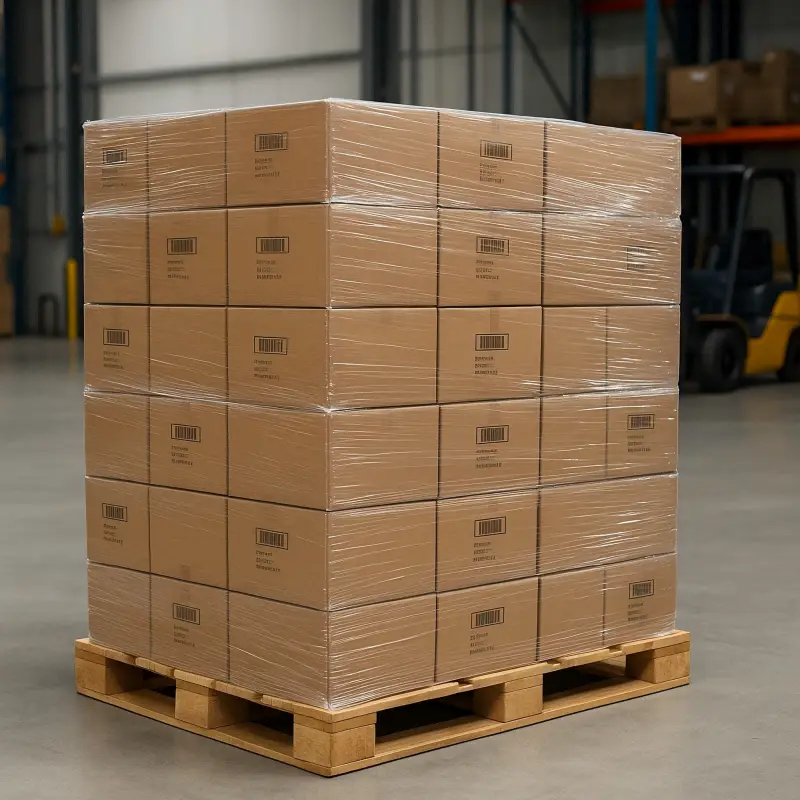
Embalaje de paletas
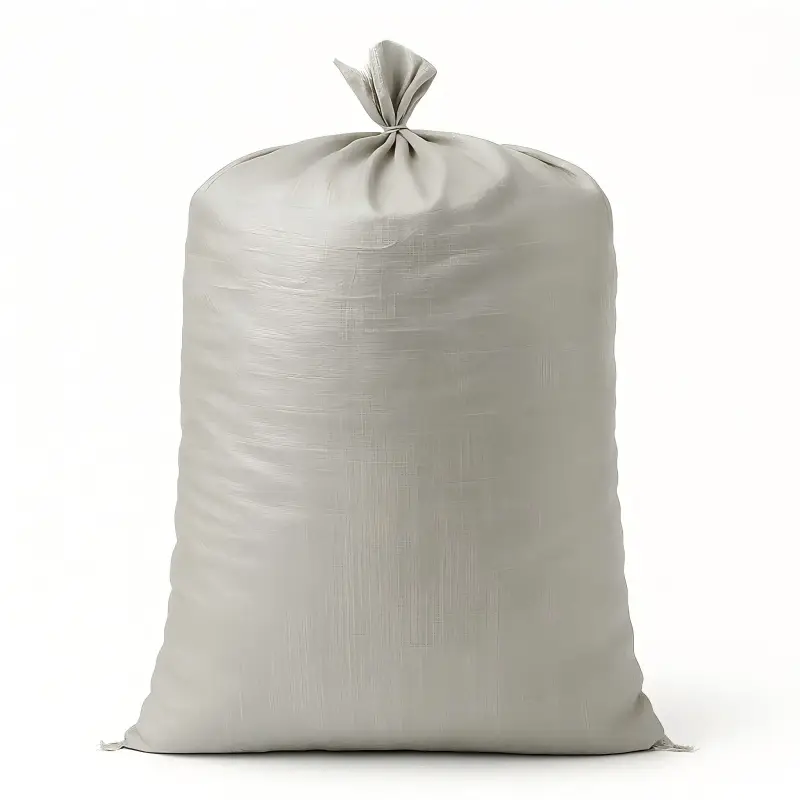
Embalaje en bolsas a granel
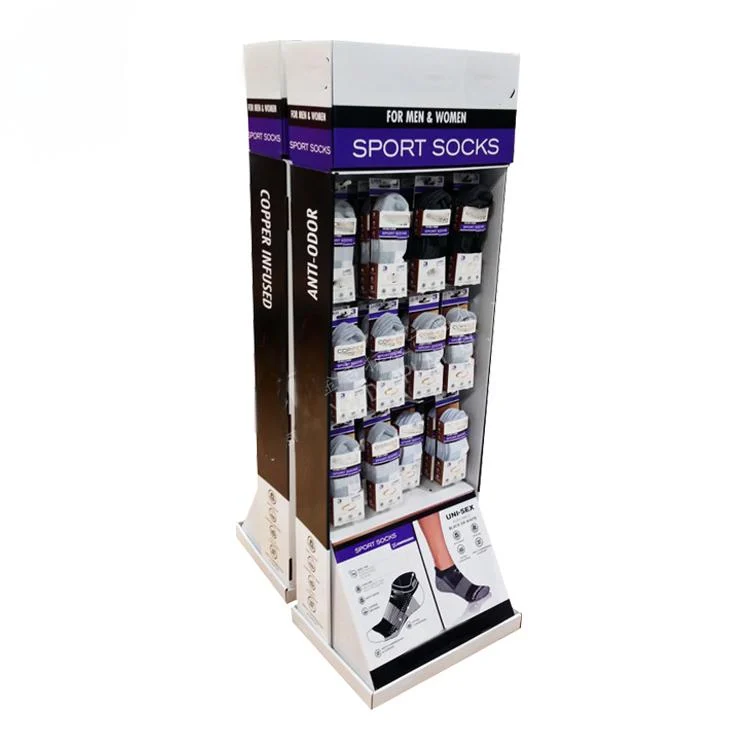
Estante de exhibición (PDQ)
Preguntas frecuentes
Obtenga respuestas a preguntas comunes sobre nuestros productos y servicios.
¿En qué tipos de calcetines de trabajo personalizados se especializan?
Our work-sock range is built for industrial and safety applications. Our expertise covers functional properties like flame resistance, anti-static, moisture-wicking, enhanced cushioning, and anti-slip grip.
Can you make heavy-duty work socks for steel-toe boots?
Yes. We can customize reinforced heel and toe zones, cushioned soles, boot-height constructions, and moisture-control yarns for steel-toe boots and work footwear.
Are work socks PPE? Do they make boots slip-resistant or puncture-proof?
No — and any supplier claiming that is over-reaching. Slip, puncture, impact and electrical protection sit in the certified footwear (ASTM F2413, EN ISO 20345 S3–S5). Our socks are the in-shoe layer: they reduce slippage, shear and hot spots, and keep a certified boot comfortable through a full shift.
Are your ESD socks certified?
ESD grounding is a system — person, sock, shoe, flooring and ground path working together. Our socks use conductive yarn at toe and heel and are built for compatibility with ESD footwear and flooring under ANSI/ESD programs, and we can provide sock and material documentation to support your own system testing. A sock on its own does not make a workplace ESD-compliant.
What materials are best for industrial work socks?
Common options include cotton-nylon-spandex blends for comfort and durability, polyester blends for moisture control, wool blends for cold-weather work, and conductive yarn options for ESD-related applications.
Can you make thermal work socks for cold-weather jobs?
Yes. We can develop wool-blend, acrylic-blend, or heavyweight terry work socks for outdoor labor, cold-storage, winter construction, utility maintenance, and fieldwork.
What is your MOQ for custom work socks?
Standard production MOQ is 1,000 pairs per design, and can be split into 500 pairs per color or per size. Specialized functions such as compression, anti-static yarns, thermal wool blends, or anti-slip grips may require different minimums.
Can you make anti-static (ESD) or flame-retardant work socks?
Yes — we can knit conductive (anti-static) yarn for path-to-ground performance with ESD footwear, and flame-retardant yarn for high-heat environments. If you require a specific industry compliance standard, let us know so we can advise.
Ready to Start Your Work Sock Project?
En Hangzhou Zhongzhi, combinamos calidad profesional con un enfoque personalizado. ¡Creemos algo grande juntos!
Consulta y consulta
Comparta los detalles de su proyecto y nuestros expertos le responderán en breve. 24 horas con precio y soluciones.
Desarrollo de muestra
Elaboramos muestras según sus especificaciones y enviamos fotos de aprobación dentro de 3 a 7 días.
Muestra y confirmación del pedido
Confirmación: Revise sus muestras y solicite mejoras. Tras la aprobación, finalizaremos los detalles de su pedido con un depósito para iniciar la producción.
Producción a granel
El tiempo de producción varía según la cantidad; el tiempo de producción regular es de 3 a 4 semanas.
Inspección de calidad y envío
We will ship the bulk order after QC inspection. Choose between express air shipping (5-7 days) or sea freight (3-5 weeks) for most areas. Transit times are estimates and may extend for remote destinations, customs inspection, or peak-season congestion.
Tu información está segura. Te responderemos en 24 horas con una propuesta personalizada.
Perspectivas que le ayudan a obtener productos de forma más inteligente
Explore expert tips, industry trends, and practical guides on custom work sock sourcing, materials, and certifications. Whether you’re launching a new line or optimizing supply chains, our articles support informed decisions and better results.
Diferencia entre lana merino y lana
Explore las diferencias clave en rendimiento, comodidad y aplicaciones entre la lana merino y la lana tradicional en calcetines.
Una guía completa para calcetines de trabajo personalizados
Una guía práctica para diseñar calcetines de trabajo de lana duraderos y cómodos, diseñados para entornos industriales y exteriores exigentes.
Cómo conseguir propiedades antimicrobianas para los calcetines
Aprenda cómo se pueden fabricar calcetines antimicrobianos con diferentes hilos, acabados y tecnologías para mejorar la higiene y el control de olores.
Explorando las exposiciones de calcetines de China y consejos de navegación
Obtenga consejos prácticos para visitar las principales ferias de calcetines de China, incluidos consejos de preparación, comunicación y viaje.
Una guía para elegir el mejor packaging para tu marca
Consejos de embalaje eficaces para marcas de calcetines para mejorar el atractivo visual, la protección y la rentabilidad en los envíos globales.
Cómo funciona el estándar AQL para la inspección de calcetines
Comprenda cómo se aplican los estándares AQL (Nivel de calidad aceptable) en las inspecciones de calidad durante la fabricación de calcetines.