
Maternity Compression Socks: Product Line Development for Pregnancy & Postpartum Brands
We help maternity brands build compression sock lines around how women actually wear them during pregnancy and postpartum — with better decisions on compression, fit, comfort, materials, and SKU planning. As a compression sock manufacturer with in-house production and pressure-testing capabilities, we turn these market needs into products that are practical to develop, manufacture, and scale.
Why Maternity Compression Socks Need a Different Product Strategy
Pregnancy changes more than the reason someone buys compression socks — it changes how the product needs to fit, feel, and function over time. For brands, that means a maternity line cannot simply reuse the same product logic as a general compression sock collection.
Ce que les futures mamans désirent vraiment — et comment concevoir des produits qui répondent à leurs besoins.
Pregnancy changes how consumers judge compression socks. Fit can change as swelling develops, mobility can make donning harder, and comfort, appearance, and everyday usability become more important over time. The six areas below translate those maternity-specific needs into practical product decisions for brands — from compression positioning and sizing to materials, design, and assortment planning.
Niveaux de compression : un point sensible pour le consommateur → Solution de marque
“What does 15–20 mmHg actually mean, and how is it different from 20–30 mmHg?”
« Je n'ai aucune idée du niveau de compression à choisir. Ces chiffres ne signifient rien pour moi. »
— Utilisatrice de Reddit, future maman
Compression numbers alone are difficult for first-time buyers to interpret. For a maternity line, brands need to make the product hierarchy easier to understand without turning packaging into medical advice.
- → Use clear product tiers alongside the mmHg specification.
- → Keep lower-compression everyday products separate from higher-compression products that may require more careful positioning or professional guidance.n
- → Make the compression level visible and consistent across packaging, product pages, and size guides.s
- → Confirm labeling and intended-use claims against the regulations of your target market.
A clearer compression hierarchy reduces confusion at the point of purchase and makes it easier for buyers to understand how each SKU fits within the line.
Problème de taille et d'ajustement pour le consommateur → Solution de marque
« Trop grand, et ça ne sert à rien. Trop petit, et ça me coupe les jambes. »
« Il m'a fallu trois essais pour trouver la bonne taille. Quel gâchis de temps et d'argent ! Et mes pieds continuent de gonfler à mesure que ma grossesse avance… que suis-je censée faire ? »
— Future maman, communauté de grossesse en ligne
Pregnancy-related changes in ankle and calf circumference make fit more variable than in a standard compression sock line. A maternity range therefore needs a measurement-based sizing system rather than relying on shoe size alone.
- → Build sizing around ankle circumference, calf circumference, and leg length rather than shoe size alone.
- → Add dedicated wide-calf or extended-size patterns where the target market requires them.
- → Include a clear measurement guide on the product page and packaging.
- → Verify fit and compression across the full size set before bulk production.
A measurement-based sizing system gives the brand a more reliable foundation for extended sizes and helps reduce fit-related uncertainty for customers.
Conception simple marche/arrêt : un point faible pour le consommateur → Solution de marque
« Au troisième trimestre, enfiler des chaussettes de contention est une véritable épreuve olympique. »
« Mon mari doit m'aider à les mettre tous les matins. C'est gênant. Existe-t-il un modèle qui me permette de le faire moi-même ? »
— Une maman au troisième trimestre, membre d'une communauté de femmes enceintes en ligne
As pregnancy progresses, reduced mobility can make high-compression socks harder to put on and remove. Donning therefore becomes part of the product experience, not just an after-sales instruction.
- → Evaluate cuff construction, stretch recovery, and overall garment structure for easier handling.
- → Consider open-toe options where they fit the intended product positioning.
- → Provide clear donning instructions through printed inserts or QR-linked videos.
- → Test ease of donning alongside compression performance during product development.
A product that is easier to use consistently removes an important friction point from the maternity wearing experience.
Respirabilité et saisonnalité : un problème pour les consommateurs → Solution de marque
« C’est en été que le gonflement est le plus important, mais porter des chaussettes de compression donne l’impression d’être dans un sauna. »
« Je ne peux tout simplement pas porter de chaussettes de compression en été. Il fait beaucoup trop chaud. Elles sont bien en hiver, mais j'abandonne dès qu'il fait chaud. »
— Future maman, communauté de grossesse en ligne
Warm weather can make compression socks feel less comfortable for daily wear, especially when the product uses a heavier construction. Material and construction choices therefore need to reflect the climate and season in which the line will be sold.
- → Develop lighter constructions for warm-weather collections.
- → Use moisture-management yarns or blends where they support the intended hand feel and price point.
- → Consider a warmer cotton-rich option for cooler climates or winter collections.
- → Choose seasonal SKUs based on the brand's actual market rather than forcing one material specification across every region.
A climate-aware material strategy gives brands more flexibility to build collections for different markets and wearing seasons.
Apparence et style : un point sensible pour le consommateur → Solution de marque
Maternity consumers may want the functional benefits of compression without a product that feels overtly clinical. For lifestyle-focused brands, appearance therefore becomes part of the wearing experience — not just decoration added after the product is developed.
Color, pattern, and overall visual direction should support the way the maternity line is positioned. A healthcare-led product may need a quieter, more functional appearance, while a DTC or lifestyle brand may benefit from a softer, more everyday look. The right choice depends on the target customer and sales channel.
- → Decide first whether the line should feel clinical, lifestyle-led, or somewhere between the two.
- → Construire un controlled color palette that fits your brand instead of adding too many disconnected colors and designs.
- → Use stripes, dots, geometric patterns, or other design elements selectively according to the target customer and retail channel.
- → Coordinate color and design decisions with the compression construction so that appearance does not compromise fit or performance.
A defined visual direction helps the maternity line feel like a natural part of your brand rather than a generic compression product with a different label. That makes design a positioning decision, not simply a customization option.
Assortment & Bundling Strategy → Brand Solution
Compression socks are usually worn repeatedly rather than as a one-off product. For maternity brands, that creates room to plan the assortment around rotation, gifting, and different stages of the pregnancy-to-postpartum journey instead of relying only on single-pair SKUs.
Bundling should be treated as part of product-line architecture, not just a pricing promotion. The right bundle can give customers more wearing options, create clearer gift formats, and connect pregnancy and postpartum products within one assortment.
- → Test 2-pack, 3-pack, or mixed-color rotation sets based on your target price point and how frequently customers are expected to wear the product.
- → Considérons un maternity gift set if gifting is important to your retail channel, such as baby showers, maternity boxes, or wellness gift programs.
- → Construire un pregnancy-to-postpartum bundle when the brand wants to cover a longer customer journey rather than ending the relationship at delivery.
- → Finaliser le SKU structure first, then design packaging around the actual bundle format instead of letting packaging determine the assortment.
A well-planned bundle gives the maternity line more flexibility in price points, gifting formats, and wearing occasions. More importantly, it turns multiple SKUs into one coherent product journey instead of a collection of unrelated pairs.
We can help turn these decisions into a practical maternity product brief based on your target customer, sales channel, and price positioning.
From Consumer Needs to a Maternity Product Brief
The decisions above only become useful when they are brought together into one clear product brief. Before sampling starts, define who the product is for, when it will be worn, how it should fit, and where it sits within the overall maternity line.
Once the product brief is clear, the next step is turning those decisions into specifications, samples, and production. Keep the product strategy here; use the main compression sock page for full manufacturing, customization, MOQ, and production details.
Our maternity recommendations come from hands-on compression sock development and production experience — including a 100,000+ pair maternity program. We combine that project experience with in-house pressure verification and fit development to help brands turn a product brief into a production-ready specification.
100,000+ Pair Maternity Project
We have supported a maternity compression sock program at more than 100,000 pairs, giving our team practical experience with the fit, consistency, and repeat-production requirements of a scaled maternity line.
In-House Pressure Verification
Compression performance can be checked with our Swisslastic MST MK V testing equipment, helping verify that the approved pressure specification carries through from development into production.
Fit Development Beyond Standard Sizes
We can develop dedicated wide-calf and extended-size constructions instead of simply enlarging a standard sock — an important capability when a maternity line needs broader calf and fit coverage.
These capabilities support the maternity-specific product decisions covered on this page. For full manufacturing capabilities, certifications, customization options, MOQ, and production details, see our main compression sock manufacturing page.
View our compression socks manufacturer page →Questions fréquemment posées
How should a maternity brand plan compression levels across the product line?
Compression levels should be planned around the intended use, target customer, sales channel, and labeling requirements of your market. If the line includes multiple compression levels, each SKU should have a clear role rather than simply adding more mmHg options. We can manufacture and verify different compression specifications, while the final positioning and medical claims should follow the requirements of your target market.
How should plus-size and wide-calf options be developed for a maternity line?
Wide-calf and extended-size products should use dedicated sizing and construction rather than simply enlarging a standard sock. We can adjust calf circumference, garment dimensions, and knitting structure based on the target size range, then verify fit and compression performance before bulk production.
How should we choose materials for maternity compression socks?
Material choice should follow the target climate, wearing season, comfort expectations, price position, and sales channel. A warm-weather line may prioritize lighter and more moisture-managing constructions, while cooler-market products may use softer or more substantial blends. We help brands compare yarn and construction options after the product positioning is defined.
How many maternity compression sock SKUs should a new line start with?
Start with the smallest assortment that covers clearly different customer needs. A core everyday style, an extended-size option, a seasonal variation, or a postpartum extension should only be added when each SKU has a distinct role. Defining that role before sampling helps avoid an assortment built from minor specification changes.
Should pregnancy and postpartum products be planned as one line?
They can be, but they do not have to be identical products. The useful question is whether the same customer journey continues after delivery. If postpartum is part of the brand strategy, define its SKU role separately and decide which fit, compression, material, or packaging decisions should remain consistent with the pregnancy range.
Should a maternity compression sock line use one design or multiple product tiers?
That depends on how different the target customers and use cases are. A single core style may be enough for a focused launch, while a broader line may separate everyday wear, extended sizing, seasonal options, or postpartum use. The key is to make sure each tier solves a clearly different need rather than creating several SKUs with only minor specification changes.
Découvrez d'autres solutions industrielles pour les chaussettes de compression
Au-delà du secteur de la maternité, notre expertise en fabrication couvre de nombreux segments de marché à forte croissance. Découvrez comment nous pouvons aider votre marque à se développer sur de nouveaux marchés.

Soins de santé et infirmières
Aux États-Unis, plus de 4 millions d'infirmières ont besoin de chaussettes de contention résistantes à des gardes de 12 heures. Ce segment de clientèle, caractérisé par une forte fidélité, des achats répétés et un bouche-à-oreille efficace, représente l'un des créneaux les plus attractifs pour les marques.
Nurse Compression Sock Line Guide
Sports et récupération
L'un des segments de la compression connaissant la plus forte croissance. Positionnez votre marque auprès des athlètes, des coureurs et des passionnés de fitness axés sur la performance et la récupération.
Sports Compression Sock Line Guide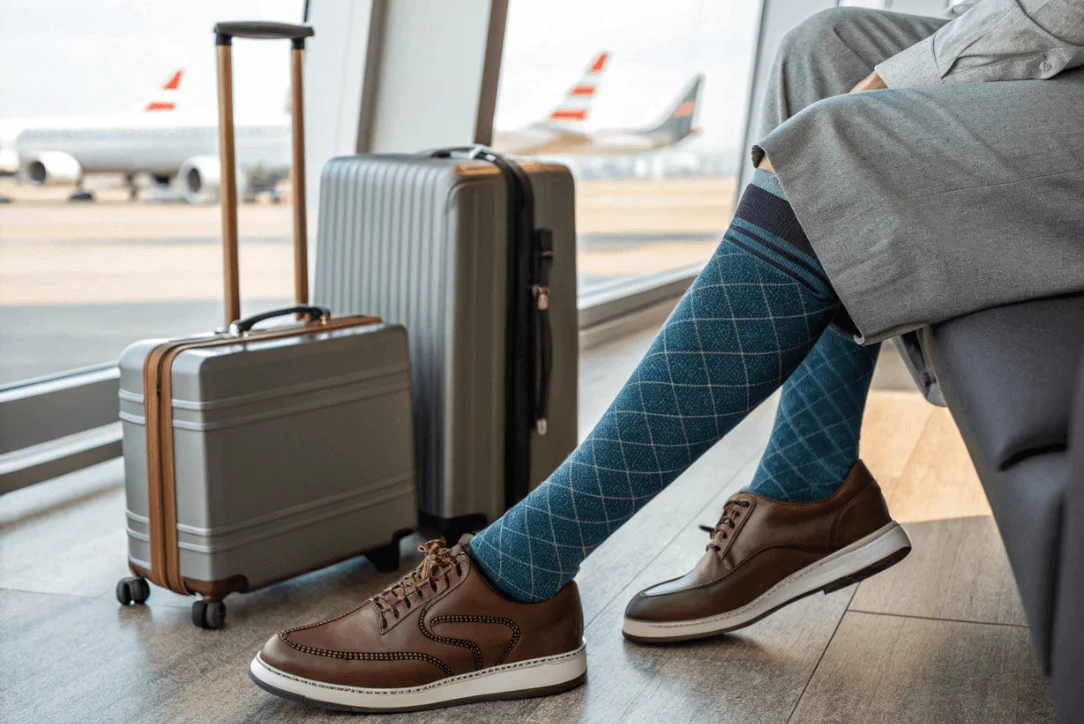
Voyages et vols
Une catégorie en pleine expansion, alimentée par la sensibilisation à la TVP chez les voyageurs fréquents et les personnes effectuant des longs courriers. Des modèles légers et compacts, offrant un fort potentiel pour les cadeaux et la vente au détail.
Travel Compression Sock Line GuidePrête à démarrer votre projet de chaussettes de compression de maternité ?
Parlez-nous de votre entreprise et de vos besoins. Notre équipe vous répondra sous 24 heures avec des recommandations de produits personnalisées et des prix compétitifs.
Enquête et consultation
Partagez les détails de votre projet et nos experts vous répondront dans les plus brefs délais. de 24 heures avec prix et solutions.
Développement d'échantillons
Nous fabriquons des échantillons selon vos spécifications et envoyons des photos d'approbation dans un délai de 3 à 7 jours.
Échantillon et confirmation de commande
Confirmation : examinez vos échantillons et demandez des précisions. Après approbation, nous finalisons votre commande avec un acompte pour lancer la production.
Production en vrac
Le temps de production varie en fonction de la quantité ; le temps de production normal est de 3 à 4 semaines.
Contrôle qualité et expédition
Nous expédierons les commandes groupées après contrôle qualité. Choisissez entre le transport aérien express (5 à 7 jours) et le transport maritime (3 à 5 semaines) pour la plupart des régions.
🔒Vos informations sont sécurisées. Nous vous répondrons sous 24 heures avec une proposition personnalisée.