
Maternity Compression Socks: Product Line Development for Pregnancy & Postpartum Brands
We help maternity brands build compression sock lines around how women actually wear them during pregnancy and postpartum — with better decisions on compression, fit, comfort, materials, and SKU planning. As a compression sock manufacturer with in-house production and pressure-testing capabilities, we turn these market needs into products that are practical to develop, manufacture, and scale.
Why Maternity Compression Socks Need a Different Product Strategy
Pregnancy changes more than the reason someone buys compression socks — it changes how the product needs to fit, feel, and function over time. For brands, that means a maternity line cannot simply reuse the same product logic as a general compression sock collection.
Cosa vogliono veramente le future mamme e come creare prodotti che le soddisfino
Pregnancy changes how consumers judge compression socks. Fit can change as swelling develops, mobility can make donning harder, and comfort, appearance, and everyday usability become more important over time. The six areas below translate those maternity-specific needs into practical product decisions for brands — from compression positioning and sizing to materials, design, and assortment planning.
Livelli di compressione Punto dolente del consumatore → Soluzione del marchio
“What does 15–20 mmHg actually mean, and how is it different from 20–30 mmHg?”
"Non ho idea di quale livello di compressione scegliere. I numeri non mi dicono nulla."
— Utente Reddit, futura mamma
Compression numbers alone are difficult for first-time buyers to interpret. For a maternity line, brands need to make the product hierarchy easier to understand without turning packaging into medical advice.
- → Use clear product tiers alongside the mmHg specification.
- → Keep lower-compression everyday products separate from higher-compression products that may require more careful positioning or professional guidance.n
- → Make the compression level visible and consistent across packaging, product pages, and size guides.s
- → Confirm labeling and intended-use claims against the regulations of your target market.
A clearer compression hierarchy reduces confusion at the point of purchase and makes it easier for buyers to understand how each SKU fits within the line.
Vestibilità e taglie: punto dolente del consumatore → Soluzione del marchio
"Se è troppo grande non fa niente. Se è troppo piccolo mi taglia le gambe."
"Ci ho messo tre tentativi per trovare la taglia giusta. Che spreco di tempo e denaro. E poi i miei piedi continuano a gonfiarsi man mano che la gravidanza va avanti: cosa dovrei fare?"
— Futura mamma, comunità online sulla gravidanza
Pregnancy-related changes in ankle and calf circumference make fit more variable than in a standard compression sock line. A maternity range therefore needs a measurement-based sizing system rather than relying on shoe size alone.
- → Build sizing around ankle circumference, calf circumference, and leg length rather than shoe size alone.
- → Add dedicated wide-calf or extended-size patterns where the target market requires them.
- → Include a clear measurement guide on the product page and packaging.
- → Verify fit and compression across the full size set before bulk production.
A measurement-based sizing system gives the brand a more reliable foundation for extended sizes and helps reduce fit-related uncertainty for customers.
Design facile da indossare/smontare Punto dolente del consumatore → Soluzione del marchio
"Entro il terzo trimestre, indossare le calze a compressione è come partecipare a un'olimpiade."
"Mio marito deve aiutarmi a indossarli ogni mattina. È imbarazzante. Esiste un modo per farlo da sola?"
— Madre al terzo trimestre, comunità online sulla gravidanza
As pregnancy progresses, reduced mobility can make high-compression socks harder to put on and remove. Donning therefore becomes part of the product experience, not just an after-sales instruction.
- → Evaluate cuff construction, stretch recovery, and overall garment structure for easier handling.
- → Consider open-toe options where they fit the intended product positioning.
- → Provide clear donning instructions through printed inserts or QR-linked videos.
- → Test ease of donning alongside compression performance during product development.
A product that is easier to use consistently removes an important friction point from the maternity wearing experience.
Traspirabilità e stagioni: punto dolente per il consumatore → Soluzione del marchio
"L'estate è il periodo in cui il gonfiore è più intenso, ma indossare calze a compressione è come fare una sauna."
"Non riesco proprio a indossare le calze a compressione in estate. Sono troppo calde. D'inverno vanno bene, ma quando fa caldo le smetto."
— Futura mamma, comunità online sulla gravidanza
Warm weather can make compression socks feel less comfortable for daily wear, especially when the product uses a heavier construction. Material and construction choices therefore need to reflect the climate and season in which the line will be sold.
- → Develop lighter constructions for warm-weather collections.
- → Use moisture-management yarns or blends where they support the intended hand feel and price point.
- → Consider a warmer cotton-rich option for cooler climates or winter collections.
- → Choose seasonal SKUs based on the brand's actual market rather than forcing one material specification across every region.
A climate-aware material strategy gives brands more flexibility to build collections for different markets and wearing seasons.
Aspetto e stile: punto dolente del consumatore → Soluzione del marchio
Maternity consumers may want the functional benefits of compression without a product that feels overtly clinical. For lifestyle-focused brands, appearance therefore becomes part of the wearing experience — not just decoration added after the product is developed.
Color, pattern, and overall visual direction should support the way the maternity line is positioned. A healthcare-led product may need a quieter, more functional appearance, while a DTC or lifestyle brand may benefit from a softer, more everyday look. The right choice depends on the target customer and sales channel.
- → Decide first whether the line should feel clinical, lifestyle-led, or somewhere between the two.
- → Costruire un controlled color palette that fits your brand instead of adding too many disconnected colors and designs.
- → Use stripes, dots, geometric patterns, or other design elements selectively according to the target customer and retail channel.
- → Coordinate color and design decisions with the compression construction so that appearance does not compromise fit or performance.
A defined visual direction helps the maternity line feel like a natural part of your brand rather than a generic compression product with a different label. That makes design a positioning decision, not simply a customization option.
Assortment & Bundling Strategy → Brand Solution
Compression socks are usually worn repeatedly rather than as a one-off product. For maternity brands, that creates room to plan the assortment around rotation, gifting, and different stages of the pregnancy-to-postpartum journey instead of relying only on single-pair SKUs.
Bundling should be treated as part of product-line architecture, not just a pricing promotion. The right bundle can give customers more wearing options, create clearer gift formats, and connect pregnancy and postpartum products within one assortment.
- → Test 2-pack, 3-pack, or mixed-color rotation sets based on your target price point and how frequently customers are expected to wear the product.
- → Considerare a maternity gift set if gifting is important to your retail channel, such as baby showers, maternity boxes, or wellness gift programs.
- → Costruire un pregnancy-to-postpartum bundle when the brand wants to cover a longer customer journey rather than ending the relationship at delivery.
- → finalizzare il SKU structure first, then design packaging around the actual bundle format instead of letting packaging determine the assortment.
A well-planned bundle gives the maternity line more flexibility in price points, gifting formats, and wearing occasions. More importantly, it turns multiple SKUs into one coherent product journey instead of a collection of unrelated pairs.
We can help turn these decisions into a practical maternity product brief based on your target customer, sales channel, and price positioning.
From Consumer Needs to a Maternity Product Brief
The decisions above only become useful when they are brought together into one clear product brief. Before sampling starts, define who the product is for, when it will be worn, how it should fit, and where it sits within the overall maternity line.
Once the product brief is clear, the next step is turning those decisions into specifications, samples, and production. Keep the product strategy here; use the main compression sock page for full manufacturing, customization, MOQ, and production details.
Our maternity recommendations come from hands-on compression sock development and production experience — including a 100,000+ pair maternity program. We combine that project experience with in-house pressure verification and fit development to help brands turn a product brief into a production-ready specification.
100,000+ Pair Maternity Project
We have supported a maternity compression sock program at more than 100,000 pairs, giving our team practical experience with the fit, consistency, and repeat-production requirements of a scaled maternity line.
In-House Pressure Verification
Compression performance can be checked with our Swisslastic MST MK V testing equipment, helping verify that the approved pressure specification carries through from development into production.
Fit Development Beyond Standard Sizes
We can develop dedicated wide-calf and extended-size constructions instead of simply enlarging a standard sock — an important capability when a maternity line needs broader calf and fit coverage.
These capabilities support the maternity-specific product decisions covered on this page. For full manufacturing capabilities, certifications, customization options, MOQ, and production details, see our main compression sock manufacturing page.
View our compression socks manufacturer page →Domande frequenti
How should a maternity brand plan compression levels across the product line?
Compression levels should be planned around the intended use, target customer, sales channel, and labeling requirements of your market. If the line includes multiple compression levels, each SKU should have a clear role rather than simply adding more mmHg options. We can manufacture and verify different compression specifications, while the final positioning and medical claims should follow the requirements of your target market.
How should plus-size and wide-calf options be developed for a maternity line?
Wide-calf and extended-size products should use dedicated sizing and construction rather than simply enlarging a standard sock. We can adjust calf circumference, garment dimensions, and knitting structure based on the target size range, then verify fit and compression performance before bulk production.
How should we choose materials for maternity compression socks?
Material choice should follow the target climate, wearing season, comfort expectations, price position, and sales channel. A warm-weather line may prioritize lighter and more moisture-managing constructions, while cooler-market products may use softer or more substantial blends. We help brands compare yarn and construction options after the product positioning is defined.
How many maternity compression sock SKUs should a new line start with?
Start with the smallest assortment that covers clearly different customer needs. A core everyday style, an extended-size option, a seasonal variation, or a postpartum extension should only be added when each SKU has a distinct role. Defining that role before sampling helps avoid an assortment built from minor specification changes.
Should pregnancy and postpartum products be planned as one line?
They can be, but they do not have to be identical products. The useful question is whether the same customer journey continues after delivery. If postpartum is part of the brand strategy, define its SKU role separately and decide which fit, compression, material, or packaging decisions should remain consistent with the pregnancy range.
Should a maternity compression sock line use one design or multiple product tiers?
That depends on how different the target customers and use cases are. A single core style may be enough for a focused launch, while a broader line may separate everyday wear, extended sizing, seasonal options, or postpartum use. The key is to make sure each tier solves a clearly different need rather than creating several SKUs with only minor specification changes.
Esplora altre soluzioni industriali per calze a compressione
Oltre al settore maternità, la nostra competenza produttiva abbraccia diversi segmenti di mercato in forte crescita. Scopri come possiamo aiutare il tuo brand a espandersi in nuove categorie.

Assistenza sanitaria e infermieri
Oltre 4 milioni di infermieri negli Stati Uniti hanno bisogno di calze a compressione graduata che resistano a turni di 12 ore. Un segmento ad alta fidelizzazione, con un elevato tasso di acquisto ripetuto e un forte passaparola: una delle nicchie più interessanti per chi si occupa di brand building.
Nurse Compression Sock Line Guide
Sport e recupero
Una delle categorie di compressione in più rapida crescita. Posiziona il tuo marchio presso atleti, runner e appassionati di fitness concentrati su prestazioni e recupero.
Sports Compression Sock Line Guide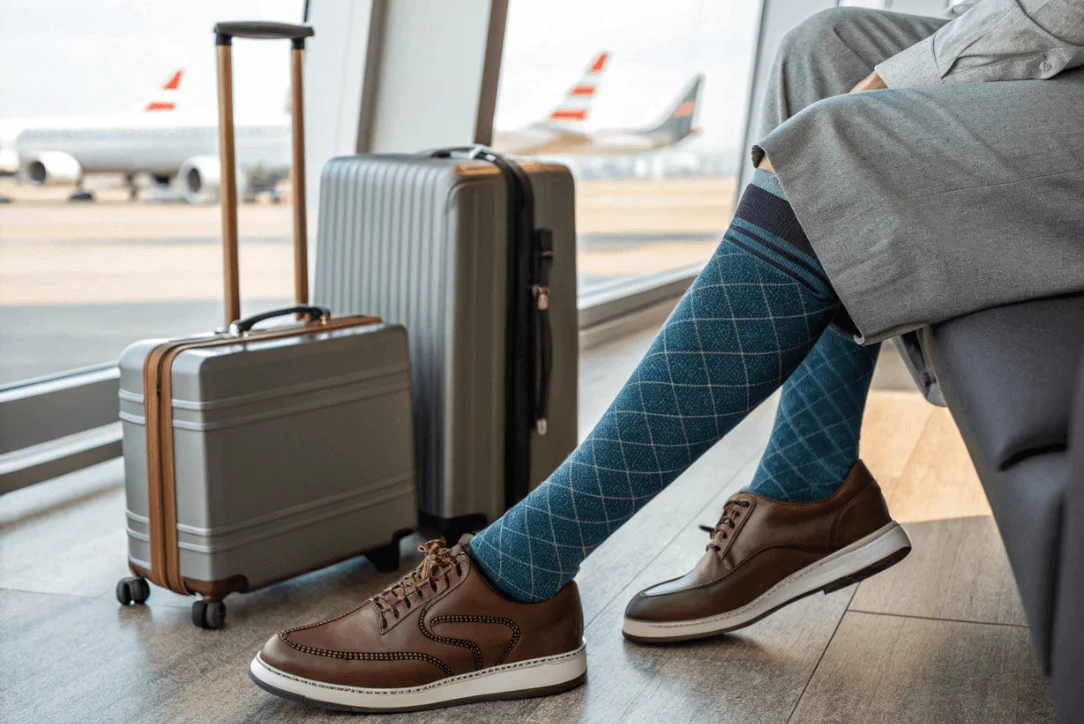
Viaggi e voli
Una categoria in crescita, alimentata dalla consapevolezza della TVP tra i frequent flyer e i viaggiatori a lungo raggio. Design leggeri e compatti, con un forte potenziale come regalo e come prodotto di vendita al dettaglio.
Travel Compression Sock Line GuidePronti a iniziare il vostro progetto di calze a compressione per la maternità?
Raccontaci la tua attività e le tue esigenze. Il nostro team ti risponderà entro 24 ore con consigli personalizzati sui prodotti e prezzi competitivi.
Richiesta e consultazione
Condividi i dettagli del tuo progetto e i nostri esperti ti risponderanno entro 24 ore con prezzo e soluzioni.
Sviluppo del campione
Realizziamo campioni in base alle tue specifiche e inviamo le foto approvate entro 3-7 giorni.
Conferma del campione e dell'ordine
Conferma: esamina i tuoi campioni e richiedi eventuali modifiche. Dopo l'approvazione, finalizzeremo i dettagli del tuo ordine con un acconto per iniziare la produzione.
Produzione di massa
I tempi di produzione variano in base alla quantità; i tempi di produzione standard sono di 3-4 settimane.
Controllo qualità e spedizione
Spediremo l'ordine all'ingrosso dopo il controllo qualità. Per la maggior parte delle aree, è possibile scegliere tra spedizione aerea espressa (5-7 giorni) o spedizione via mare (3-5 settimane).
🔒 Le tue informazioni sono al sicuro. Ti risponderemo entro 24 ore con una proposta personalizzata.