Compression socks help improve blood circulation, reduce leg fatigue and relieve mild swelling — but not all compression socks are the same. They differ across 7 distinct dimensions: compression level (mmHg), length, thickness, pattern technique, toe linking method, material, and intended user. As a compression sock manufacturer producing for brands worldwide, we’ll walk you through each one, with real order distribution data from our factory. New to the category? 壓力襪的工作原理 covers the mechanism, how they differ from regular socks 以及 how they differ from circulatory socks clear up the two most common mix-ups, and choosing compression socks in five steps is the short version of the decision.
Compression socks are classified by 7 main attributes: (1) compression level — measured in mmHg, ranging from 8–15 to 30–40; (2) length — ankle, mid-calf, knee-high or thigh-high; (3) thickness — flat-knit or terry; (4) pattern technique — jacquard, printing or tie-dyeing; (5) toe linking — hand-linked or rosso; (6) material — nylon, cotton, bamboo or polyester; and (7) target user — athletes, pregnant women, healthcare workers or travelers.
壓縮等級
Compression level — measured in mmHg — is the most common way to classify compression socks. The four standard tiers are:
8~15毫米汞柱 — light, for everyday comfort and air travel
15~20毫米汞柱 — moderate, for daily wear, sports and pregnancy
20~30毫米汞柱 — firm, the most common medical and athletic level
30~40毫米汞柱 — extra firm, used under medical direction for serious vascular conditions
Across the brands our factory produces for, the order distribution is: 8–15 mmHg ~12%, 15–20 mmHg ~40%, 20–30 mmHg ~43%, and 30–40 mmHg ~5%. The 20–30 mmHg range dominates because it sits at the intersection of medical efficacy and consumer comfort — the same range that consistently leads Amazon’s bestseller charts. Importantly, our MOQ and lead time are uniform across all compression levels, so brands can mix tiers in a single order without cost penalty.
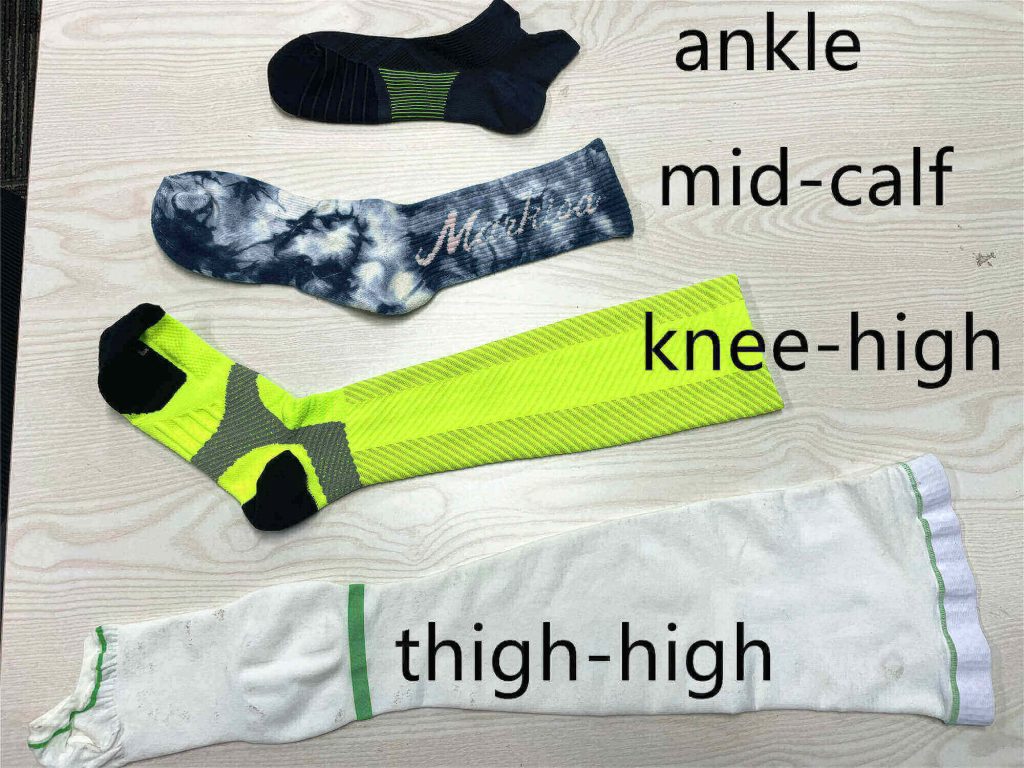
後兩種長度比較常見,因為靜脈主要集中在小腿部分,膝蓋以上長度的壓力襪可以 促進血液流動 in this part. Which length to order is a measuring question — the step-by-step measuring guide covers taking the ankle and calf.
因此,運動襪通常長度到膝蓋,不難發現 馬拉松運動員 始終穿著及膝壓力襪。
厚度
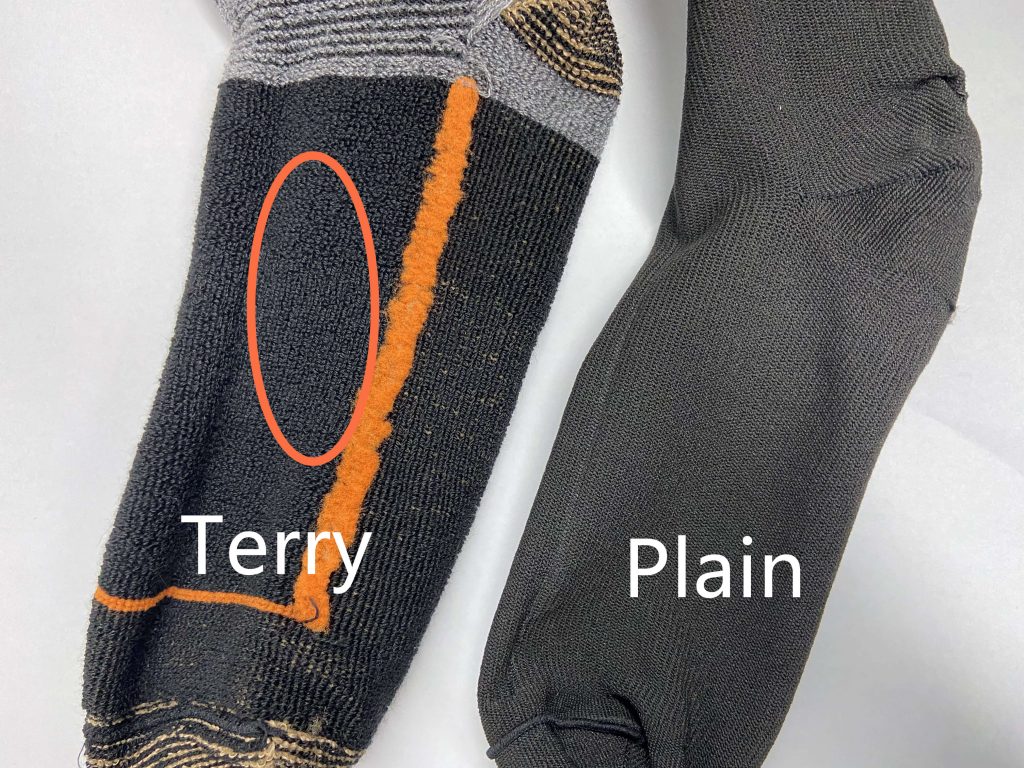
厚度的區分方法和一般襪子一致,主要分為 平板 以及 毛圈針織.
在壓力襪的鞋底添加毛圈可以 吸收汗水和衝擊力,如下圖所示。
圖案技術
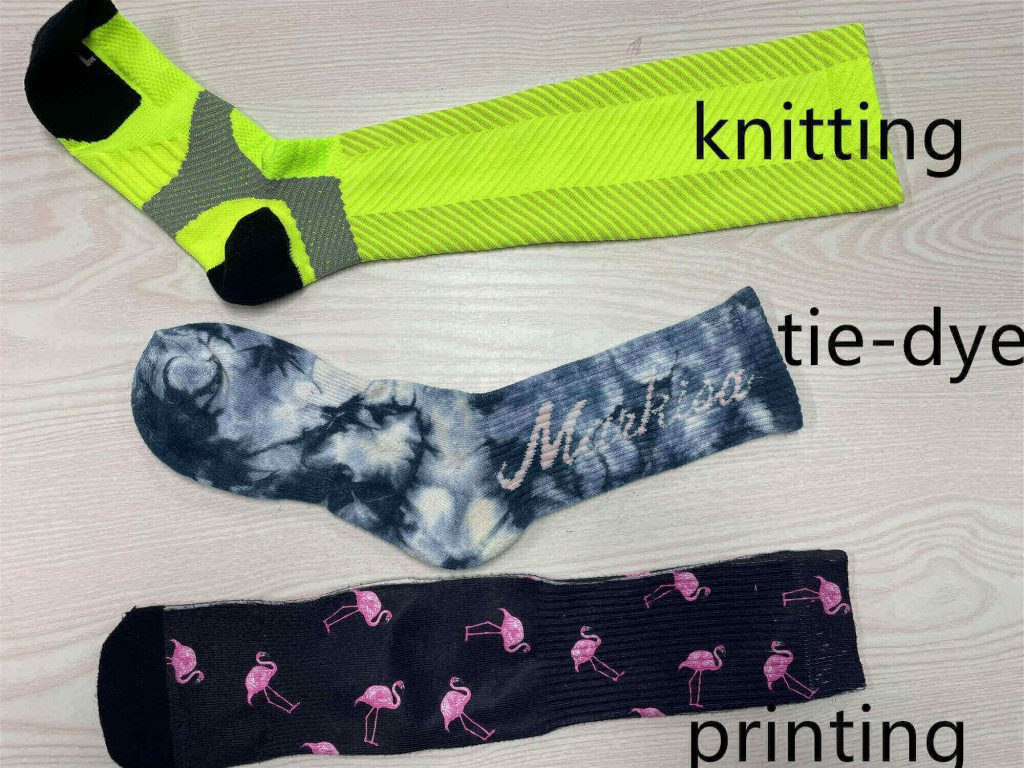
壓力襪的製版技術主要有三種: 提花、印花和紮染.
提花是 編織 圖案直接印在襪子上,印刷是為了 列印圖案 在襪子上高溫印花,紮染也分為許多不同的工藝,包括 吊染、紮染、印染 等等。之前我們專門寫過關於紮染工藝的文章, 讀到這裡. How a pattern actually gets worn is a different question — how to style compression socks 涵蓋了這一點。
Compression socks can be used by pregnant women, sedentary or standing people, sportspeople and so on. At the same time, socks should be designed according to different user groups. For example, the first two categories should consider the comfort of socks, and natural fibers such as cotton and bamboo fibers can be considered. Compression socks for sports people should consider more wear-resistant and more durable materials such as nylon. Two of these groups have their own guide: what mmHg to use during pregnancy 以及 why runners wear compression socks.
Beyond the 7 manufacturing attributes above, compression socks are also commonly categorized by the user they’re designed for. These are the categories most brands ask us to produce:
漸層壓力襪
Tightest at the ankle, gradually loosening up the leg. This is the default design for everyday wear, sports recovery and travel — pressure decreases moving upward to assist venous return toward the heart.
Anti-Embolism Stockings (TED Hose)
Designed for non-mobile, post-surgical or bedridden patients to help prevent deep vein thrombosis. Lower compression profile than graduated socks and not intended for walking.
孕婦壓力襪
Built for pregnancy-related leg swelling and varicose vein prevention. Typically 15–20 mmHg with skin-friendly fibers like bamboo or cotton blends. → See our maternity compression socks solution.
Nursing & Healthcare Compression Socks
For healthcare professionals working 12+ hour shifts. Usually 15–20 or 20–30 mmHg with reinforced cushioning at the heel and ball of foot. → See 護士壓力襪.
Athletic & Recovery Compression Socks
Knee-high construction with anti-pilling nylon for durability during running, cycling or post-workout recovery. Typically 20–30 mmHg. → See 運動壓力襪.
旅行和飛行壓力襪
For DVT risk reduction on long flights or sedentary travel. 15–20 mmHg is standard, usually in mid-calf or knee-high length. → See compression socks for travel and flight.
Medical / Therapeutic Compression Stockings
20–30 mmHg or 30–40 mmHg, used for chronic venous insufficiency, lymphedema or post-surgical recovery. Always fitted under medical supervision. Our factory produces these to US Class I FDA的 以及 的ISO 13485年標準, with pressure verified on Swisslastic MST MK V testing equipment. → See custom medical compression stockings.
For daily wellness or travel, 15–20 mmHg is ideal. For athletic recovery or moderate swelling, choose 20–30 mmHg. Higher levels, like 30–40 mmHg, are considered medical-grade and should only be used under a doctor’s direction for specific health conditions like DVT or lymphedema.
You should always consult a doctor if you plan to use a firm compression level of 20–30 mmHg or higher. These are often used to manage medical conditions, and a professional can ensure you select the safest and most effective pressure for your specific health needs.
5. 不同款式(例如及膝及及大腿)的壓縮性是否不同?
壓縮 水平 (e.g., 20–30 mmHg) is consistent, but the style determines the coverage area. Knee-highs focus support on the lower leg, while thigh-highs or pantyhose extend that support further up. Choose the style based on where you experience discomfort or swelling for targeted relief.
🔒Your information is secure. If you experience any issue submitting the form, please contact us at [email protected]. We usually respond within 24 hours with next steps for your project.