

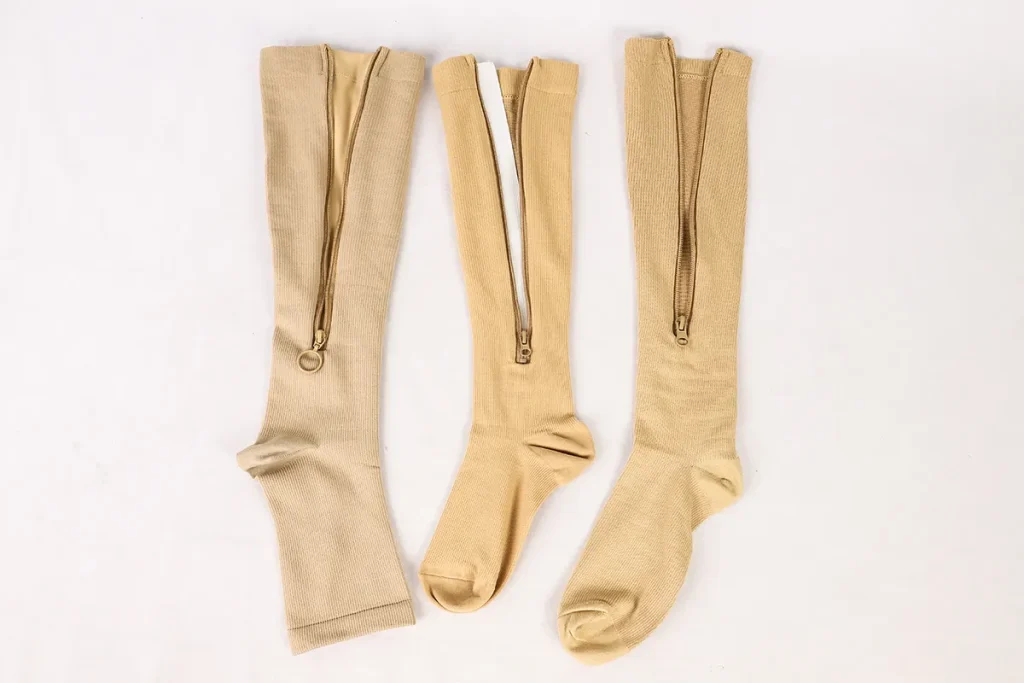
Sourcing zipper compression socks for an elderly care, post-surgical recovery, or arthritis-focused product line? This guide walks through the engineering trade-offs, sourcing checklist, and customization options behind zipper compression socks — based on our factory’s 3-generation product iteration. The goal is to help you make a better sourcing decision, whether you end up working with us or with another supplier.
Why Zipper Compression Socks Are a Distinct Category
Standard graduated compression socks (15-20, 20-30, 30-40 mmHg) work well for most users. But the very thing that makes them medically effective — high-tension elastic fabric — also makes them difficult to put on for users with:
- Limited hand strength or grip (arthritis, elderly users, post-surgical patients)
- Reduced lower-body mobility (hip replacement recovery, advanced pregnancy, obesity)
- Sensory or motor limitations that make donning standard compression socks frustrating or unsafe
For these end users, a zipper turns compression socks from a daily struggle into a 10-second routine. Brands serving these niches — medical supply distributors, elderly care brands, post-op recovery brands, arthritis-aid brands — increasingly add a zipper SKU alongside their traditional compression line.
But adding a zipper to a high-tension elastic garment is engineering-hard. Three things can go wrong, and we ran into all three.
What 3 Generations of Iteration Taught Us
Generation 1: The Naive Zipper
Our first version added a straightforward zipper from the top opening down to the ankle. Donning was solved.
What broke:
- Skin pinching. With high-tension fabric pressing inward, the zipper caught skin during donning, especially on swollen or damp legs.
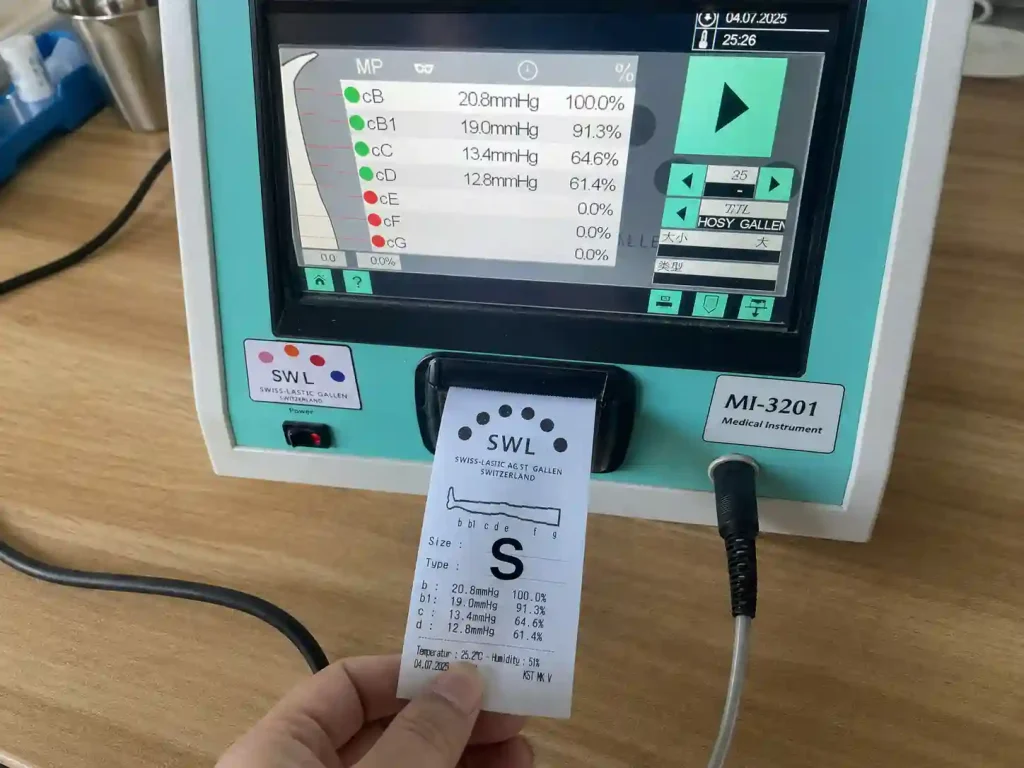
- Uneven compression. Fabric stretched or bunched along the zipper line, disrupting the graduated pressure curve. Pressure measurements at the ankle, calf, and shin showed measurable deviation from target mmHg in the zipper-adjacent zone.
- Zipper failure over time. Standard zippers corrode and seize with repeated use, leaving braces difficult to open or close mid-session.
Sourcing takeaway: Ask any supplier for pressure test report.
Generation 2: The Inner Protective Layer
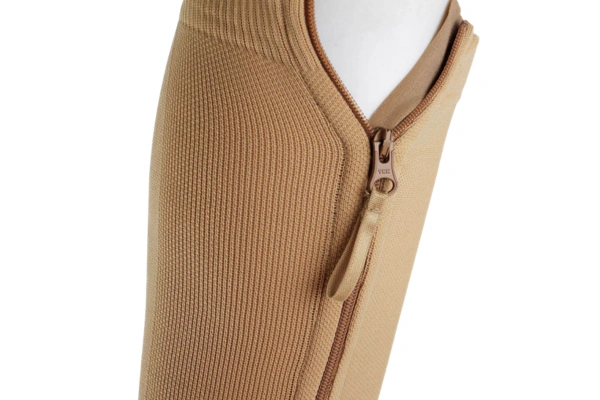
We added an inner fabric flap that sits between the zipper teeth and the wearer’s skin. Skin pinching dropped to near zero.
What still broke:
- Zipper friction on damp or swollen skin. Even with the inner layer, users with edema or perspiration reported the zipper required more grip strength than some target users had.
Generation 3: Adjustable Compression and Refined Mechanism
The current generation introduces three changes:
- Dual-level adjustable compression. Wearers can switch between two adjacent compression levels (e.g., 15-20 mmHg for desk work, 20-30 mmHg for recovery) by adjusting how the sock sits — useful for users whose needs vary across the day.
- Optional YKK zipper upgrade. For brands that need warranty-grade durability, YKK is available as a paid option. Cycle testing shows substantially longer lifespan than our standard zipper.
- Lighter, more breathable fabric blend. Reduces heat retention, which matters for all-day wear in warmer climates.
Sourcing takeaway: Ask whether the supplier offers upgrade tiers (entry vs. premium components like YKK). This lets you build a Good/Better/Best lineup from a single supplier rather than splitting your supply chain.
Sourcing Checklist: 5 Questions to Ask Any Zipper Compression Socks Supplier
Before you commit to a sample order, ask these five questions. The answers separate suppliers who have actually engineered the product from those who slapped a zipper on a stock sock.
- What is the pressure of zipper type compression socks? Will zipper affect the pressure?
- Is there an inner protective fabric layer along the zipper? Non-negotiable for any user with sensitive or fragile skin — which describes most of the target end-user segment.
- Can the pull-tab be operated one-handed by a user with arthritic grip? This is the difference between a product end users actually wear daily and one that sits in a drawer.
Production Specs at a Glance
| Spec | Detail |
| MOQ | 500 pairs per SKU (per color/size combination) |
| Lead time | 35–45 days from order confirmation |
| Sample lead time | 10–15 days |
| Compression levels | 15-20, 20-30, 30-40 mmHg, or dual-level adjustable |
| Available lengths | Knee-high, thigh-high, full-length |
| Pressure-testing equipment | Swisslastic MST MK V (Switzerland) |
| Certifications | US FDA Class I, ISO 13485 |
| Customization | Color, pattern, zipper grade (standard or YKK), pull-tab style, packaging, private labeling |
Customization Options for Your Brand
Beyond the standard product, here is what you can configure for a private-label or OEM line.
Compression configuration. Choose a single graduated compression level, or specify the dual-level adjustable design that lets end users switch between two adjacent levels. The dual-level option is increasingly popular for brands serving customers who use compression socks across both work and recovery contexts.
Zipper specifications. Standard zipper for entry-tier price points, or YKK upgrade for premium positioning. Zipper color can match or contrast the sock fabric — relevant for brand identity and shelf visibility.
Pull-tab design. Standard small tab, oversized tab for limited-dexterity users, or branded tab with your logo. An oversized pull-tab is a low-cost, high-visibility differentiator if you target elderly care channels.
Fabric and treatments. Anti-microbial treatment, moisture-wicking yarn, or anti-odor finishing. These add unit cost but support higher retail pricing for sport- or recovery-positioned lines.
Sizing system. Use our standard chart, or supply your target market’s regional sizing standard (US, EU, UK, JP) and we will match.
For full SKU details and product photos, see our Zipper Compression Socks product page.
Who’s Actually Buying These — Target End-User Segments
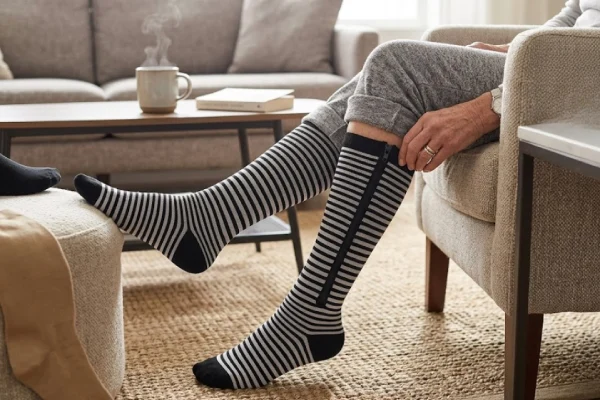
If you’re evaluating whether zipper compression socks fit your brand’s product portfolio, the strongest end-user segments we’ve seen across our clients are:
- Elderly care brands. Customers in care homes, assisted living, and home care often cannot don traditional compression socks without help. A zipper version solves an actual workflow problem for caregivers and users.
- Post-surgical recovery brands. Hip, knee, and abdominal post-op patients have temporary mobility limits that make standard compression socks impractical for the first 2-6 weeks of recovery.
- Arthritis and limited-dexterity brands. A specific, underserved segment. End users have the motivation to wear compression socks (circulation, swelling) but not the physical ability to put them on. This is the segment where zipper styles outperform traditional ones most clearly at the user level.
- Late-term pregnancy brands. Less common, but third-trimester customers find zipper styles easier as belly size limits forward bend.
The traditional compression sock buyer — athletes, frequent travelers, nurses on long shifts — typically does not need a zipper version. The zipper SKU works best as a complementary line targeting the segments above, not as a replacement for traditional styles.
FAQs from Brand Buyers
Does adding a zipper reduce the medical effectiveness of the compression?
With proper engineering — measured pressure deviation, an inner protective layer, reinforced fabric — no. Without proper engineering, yes. This is why the supplier’s testing protocol matters more than any marketing claim. Ask for the pressure data.
What is the typical retail price difference vs. standard compression socks?
Brands typically price zipper compression socks at 1.5–2× the equivalent traditional compression sock SKU at retail, reflecting both higher production cost and the convenience premium for target users.
Can we start with a small test order before committing to volume?
We support sample orders for design validation, then standard MOQ for the first production run per SKU. We don’t recommend skipping samples — every brand discovers something during sample review they want adjusted.
Is the zipper covered under the same warranty as the rest of the sock?
On standard zippers, the warranty matches the sock fabric. On YKK upgrades, we extend the zipper-specific warranty given the higher cycle rating.
Can you produce zipper compression socks for both medical and consumer retail channels?
Yes. The same factory line produces for both, but channel-specific labeling, packaging, and certification documentation differ. Tell us your target channel during the inquiry stage.