

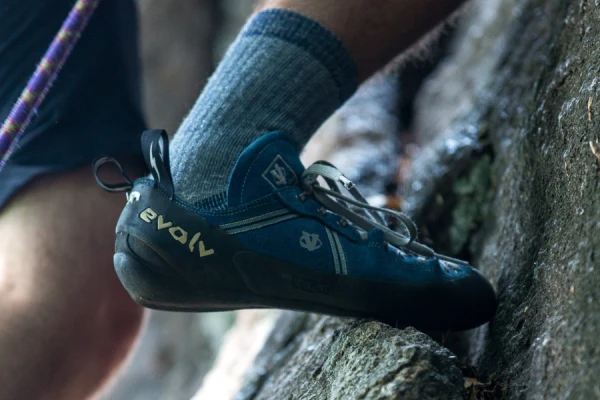
If you’ve spent any time at the gym or crag, you’ve probably heard people argue about climbing socks. Some climbers swear by going barefoot in their shoes, while others never climb without socks, and rental shoes can intensify the debate even further. The truth is simple: the right socks, in the right context, can massively improve comfort, hygiene, and even performance – especially when you choose modern, purpose-built climbing socks or custom climbing socks designed for gyms and outdoor brands.
This guide breaks down exactly when you should wear socks with climbing shoes, what types of socks work best, and how brands and gyms can leverage custom designs to stand out.
What Are Climbing Socks?
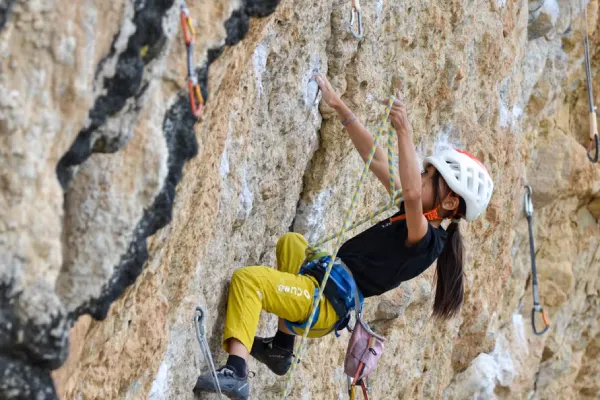
Climbing socks are performance socks designed specifically to be worn inside climbing shoes. Unlike everyday cotton socks, they’re built to:
- Stay thin and snug so they don’t bunch up inside tight shoes.
- Manage sweat efficiently with moisture-wicking fibers (e.g., merino wool or synthetics).
- Reduce friction and hotspots to help prevent blisters on long routes or full days in the gym.
- Control odor with anti-bacterial or naturally odor-resistant materials like merino or bamboo.
Some modern climbing socks go further with:
- Compression zones for better blood flow and muscle support.
- Silicone grip patterns on the sole for extra security in rental shoes or when walking around the gym.
So while you can climb in generic sports socks, purpose-built climbing socks give you a better balance of grip, comfort, and durability.
Should You Wear Socks with Climbing Shoes?
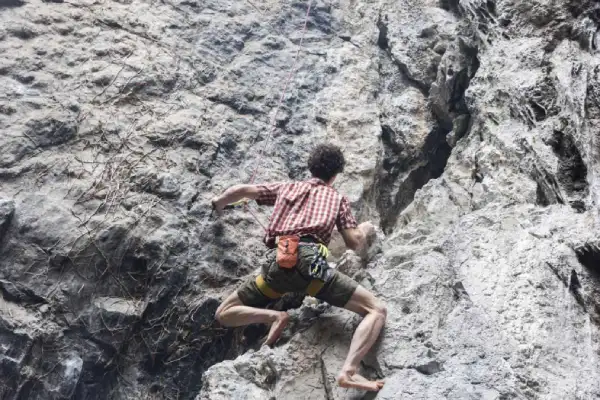
This is the classic question: should you wear socks with climbing shoes or not? There isn’t one universal answer, because it depends on your goals, shoe fit, and climbing style.
Most advanced climbers still climb barefoot in their shoes for maximum sensitivity and precision, especially on hard sport and bouldering problems.
But more and more climbers – especially beginners, gym regulars, and trad climbers – are adding thin socks back into the equation for comfort and hygiene.
Pros of Wearing Climbing Socks
- Better hygiene: Socks absorb sweat instead of letting it soak directly into the shoe’s lining. This slows down odor build-up and helps your shoes last longer, especially if you climb frequently or rent shoes.
- Increased comfort: A thin layer of fabric reduces rubbing on sensitive areas (toes, heel, top of the foot). On long sessions, multi-pitch routes, or crack climbing, that extra bit of padding can make a huge difference.
- Better fit in slightly loose shoes: If your climbing shoes are a little too big (common with rentals or more “relaxed” trad shoes), socks help fill in dead space and improve control.
- Easier break-in period: With new shoes, socks can reduce the pain while the shoe molds to your foot shape.
- Warmer feet in cold conditions: For alpine, ice, or cold-weather trad, thin merino climbing socks keep your feet warm without adding much bulk.
Cons of Wearing Climbing Socks
- Reduced sensitivity: Climbing shoes are designed to feel like a second skin. Adding socks creates an extra layer, which reduces your feel on small footholds. This matters most for hard bouldering and technical sport.
- Possible loss of precision: If socks aren’t thin and snug, they can bunch up and cause the foot to move slightly inside the shoe, leading to sloppy foot placements.
- Over-tight shoes can become unbearable: If you’ve sized your shoes aggressively for performance, adding socks might make them so tight they cut off circulation or cause severe pain.
- Wrong material = more blisters: Thick cotton socks trap moisture and can actually cause more friction and blisters. Good climbing socks should be moisture-wicking, not absorb-and-hold.
For many climbers, especially in gyms, rentals, or longer routes, wearing thin, performance climbing socks with climbing shoes is a smart compromise. If you’re pushing your limit on tiny footholds, barefoot in the shoe still makes sense.
How Climbing Socks Evolved from Barefoot to Performance Gear
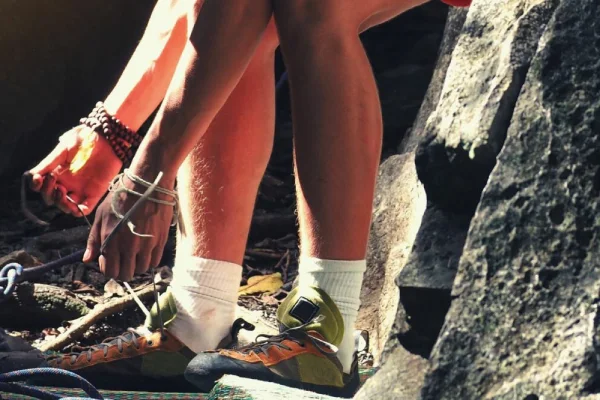
For decades, the climbing “rule” was simple: no socks in climbing shoes. Early rock shoes were often just modified boots or pumps, and going barefoot inside them gave climbers a better feel on rock than thick wool socks could. As shoes became tighter, more downturned, and more specialized, the barefoot norm got even stronger.
Over time, though, several trends changed the game:
- Climbing gyms exploded in popularity
More people renting shoes, day after day, raised hygiene concerns.
Gyms started recommending or even requiring socks for rentals, which created demand for thin, non-slip socks that still work in tight shoes. - Technical sock materials improved
Merino wool became widely used for outdoor and hiking socks because it regulates temperature, wicks moisture and naturally resists odor.
Synthetic fibers like nylon, polyester and elastane added durability, stretch and fast drying. - Grip & compression tech moved into socks
Performance brands developed grip socks with silicone patterns across the sole to prevent slipping inside shoes and on slick surfaces.
Compression designs helped support feet and lower legs over long, high-output days. - Gyms and outdoor brands wanted custom gear
Custom grip socks with logos, brand colors and private-label packaging became a standard promotional and retail item for sports, fitness and medical sectors – a model that transfers perfectly to climbing gyms and outdoor brands.
The result: climbing socks evolved from “forbidden” to specialized performance gear – especially when you look at thin, high-grip, moisture-managing socks designed for climbing shoes.
How to Choose the Right Climbing Socks
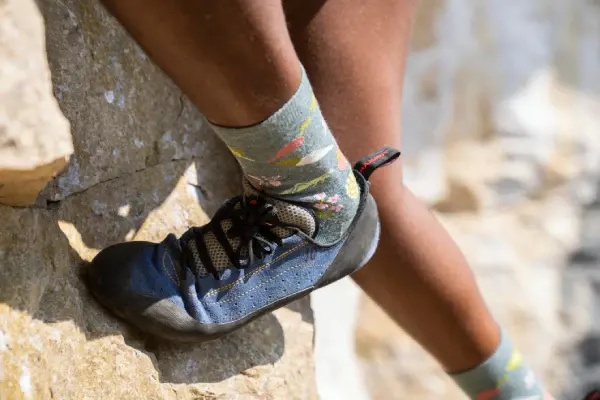
Not every sock works inside a climbing shoe. Here’s how to pick the right climbing socks for your needs.
Materials (Merino vs Synthetic vs Bamboo)
Merino wool
Excellent moisture-wicking and temperature regulation.
Naturally odor-resistant – ideal for people with sweaty feet or long days at the crag.
Soft and non-itchy compared to traditional wool, even when worn tight in climbing shoes.
Synthetic fibers (nylon, polyester, elastane, spandex)
Very durable and abrasion-resistant, which matters when your feet are constantly twisting on micro-edges or jamming into cracks.
Dry faster than cotton and can be engineered for targeted compression and stretch.
Bamboo & blends
Bamboo fibers are naturally soft, breathable and have some odor-control properties.
Many of the best climbing socks mix merino + synthetics, or bamboo + synthetics, to combine comfort, moisture-management and durability.
Thickness & Cushioning for Different Climbing Styles
Ultra-thin / liner-style climbing socks
Best for tight performance shoes and bouldering.
Maintain good sensitivity while still improving hygiene and reducing hotspots.
Light to medium cushioning
Ideal for all-day wear, trad, multi-pitch, and gym climbers who value comfort over absolute precision.
Enough padding under the heel and ball of the foot to soften standing on small holds for hours.
Heavier cushioning
Mostly relevant for cold-weather or alpine environments where warmth matters more than tight performance fit.
Use with more relaxed shoes – heavy socks in aggressive shoes usually don’t mix well.
Fit, Seams & Anti-Odor Tech
Fit: The sock should be snug, not baggy – no extra fabric around toes or heel. Look for anatomically shaped left/right socks if you’re very performance-focused.
Seams: Flat or invisible toe seams help prevent pressure points when your toes are jammed into the front of a shoe or in cracks.
Anti-odor tech: Merino’s natural anti-microbial properties are still one of the best options. Some synthetic climbing socks use anti-bacterial treatments or yarn blends for odor control.
Grip & compression: Silicone grip patterns on the sole help reduce foot slip in rental shoes or slightly loose gym shoes – especially useful in custom climbing socks for gyms. Light compression in the arch and ankle provides support without cutting off blood flow.
Best Use Cases: When Climbing Socks Really Help
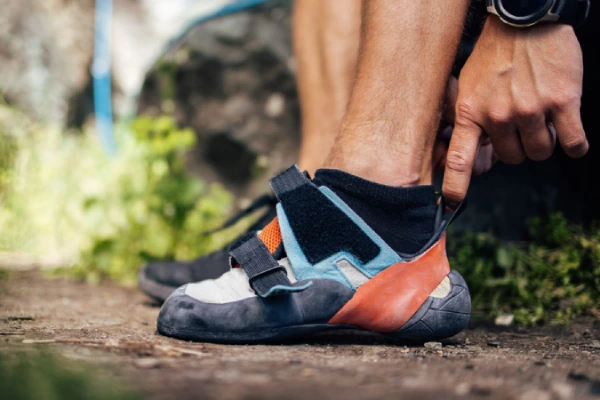
Not every session demands socks, but there are clear situations where wearing socks with climbing shoes is a smart move.
Bouldering / Sport Climbing
Performance-oriented bouldering and steep sport routes often demand the maximum sensitivity you can get. Many climbers prefer no socks in aggressive shoes for this reason.
That said, ultra-thin climbing socks can still work if:
- Your shoes are slightly relaxed rather than painfully tight.
- You prioritize hygiene in the gym.
- You’re training rather than redpointing your hardest project.
Trad / Multi-pitch
Longer routes mean hours in your shoes. Here, comfort and circulation beat tiny gains in sensitivity.
Thin merino or synthetic climbing socks:
- Reduce rubbing and pressure on long stances and belays.
- Help manage sweat over a full day.
- Make it easier to deal with crack climbing where the shoe is often torqued and jammed.
Indoor Gyms & Rental Shoes
This is where socks can be a game-changer.
- Rental shoes are used by dozens of different people, and gyms often recommend or require socks for hygiene.
- Climbing socks with grip patterns on the sole help prevent the foot from sliding around inside generic rental shoes.
- If the rental fit is a bit loose, socks improve control and make it less likely your foot will rotate inside the shoe.
For new climbers, especially, wearing socks with climbing shoes in the gym often means less pain, fewer blisters, and a better first impression of the sport.
FAQs
Should I wear socks with climbing shoes?
Wearing socks with climbing shoes is a personal choice. Most climbers go barefoot for sensitivity, but thin climbing socks can improve comfort, hygiene, and warmth, especially with rentals, long sessions, or cold conditions. Try both and choose the option that gives you the best balance of feel, fit, and all-day comfort.
What kind of socks are best to wear with climbing shoes?
The best socks for climbing shoes are thin, snug, and moisture-wicking, made from merino wool or synthetic blends. They should fit like a second skin, with flat toe seams to avoid pressure points. Avoid thick cotton socks, which trap sweat, stay damp, and increase friction, blisters, and shoe odor.
Do climbing socks affect performance?
Climbing socks can slightly reduce sensitivity because they add a layer between your foot and the shoe. In very tight, aggressive shoes, this can hurt precision on tiny footholds. With more relaxed fits, a thin technical sock rarely ruins performance and often improves comfort, so the overall impact is usually small for most climbers.
Should beginners wear socks with climbing shoes?
For beginners, socks with climbing shoes are usually a good idea. New climbers often use rental shoes, and thin socks improve hygiene while reducing pain and blisters. Sensitivity loss is not critical at this stage; comfort and confidence matter more. If feet feel destroyed after every session, socks are an easy fix.
Is it okay to wear socks with rental climbing shoes?
Yes, you should wear socks with rental climbing shoes. Rentals are worn by many people, and socks protect against sweat, bacteria, and odor. Thin, close-fitting socks also help fill small gaps in fit, so your foot slides less inside the shoe. Just avoid bulky socks that wrinkle and reduce stability.
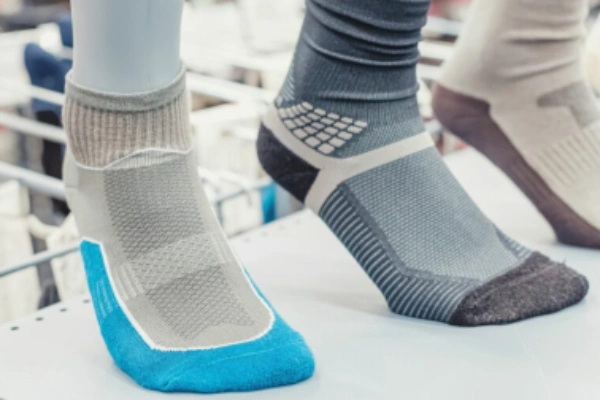
If you’re looking for high-quality, custom-made climbing socks or bulk orders for your business, Max Hosiery offers tailored solutions to meet your specific needs. Contact us today to elevate your climbing gear offerings with our performance-driven, durable, and comfortable socks!