

Introduction: From Commodity to Curiosity
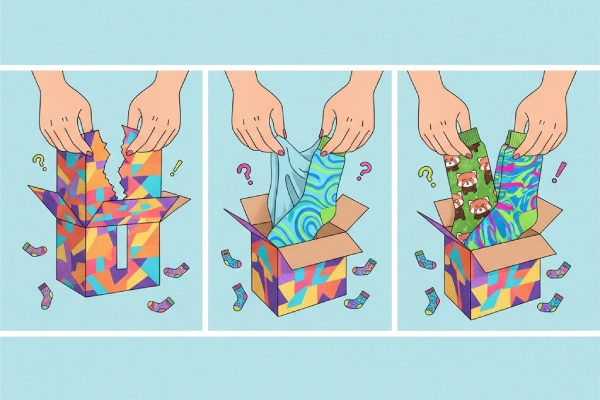
In most retail and e-commerce environments, socks sit in a very predictable place. They are reliable, they sell every season, and they are clearly a necessity. At the same time, they rarely become the category that buyers or consumers get excited about. Shoppers often filter by size, material and price, add a few pairs to the cart, and move on.
Blind box socks for brands and retailers, on the other hand, are built on curiosity and anticipation. The product is sealed. The exact design inside is unknown until the moment of opening. A series of designs works together as a collection, and the random element activates emotions that standard, fully transparent shopping does not. This mechanism has already been proven in toys, collectibles and other lifestyle categories.
The key point is that blind boxes are not limited to any single industry. They are a business mechanism that can be applied wherever the product and consumer logic fit.
Consumer View: Low-Pressure “Try It” Purchases
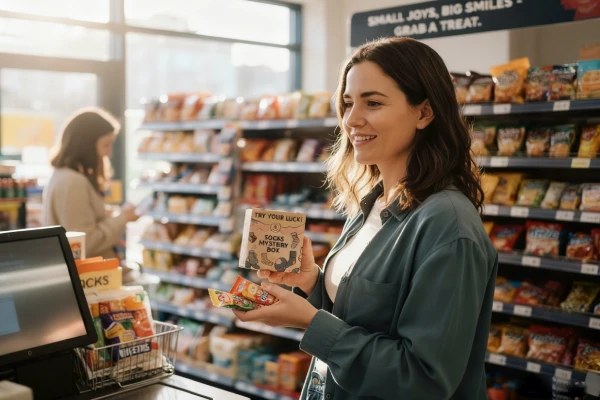
Price points that invite experimentation
Socks typically sit in a friendly price range. For most consumers, a single pair or a small bundle does not require long consideration or comparison. This is exactly the kind of price level where “I’ll try one” feels natural.
When blind box mechanics are attached to this price level, the leap from a planned purchase to a small impulse add-on becomes very short. The decision is no longer only about function; it also includes the small thrill of not knowing exactly which design will appear. Because the absolute amount of money involved is modest, many shoppers are comfortable making that decision quickly.
High usage frequency reduces regret
Socks are used every day. They wear out. They are washed, rotated and replaced regularly. This high turnover changes how consumers perceive risk.
Even if the design inside the blind box is not the top favorite, the product is still practical. It will still be worn. It will still deliver comfort and coverage. This is different from categories where a “wrong” blind box pull might never be used at all.
This everyday utility softens the emotional downside of randomness. The consumer is less likely to feel that the purchase was a mistake and more likely to accept the outcome as a neutral or mildly positive result. That is an important foundation for any blind box experience.
One product, multiple natural scenarios
The same pair of socks can function in several different situations without any change in the product itself.
- Self-use: the buyer keeps and wears the socks personally.
- Shared at home: the socks are passed to a family member whose style or size fits better.
- Small gift: the socks become a friendly, low-pressure present for a friend, colleague or child.
Because these scenarios are all natural and socially acceptable, the consumer has more ways to justify the purchase. The blind box is not locked into a single narrow use case. This flexibility makes socks a forgiving and attractive choice when randomness is involved.
Product View: Small, Variable, and Universally Approachable
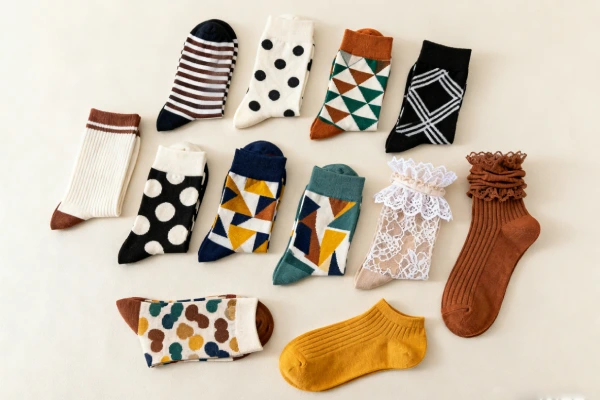
Small footprint, large “canvas”
Physically, socks occupy little space. They are easy to store, easy to ship and easy to handle. From a logistical perspective, this compactness is very convenient.
At the same time, each sock still offers a surprisingly large visual surface. The leg, ankle and foot areas together provide multiple zones where color blocks, patterns and simple graphics can appear. This gives designers enough room to create clear visual differentiation between designs in the same blind box series, without moving into complex garment construction.
The combination of small footprint and rich visual area is unusual. Many compact products have very limited design space. Socks are an exception, which makes them particularly suitable for collections where each item needs a distinct identity.
Visual change without functional compromise
The production of socks allows for a separation of structure and surface design.
- Rapid Prototyping: Unlike cutting and sewing garments, changing a sock design is largely a matter of programming the Jacquard machine and changing yarn bobbins.
Infinite Iteration: A factory can produce the same high-quality base structure (e.g., 200N cotton with Y-heel) while churning out hundreds of distinct visual patterns. This allows brands to create “Rare,” “Super Rare,” and “Common” tiers without altering the fundamental manufacturing process or cost structure.
Wider acceptance of playful and bold aesthetics
The foot is a “Safe Zone” for rebellion. Consumers who adhere to strict corporate dress codes often use socks as their sole outlet for personality. Consequently, the market has a high tolerance for “weird” or “loud” designs in socks that it would reject in shirts or pants. In the blind box world, the crazier the design, the higher the perceived value.
Size and Inventory View: Simple Structure, Friendly Operations
Fewer size decisions, less friction
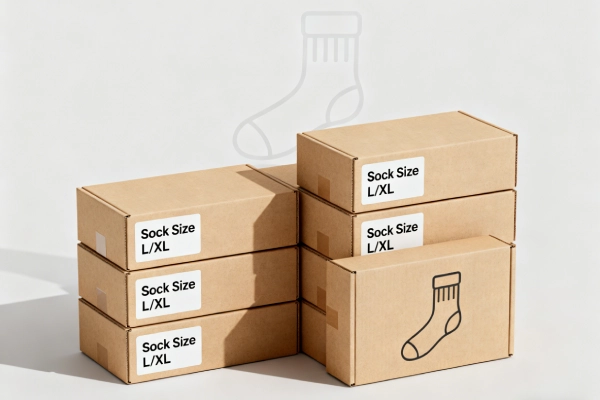
Compared with many apparel categories, sock sizing is relatively compact. Instead of managing a long ladder of individual sizes, most programs can serve the majority of consumers with:
- one “fits most” range, or
- a small set of bands such as S/M and L/XL.
For blind box marketing, this matters for a simple reason: the consumer does not want to worry about size and randomness at the same time. When there is only one or two size choices, the decision becomes straightforward. The uncertainty can stay where it belongs, in the design inside the box, not in the basic question of “will this even fit me?”
This is very different from categories where size choice itself is complex and stressful. Socks remove that layer of friction and make the blind box experience easier to accept.
Profit View: Why Mystery Box Socks Can Earn More per Customer
From “fill-in item” to reason to visit
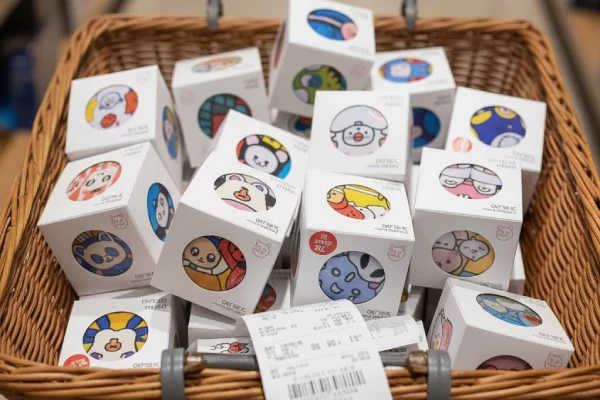
In most assortments, socks are a fill-in item. In a typical fashion store, socks play the same role as chewing gum at the supermarket checkout: customers come for the main items, and socks are the small, easy add-on they pick up on the way out.
When you add a blind box concept, that role changes. The product is no longer just “one more basic pair” but a small game with an unknown outcome. That gives socks their own reason to be noticed and, in some cases, their own reason for a visit.
More units in a single transaction
Blind box logic and sock pricing fit together very well. The price is low enough that buying more than one box still feels safe, even when the exact design is unknown.
More occasions to come back
Without blind boxes, many customers only think about socks when old pairs are worn out. It is a replacement habit.
A blind box series adds a second habit on top of that. Some people start to pay attention to new designs, special drops or small variations inside the same program. That curiosity gives them a reason to check the category more often, not only when they “need socks”.
Comparison with Other Blind Box Categories: Why Socks Stand Out & What Can Learn
From toy blind boxes
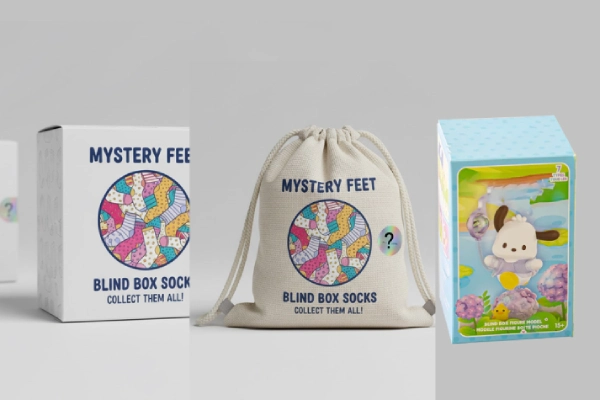
Toy blind boxes prove three things: a clear “world” or theme, a defined series, and the idea of rare items can strongly drive repeat purchase. Their weakness is that most items end up just sitting on a shelf.
Sock mystery boxes can keep the strengths:
- a coherent visual universe
- a clear set structure with a few “hot” or “rare” designs
and add what toys lack: everyday use. Every pull goes into real outfits, not only into display. That combines emotional value with practical value.
From accessories blind boxes
Accessory blind boxes show that people are willing to pay for self-expression. But when style, body fit or material sensitivity are wrong, the item is easily wasted.
Socks reduce that risk by nature:
- They still carry style and personality
- But they are not constrained by things like piercings, metal allergies or strict dress codes
From accessories, sock mystery boxes can borrow the idea that “each item is a small signal”, while benefiting from much higher tolerance in both look and function, making them better suited for large, long-running blind box programs.
Brand and Differentiation View: A Compact Carrier of Story
Carrying larger narratives in a small format
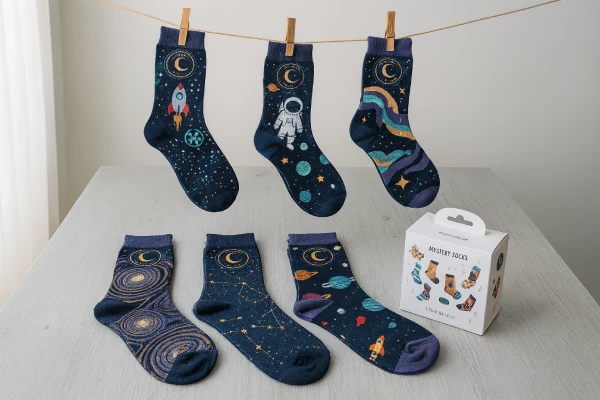
A cohesive set of sock designs can express much more than color and pattern. It can reflect a brand’s view of everyday life, humor, lifestyle and values. A series might echo urban living, outdoor exploration, relaxation, or other themes that matter to the target audience.
Because socks are smaller and less formal than many other garments, these narratives can be expressed in a lighter, more approachable way. The brand is free to show personality without the same level of risk that might come with making a very bold main outerwear piece.
Turning a quiet category into a conversation starter
In many businesses, socks have historically played a supporting role. They fill necessary shelf space, provide a reliable margin, but rarely lead campaigns. Blind box formats create an opportunity to change this dynamic.
When each design in a series has a clear identity and the outcome of each purchase is uncertain, socks begin to attract attention and conversation. They can become the unexpected highlight of a product lineup, not by competing on price alone, but by offering a new kind of engagement.
A natural platform for light-weight collaborations
Because socks are low-risk and broadly accepted, they are well-suited to collaborations and co-branding. Artwork, slogans and visual motifs can be integrated into a series without requiring large structural changes to the product line.
For partners, this offers a compact, friendly canvas that can carry their identity into everyday use. For the host brand, it provides fresh visual material and access to new communities. Mystery box structure magnifies this effect by encouraging exploration across the full set of designs.
Content and Social View: Ready-Made Material for Sharing
Unboxing that looks good on camera
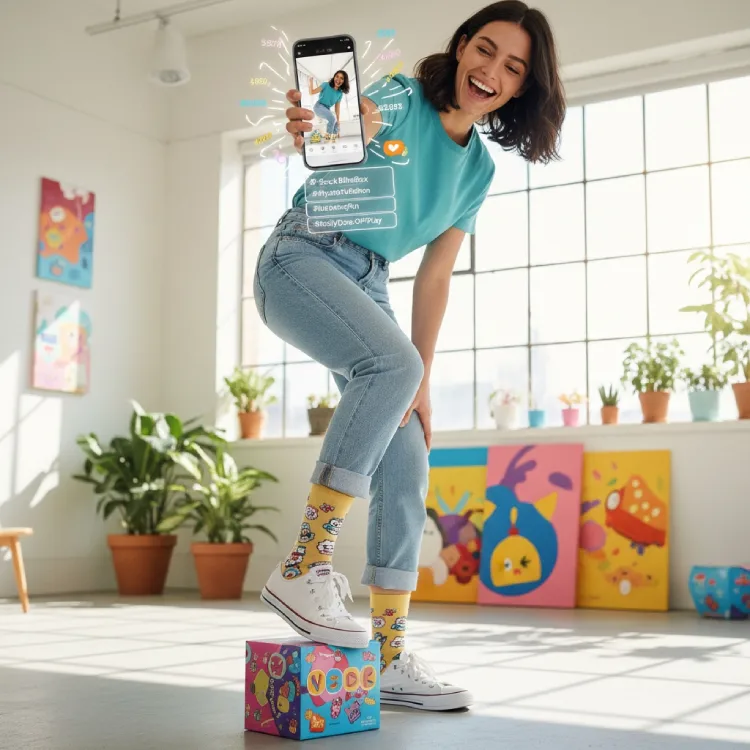
Blind boxes are made for unboxing. A sealed pack, a quick reveal, a clear reaction. Socks fit this pattern very naturally: the design is instantly visible, the differences between each style are obvious, and the whole sequence is easy to capture in a short photo or video.
Wearable designs that keep showing up
Unlike many blind box items that stay on a shelf, socks are worn in everyday life. They appear in outfit photos, gym posts, travel pictures and casual snapshots. This gives the brand repeated, organic visibility long after the first unboxing moment.
Clear signals on what people love
Because socks are so visible, it is easier to see which designs people actually use and share. Likes, comments and repeated appearances of certain patterns provide direct feedback on what works. That feedback is a strong reason why socks are a smart canvas for blind box marketing.
FAQs
What are blind box socks or a sock mystery box?
Blind box socks (or sock mystery boxes) are sealed packs where shoppers know the general style or theme but not the exact design until they open them. The appeal comes from surprise, collectability and the chance of getting a favorite or rare pattern, all on top of a practical everyday product like socks.
Why do blind box products sell so well?
Blind box products tap into curiosity, collection instincts and social sharing. Research shows the uncertainty itself can increase purchase intention when the perceived reward is fun, low-risk and repeatable. The model works especially well when people buy often or margins are strong, which encourages multiple purchases and sustained engagement.
Are blind box socks worth it for brands and retailers?
For brands and retailers, blind box socks can turn a low-attention basic into a traffic and margin driver. Socks combine high purchase frequency, simple sizing and strong design variety, so the same technical product can support many collectible looks. This makes it easier to lift units per transaction and repeat visits compared with standard sock programs.
What kinds of products work best for blind box marketing, and where do socks fit?
Blind boxes work best for products that are bought often or carry a healthy profit per unit, where design can change without compromising function. Socks are a strong fit: they are inexpensive, frequently replaced, easy to size and highly visual, so they deliver both the surprise of collecting and the practicality of daily wear.
Are blind boxes similar to gambling, and how can brands reduce that concern?
Some studies and news reports compare blind boxes to gambling because of randomness, chasing rare items and repeated spending. Brands can reduce concerns by keeping price points modest, ensuring all items have clear utility and quality, and avoiding aggressive scarcity tactics that push vulnerable consumers into overspending.
Socks as the Ideal Playground for Mystery Box Innovation
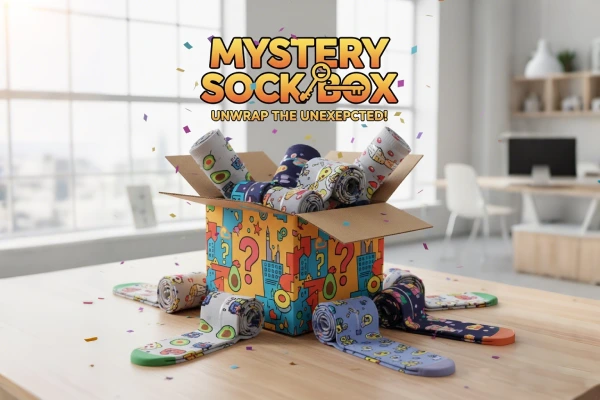
Socks combine something rare in blind box marketing: low-risk price points, everyday utility, wide visual variety and a simple size structure that is friendly to operations. They are practical enough to be used, playful enough to be collected, and expressive enough to carry a brand story in a small format.
For brands testing blind box concepts, socks are a natural place to start. Max Hosiery can help you explore this with performance socks and multi-design collections.