

Modern and contemporary dancers live close to the floor: spirals, rolls, grounded turns and low travelling phrases all depend on real contact with the ground. At the same time, most studios still expect covered legs for warmth, modesty and uniformity.
Footless and stirrup tights try to solve this tension. Both keep the leg covered while exposing the sole, but they behave very differently in grip, floorwork and on-camera appearance. This guide focuses specifically on modern, contemporary, lyrical, fusion and other barefoot-based training—not on pointe work or fully shod ballet.
If you need a complete overview of all tights types (footed, convertible, fishnet, high gloss, etc.), that belongs in a separate “Dance Tights 101” pillar. Here we stay on one narrow but important question: footless vs. stirrup for barefoot technique.
Quick Picks: When to Choose Footless vs. Stirrup
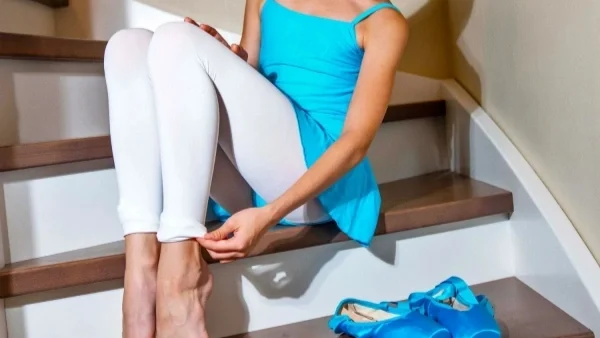
If you need a fast answer before class:
Choose footless tights if you:
- Train mainly in barefoot modern/contemporary with substantial floorwork.
- Want maximum skin-to-floor contact and clear feedback from the ground.
- Like a visibly “barefoot” ankle break.
Footless styles are routinely marketed as ideal for modern, contemporary and jazz where dancers work barefoot but still want leg coverage.
Choose stirrup tights if you:
- Want heels and toes bare but prefer the arch visually connected into the leg.
- Dance lyrical / jazz-contemporary / fusion where long lines and photos matter as much as floorwork.
- Often use half-soles or foot thongs and want continuous fabric over the arch.
Brand descriptions for stirrup tights repeatedly stress that the under-arch band keeps the tights in place and helps create a longer, uninterrupted leg line while dancing barefoot.
Keep convertible tights as a backup if you:
- Regularly switch in the same day between barefoot work and classes in shoes.
- Need a single pair that can behave like a footed tight for exams or rehearsals, then roll back to barefoot.
Convertible designs with an under-sole opening are widely recommended for mixed schedules for this reason.
The rest of this article explains why these choices make sense and how to build a small, efficient tights “capsule” around them.
Structure First: How Footless and Stirrup Tights Are Built
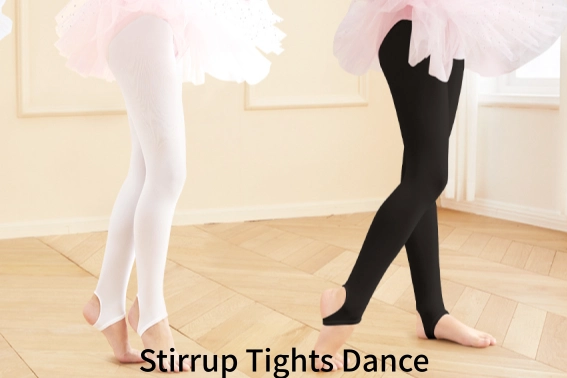
Footless tights: coverage to the ankle, bare sole
Footless tights run from the waistband to a finished hem at or just above the ankle. There is no fabric under the foot: toes, ball, and heel are fully exposed.
Practical consequences:
- Floor contact is essentially the same as true barefoot: friction and feedback are determined by skin, not nylon.
- There is no extra fabric to bunch inside half-soles or foot thongs if you layer minimal footwear.
- The visual line of the tight ends is clearly at the ankle.
This is why many retailers list footless tights as a go-to for contemporary and jazz-contemporary: they keep legs warm but let feet behave like bare feet.
Stirrup tights: under-arch strap and continuous line
Stirrup tights also extend from the waistband to the foot, but the foot area is cut out around the heel and toes, leaving a strap that loops under the arch.
That means:
- The strap visually connects the calf to the instep, so the arch appears as part of one continuous line rather than a bare interruption.
- Heel and metatarsal heads still contact the floor directly, but the mid-foot glides on fabric.
- The strap helps anchor the leg portion so it doesn’t ride up, provided sizing is accurate.
Manufacturers commonly describe stirrup tights as a way to “dance barefoot with a longer leg line” and as a staple for lyrical and contemporary, where the arch should remain visible.
These structural choices explain almost everything you later feel in terms of grip, line and comfort.
Barefoot Connection: Grip, Grounding and Floorwork
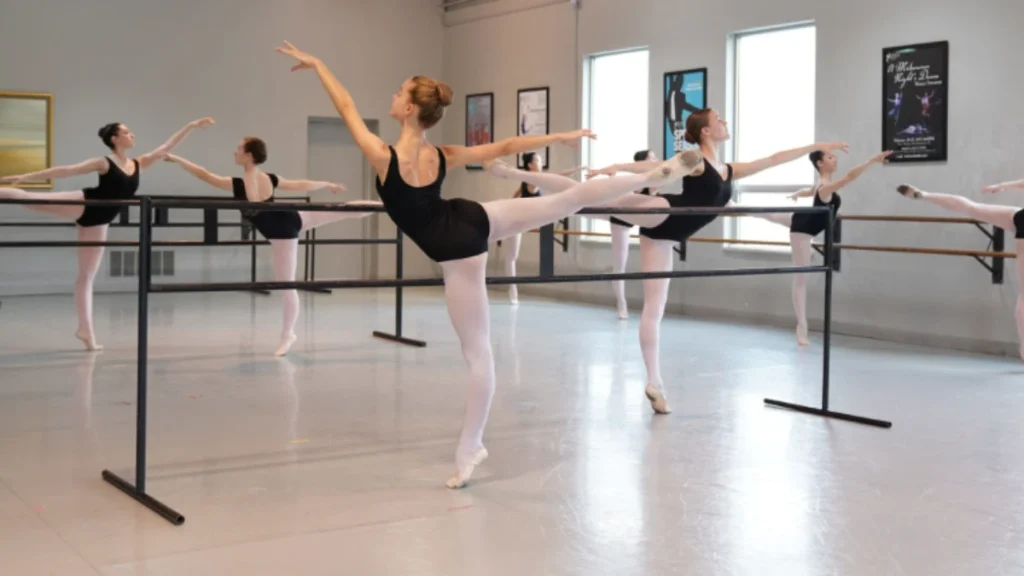
Why barefoot sensation matters in modern & contemporary
Modern and contemporary techniques treat the floor as a partner:
- Weight is released into and out of the ground.
- Spirals, falls and recoveries use push–pull contact across the feet and body.
- Floorwork phrases rely on controlled sliding and rolling, not accidental slipping.
For that reason, many syllabi and studios prefer bare feet or minimal coverage for these styles. Anything too smooth or thick under the sole can dull feedback or create unpredictable friction.
How footless tights feel on the floor
With footless tights:
- Grip and control
Because the entire sole is bare, you can choose precisely where to slide and where to anchor—dragging the top of the foot while toes stabilise, or using the inside edge for control—without fabric interfering. - Security in deep work
In deep lunges, grounded turns or travelling low phrases, there is no nylon under the sole to trigger sudden loss of traction. - Trade-off: floor burns
On rough marley or unfinished wood, high volumes of floorwork can produce skin irritation or burns on the bare sole, just as they would with no tights at all.
For many modern and contemporary dancers, this is an acceptable trade: maximum control and sensation, with some need to manage floor abrasiveness.
How stirrup tights change floor contact
With stirrup tights:
- Mixed surface
Heel and ball of the foot still meet the floor skin-to-surface, while the arch rolls over fabric. Some dancers like the slightly smoother transition when rolling through the foot; others notice a short adaptation period. - Mild cushioning under the arch
The strap provides a thin layer between arch and floor in kneeling or plank-like positions and when weight passes directly across the mid-foot. - Fit-sensitive behaviour
If the strap is too long or the tights too loose, it may drift towards the heel or forefoot during pivots and rolls. Correct sizing and quick movement tests (see below) are essential.
In other words, stirrup tights keep a large part of the barefoot feel, but redistribute friction and require more attention to fit.
Visual Lines: How Each Style Draws the Leg and Foot
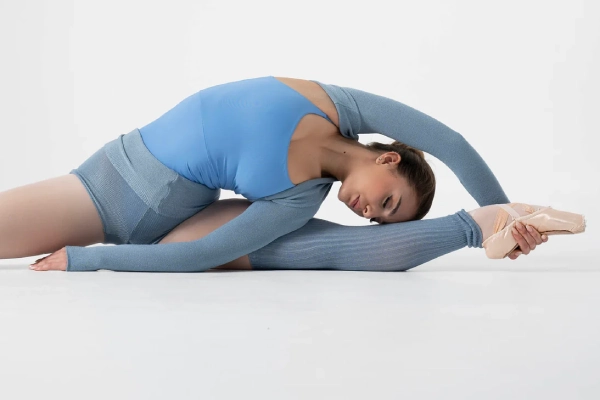
In the mirror: barefoot break vs continuous arch
Footless
- The fabric stops at the ankle, then bare skin begins. This creates a deliberate visual break.
- Works well when choreography or costume aims for a natural, nearly uncostumed aesthetic—“just me and the floor”.
Stirrup
- The under-arch strap visually pulls the leg line into the foot, particularly visible in tendus, penchés, arabesques and tilts.
- To the eye, it looks closer to a footed tight that has had the toes cut out, but with heel and toes still visible for a barefoot feel.
Many lyrical and contemporary costumes use stirrup tights for exactly this blend: the audience clearly sees the arch and line, but the dancer still “reads” as barefoot.
On stage and in photos
On stage, distance and lighting amplify small design choices:
- Footless in a skin-tone shade can read almost as bare legs while still ensuring coverage and uniformity across a group.
- Stirrup makes the arch contour clearer to judges and cameras, especially side-on. The uninterrupted fabric around the arch helps define the foot shape against the floor and background.
Finish and denier adjust how strong this effect is—matte for softer, sketch-like legs, shimmer for more reflective, high-contrast lines—but those details are better handled in your dedicated denier/finish article rather than repeated here.
Real-World Use: Modern, Lyrical and Conditioning
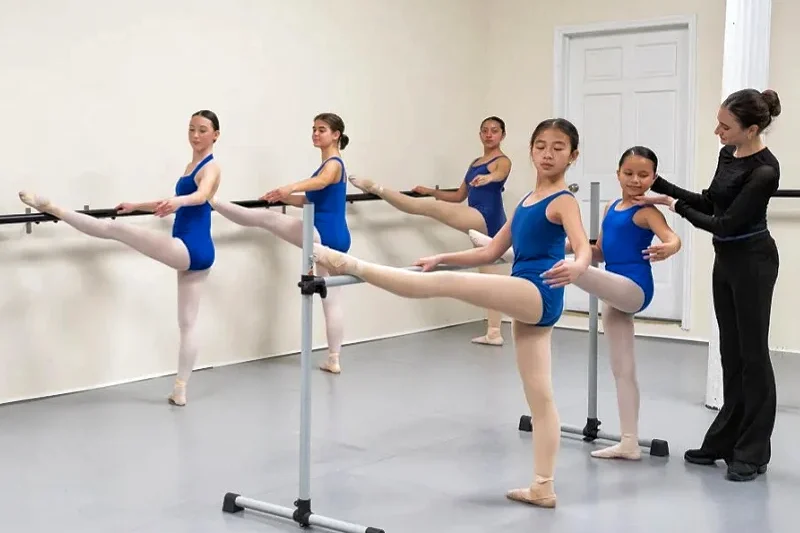
Modern & Contemporary with Heavy Floorwork
In floorwork-heavy modern and contemporary, treat footless tights as your default: they give you the same underfoot behaviour as dancing barefoot and keep transitions predictable. Keep one stirrup pair for lighter, more upright contemporary pieces or when a choreographer wants a slightly more elongated leg-and-arch line without switching to fully footed tights.
Lyrical, Jazz-Contemporary and Fusion
For lyrical and jazz-contemporary, especially when you often wear half-soles, stirrup tights usually work best as your main option: they tidy the transition between leg and shoe and photograph cleanly. Add a single footless pair for grounded workshops or contemporary-leaning choreography that deliberately pushes more into floor phrases and a visibly “barefoot” look.
Conditioning, Pilates and Floor Barre
In conditioning, Pilates and floor barre, footless tights are practical for everyday use because they leave ankles and toes completely free for detailed foot work and theraband exercises. Keep stirrup tights as an occasional tool for classes where teachers need to see arch organisation clearly—the strap makes arch engagement and alignment easier to read from a distance.
Fit & Fabric: What (Doesn’t) Change Between Footless and Stirrup
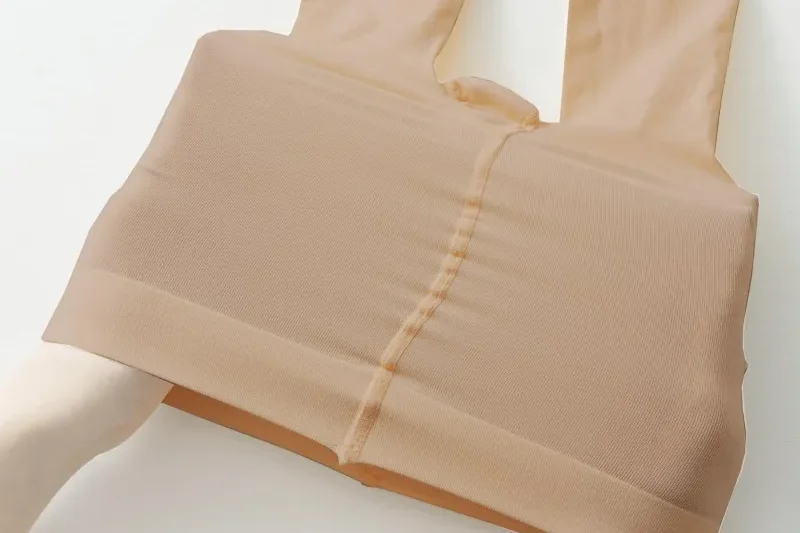
For footless and stirrup tights, most of the fit and fabric story is actually the same: they usually share the same yarns, denier and finishes within a product line, so the real difference you feel comes from the ankle hem versus the under-arch strap. Once you’ve decided how you want the foot to behave, you can treat both styles as two “endings” on top of the same base tight and choose the yarn, thickness and finish that match your climate and coverage needs using a dedicated guide to fabrics for dance tights.
Common Problems and Simple Fixes
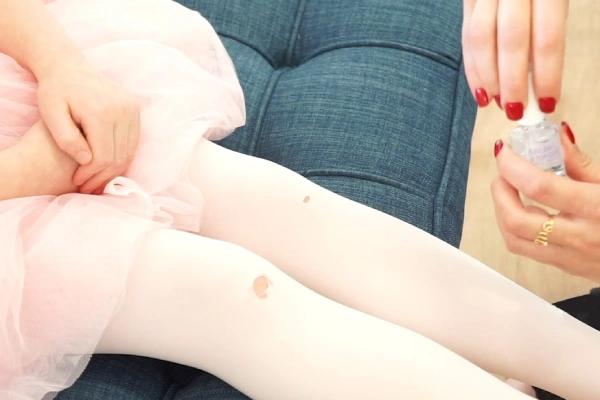
Floor Burns
Whether you wear footless or stirrup tights, floor burns are essentially a barefoot problem:
- Be Mindful: Practice careful technique and always be aware of the floor surface.
- Use Protection: For rehearsals, strategically use half-soles (foot undies) for extra protection.
- Stirrup Note: While the stirrup strap slightly reduces friction on the arch, your toes and heels remain just as exposed, so the same precautions apply.
Slipping and Stability Issues
Slipping often occurs due to:
- Slippery Fabric: The tights material is too smooth or shiny for the studio floor.
- Poor Fit: Tights are too large, causing them to bunch up and shift.
Simple Fixes:
- Choose the Right Material: Favor matte, dance-specific microfiber over fashion hosiery, which is usually slicker and less durable.
- Size Accurately: Always size your tights according to the brand’s height/hip chart for the best fit.
- Use Rosin (If Allowed): If the floor is extremely slick, ask your studio if controlled use of rosin is permitted. Always follow venue rules.
- ders to a dedicated “care & durability” article so this piece stays focused on choosing between structures.
Snags, Runs, and Lifespan
Keep both footless and stirrup tights lasting longer with these basic care tips:
- Washing: Wash in cool water with a mild detergent, ideally in a mesh laundry bag.
- Drying: Air-dry instead of tumble-drying to maintain elasticity.
- Protection: Keep tights away from Velcro, rough costume pieces, and sharp nails.
FAQ: Footless vs. Stirrup Dance Tights
What is the main difference between footless and stirrup dance tights?
Footless tights end at the ankle and leave the entire foot bare, so floor contact feels like true barefoot work. Stirrup tights loop a band of fabric under the arch while leaving heel and toes free. That strap both anchors the tight and visually extends the leg line into the foot, which many lyrical and jazz-contemporary dancers prefer.
Are footless tights better than stirrup for modern or contemporary?
For floorwork-heavy modern and contemporary, most dancers and retailers lean toward footless tights because they maximise grip and floor feedback while still warming the legs. Stirrup styles work well for contemporary that is more upright, or when arch line and photos matter as much as floor contact. In practice, many dancers keep one of each and rotate by choreography.
Can I wear stirrup tights with dance shoes?
Yes. Stirrup tights are often worn barefoot or layered over jazz, lyrical or character shoes. The exposed heel and toes help the shoe grip, while the arch strap keeps the tights in place and smooths the line over the top of the shoe. Just check for rubbing at the heel and arch during a trial class.
Are footless or stirrup tights acceptable for ballet class?
Most ballet syllabi still prefer footed or convertible tights so the foot can be fully covered inside soft shoes or pointe shoes. Footless or stirrup tights are more common in modern, contemporary and jazz settings. Some open dress-code studios may allow them at the barre, but for exams and traditional classes, check the uniform list before switching.
What denier is best for barefoot modern or contemporary tights?
A matte microfiber tight around 60–70 denier is a reliable baseline for modern and contemporary: opaque enough for coverage, but flexible and durable for floorwork. Higher deniers add warmth and opacity but can feel heavier; lower deniers look sheerer and wear out faster. Choose the same denier in both footless and stirrup if you want them to match on stage.
For studios and retailers, should we stock more footless or stirrup tights?
Studios with strong modern/contemporary programs generally need more footless stock, while lyrical, jazz-contemporary and show work drive stirrup demand. A balanced rail often includes: 1) footless for barefoot training, 2) stirrup for performance lines, and 3) convertible for mixed-class schedules.
Conclusion: Tights That Meet the Floor 🩰
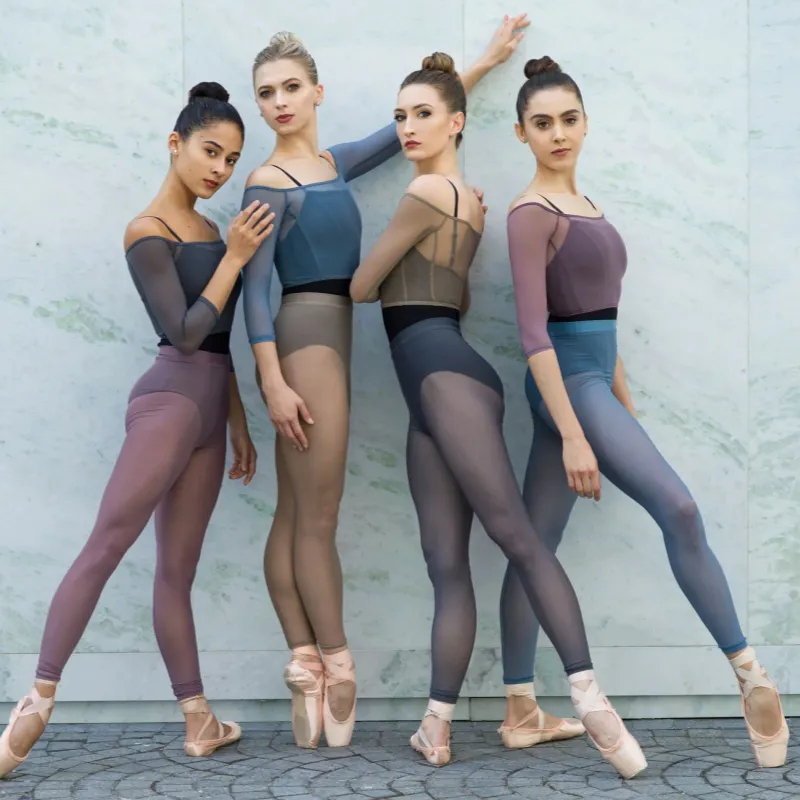
For modern and contemporary dancers, the choice between footless and stirrup tights balances floor feedback with visual line.
- Footless Tights: Offer the most authentic barefoot sensation and maximal grip control—ideal for floorwork-heavy modern and contemporary technique.
- Stirrup Tights: Visually connect the arch to the leg, providing a longer, uninterrupted line favored in lyrical and fusion, especially when wearing minimal footwear.
In professional dance, every detail matters, from control to aesthetic line. Choosing a quality manufacturing partner is key to meeting these high standards.
As a dedicated B2B supplier, Max Hosiery provides professional-grade Footless and Stirrup solutions, specializing in the durable fabrics and precise fit your brand requires. Partner with us to ensure your clients always step onto the floor with confidence and style.