

Quick Answer
Tennis socks affect comfort, grip and skin health on court. This pillar gives a 40–60-word fast answer, a question-style H2 with a direct answer, a 2025 quick comparison table, a step-by-step fit checklist, and FAQs. It links out to deep dives on no-show designs, why crew socks run higher, and men’s sizing.
What makes a good tennis sock?
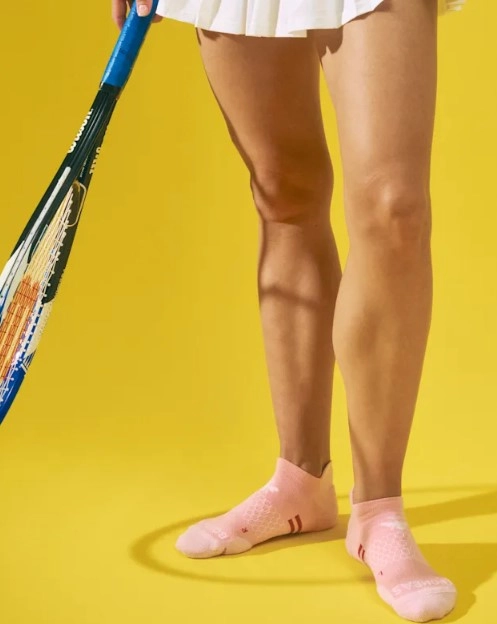
A good tennis sock manages moisture, uses smooth low-bulk toe seams, and adds targeted heel/forefoot cushioning with a snug arch band to tame in-shoe movement. Pick nylon/polyester or merino-blend yarns for wicking, set thickness by court and session length, and choose length by collar protection and slippage control to lower blister risk.
Key criteria you can check in seconds
- Moisture management: nylon/polyester performance yarns or merino blends keep skin drier than cotton.
- Targeted cushioning: heel and ball-of-foot pads protect without overfilling the shoe.
- Smooth toe construction: low-profile seam to cut rubbing on starts/stops.
- Arch/instep band: gentle compression for hold; avoid over-tightness.
- Length fit: low-cut for a minimal look; crew height adds collar protection and helps reduce slippage.
- Blister control: keep the skin–sock interface dry; moisture raises friction and blister risk.
Materials: synthetics vs merino blends
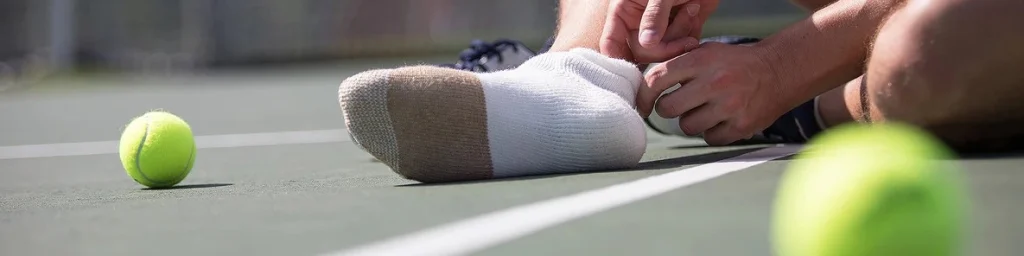
Modern sport socks rely on hydrophobic synthetics (nylon, polyester) to move liquid sweat and dry fast; merino wool blends absorb moisture vapor and stabilize the skin micro-climate while resisting odor. Both work; blend quality and knitting matter more than a single fiber label.
Evidence snapshot: higher moisture at the skin–sock interface increases friction and the likelihood of blisters, so moisture management is a primary selection factor.
Cushioning and compression, explained
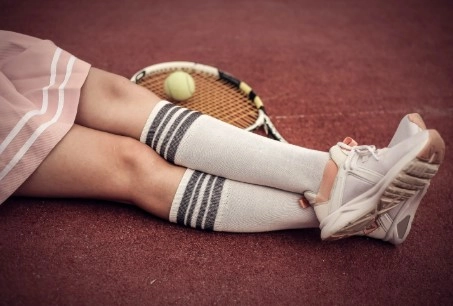
Use zoned cushioning under the heel and forefoot to absorb braking forces, but keep overall volume consistent with your shoe fit. Light compression bands around the arch/ankle can improve hold and feel. For full compression socks, recent syntheses show small-to-moderate performance or motor-function benefits with individual variability—set realistic expectations and prioritize fit.
Length and use-case: no-show, low-cut, crew
Low-cut sits at the ankle and keeps a precise shoe feel. Crew height adds collar protection against rubbing, shields from grit/sun, and often reduces slippage during lateral cuts. True no-show looks clean but demands excellent heel grip and patterning—test carefully. Deep dive: why crew runs higher and how that helps slippage.
2025 quick comparison table for tennis socks
| Court type | Session length | Recommended thickness | Key structures | Suggested length | Practical note |
|---|---|---|---|---|---|
| Hard | 60–120 min | Medium | Heel/forefoot pads, snug arch band | Crew or low-cut | Extra collar coverage reduces rubbing on aggressive stops. |
| Clay | 60–120 min | Light–Medium | Wicking yarns, smooth toe | Low-cut or crew | Debris control matters; crew can shield from grit. |
| Training day | 120+ min | Medium–High | Zoned pads + stable arch band | Crew | Prioritize moisture management for longer exposure. |
| Match day | <90 min | Light–Medium | Smooth toe, lock-in arch band | Low-cut | Keep shoe volume precise; avoid bulk. |
Table adapts to mobile by stacking rows as cards and exposing headers via data-label for screen readers.
If you’re planning a custom run—materials, cushioning map, lengths, packaging—Max Hosiery can help you turn this guide’s specs into production. See who we are and how we build performance socks, then send your spec sheet for a fast feasibility check and quote.
FAQs
Do tennis socks prevent blisters?
Yes—by keeping skin drier and lowering friction. Choose moisture-wicking synthetics or merino blends, avoid saturated cotton, change into a dry pair during long sessions, and ensure shoes fit properly. Double-layer or padded sports socks can further reduce pressure and shear at the heel and forefoot.
How do I stop socks from slipping in tennis shoes?
Use designs with a deep heel cup, silicone heel grips, a snug arch band, and the right size/length (crew or tab helps). Replace damp socks, and test with quick cuts; adhesive sock “glue” is a temporary fix, not a substitute for proper patterning.
Are running socks OK for tennis?
Yes—if they wick sweat, have smooth seams, and don’t overfill the shoe. Tennis adds more lateral braking than distance running, so recheck heel lock and collar protection during side-to-side sprints.
What socks do pro tennis players wear?
Pros commonly use performance low-cut or crew socks with moisture-managing yarns, smooth toe seams, arch bands, and targeted cushioning. Styles vary by preference and shoe fit. Buyer’s guides summarise typical pro-style features and examples you can match to your needs.
Should I wear two pairs of socks for tennis?
It can help when you’re blister-prone. Two layers create an extra interface that reduces shear; the USTA also suggests pairing one sock inside-out with one right-side-out and changing socks when damp. Test in your match shoes, as added bulk can alter fit.