

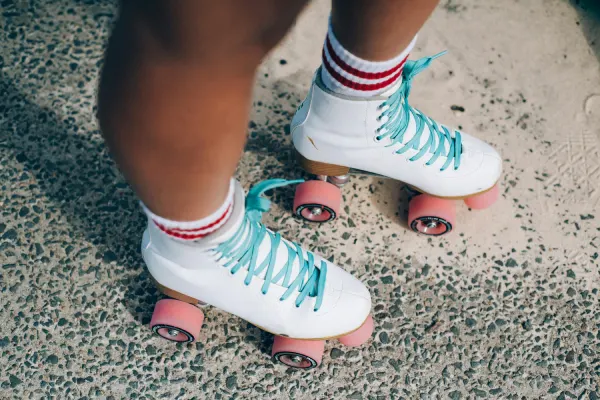
Tube socks are easy to recognize, but they are often misunderstood. Many buyers use the term for any sporty sock with stripes or any longer athletic sock, even when the construction is different.
Tube socks are socks made with a straight, heel-less body instead of a shaped heel pocket. For brands and retailers, they are most useful in retro, team, casual, and promotional lines where simple sizing, visible design, and a familiar athletic look matter.
Understanding that structure helps explain where tube socks work well, where they fall short, and when another sock type may be a better fit. For brands developing a broader range beyond tube styles, it often makes sense to compare them with other categories offered by a custom compression and sports socks manufacturer.
What makes tube socks different from other sock types?
Many sock categories look similar at first glance. Tube socks stand apart because the difference starts inside the construction, not only in the appearance.
Tube socks use a straight, heel-less body. That simpler structure can make sizing more flexible across broader ranges, but it also gives a less exact foot fit than socks with a shaped heel.
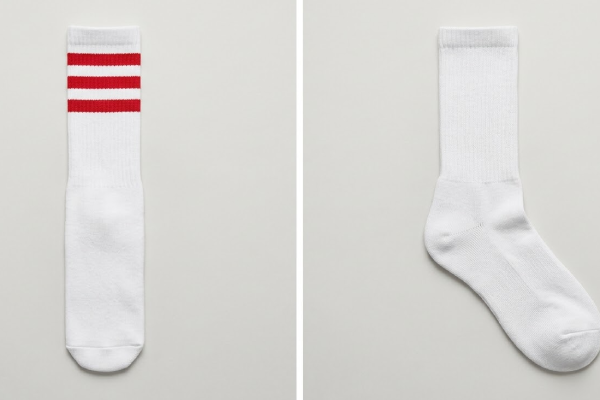
A true tube sock does not have a formed heel pocket. The body stays straight from the leg into the foot area, then uses stretch and rib structure to adapt to the wearer.
That single design choice affects how the sock fits, how it feels in use, and where it makes sense in a product range.
A shaped sock usually holds the foot in a more fixed position. A tube sock does not do that in the same way. Because of this, tube socks can work well in broader size programs, but they usually feel less exact around the foot.
That is one reason tube socks are common in categories where simple sizing and clear styling matter more than foot-specific fit. Team socks, retro socks, school socks, and casual athletic socks often fall into that group.
This does not make tube socks worse. It simply gives them a more specific role. They are best understood as a simpler structure with a strong visual identity, not as the right answer for every sock brief.
Why are tube socks still popular in retail?
Some sock styles stay relevant because they solve a clear need. Tube socks have stayed in the market for exactly that reason.
Tube socks remain popular because they are easy to recognize, easy to style, and easy to place in familiar retail themes. Their strongest value usually comes from visual identity and simpler sizing rather than from highly technical fit.
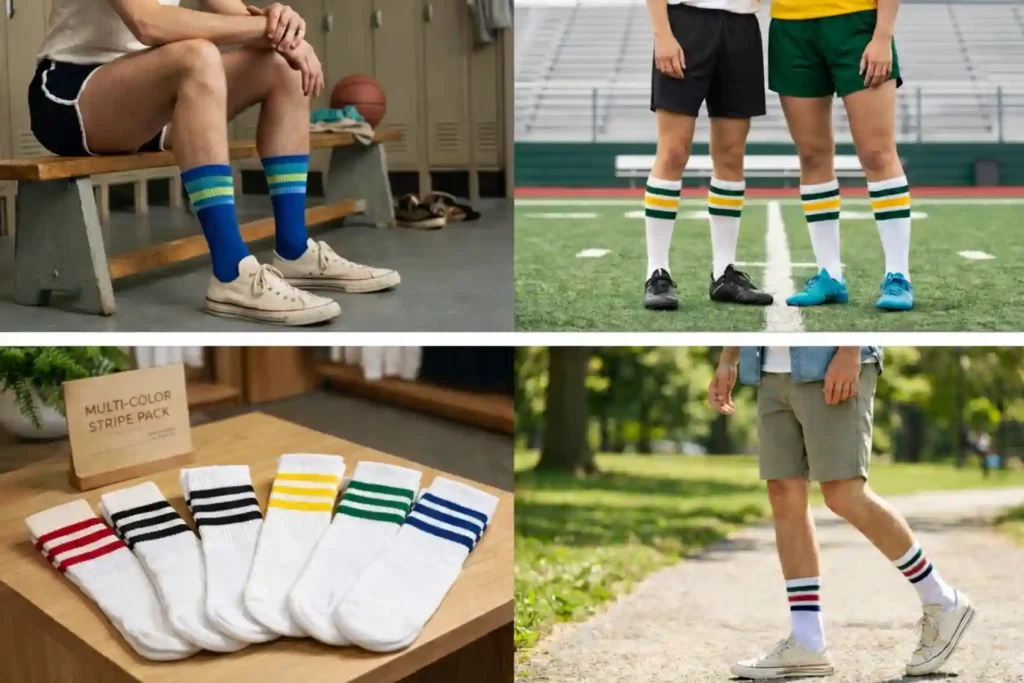
Tube socks fit several proven product directions.
One is retro style. Striped cuffs, white bases, contrast ribs, and old-school sports color stories all sit naturally on tube socks. The silhouette feels familiar, which makes the product easy to understand at a glance.
Another is team and school use. Tube socks carry color clearly, so they work well in school palettes, mascot-inspired collections, club merchandise, and teamwear ranges where visual identity matters.
They also work in promotional lines. The visible leg area gives more room for stripes, contrast sections, and simple graphics than very short socks do. That can make them easier to present in event merchandise, seasonal packs, and entry-level retail assortments.
Casual basics are another natural fit. Some buyers do not need a highly technical sock. They want a sock that looks sporty, feels familiar, and works in a broader size range. Tube socks can fill that role well.
Their main strength is not precision. Their main strength is clarity. Buyers usually understand what tube socks are meant to be the moment they see them.
Where do tube socks fit in a product line?
A sock line works better when each style has a clear job. Tube socks are strongest when the job is simple and visible.
For most brands, tube socks fit best as easy-entry visual products. They work well in retro collections, school programs, team ranges, and casual basics where broad sizing, color impact, and familiar merchandising matter more than precise foot shaping.
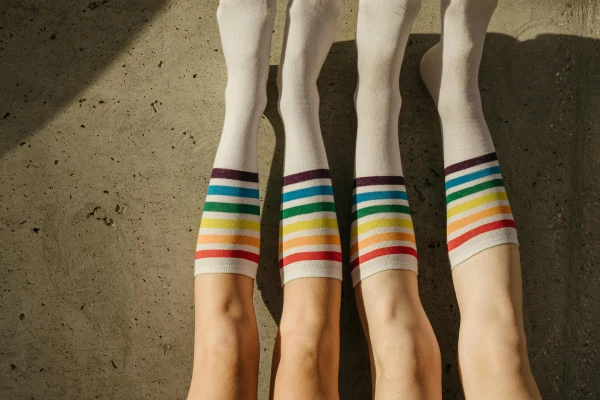
Tube socks often work well as one style inside a wider assortment.
They can serve as a recognizable basic. They can support school or club programs. They can also sit beside more technical socks without trying to do the same job.
A sports-inspired brand, for example, may use tube socks for striped styles and color-led packs, then use more shaped socks for running or other performance uses. A school or club collection may choose tube socks because the construction is simpler and the visual result is easy to approve. A promotional range may choose them because the styling reads quickly and the sizing is easier to handle.
In most cases, tube socks work best when the product brief includes:
- a familiar athletic look
- visible stripes or color blocking
- broad size planning
- simple retail packs
- school, club, or team positioning
- casual sportswear presentation
They are often most effective when used for simplicity, familiarity, and easy styling rather than for technical specialization.
What are tube socks not ideal for?
No sock type suits every use. Tube socks have clear strengths, but they also have clear limits.
Tube socks are usually not the best option when a project needs exact heel positioning, more stable foot hold, technical support zones, or product claims built around more structured performance.
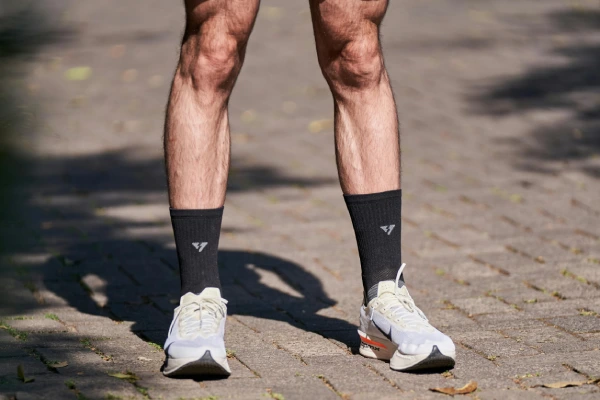
The same heel-less construction that makes tube socks simple also creates their limits.
Because the body is straight, the sock does not anchor around the foot as precisely as a shaped sock does. That can lead to extra fabric, more movement, or a less controlled feel, depending on the wearer and the intended use.
For some product types, that is completely acceptable. For others, it is not.
Tube socks are usually less suitable when the brief requires:
- a more exact everyday fit
- stronger foot hold during activity
- targeted support zones
- structured cushioning placement
- compression-led positioning
- more technical running or training use
When a brief starts moving in that direction, buyers often begin comparing tube socks with more functional alternatives. If the priority is grip, traction, and better control on smooth indoor surfaces, custom grip socks are usually a more practical choice. If the product is intended for yoga, barre, or reformer-based studio use, custom pilates socks make more sense because the product structure and use case are more specific. If the main goal is lower-leg support, recovery positioning, or a stronger performance message, custom compression socks are often the better direction.
This is where the category becomes easier to judge. Tube socks are not weak because they are simple. They are simply more suitable for some jobs than for others.
What do buyers usually confuse tube socks with?
Tube socks are easy to recognize, but they are also easy to mislabel.
Most confusion happens in two places. One is with crew socks, where the question is mainly about structure and fit. The other is with knee-high socks, where the question is mainly about length and coverage.
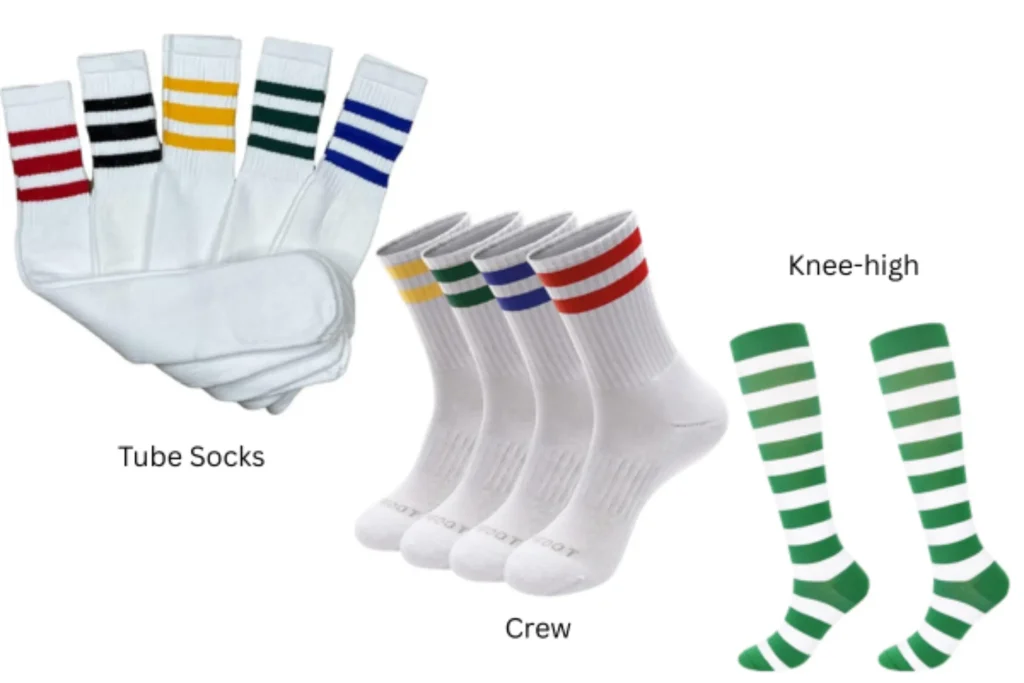
Tube socks vs crew socks
Tube socks and crew socks are often grouped together because both can appear in athletic and casual assortments. They may share similar colors, cuff styling, and shelf presentation.
The key difference is not only the look. It is how the sock is shaped around the foot.
Tube socks use a straight, heel-less body. Crew socks usually point toward a more shaped everyday style with a more defined fit around the foot and leg. That makes the comparison useful for buyers who care about everyday wear feel, fit control, and how structured the product should be.
If the main question is how a simpler tube style compares with a more shaped everyday sock, crew socks vs tube socks is the more useful comparison.
Tube socks vs knee-high socks
Tube socks are also often confused with knee-high socks because many tube socks are shown in taller sport-inspired styles. The visual overlap is real, but the terms do not mean the same thing.
Tube socks describe construction. Knee-high socks usually describe length. A sock can be knee-high without being a true tube sock. It can also use tube-style construction without being defined only by height.
This comparison matters most when the question is about coverage, leg height, support direction, and overall use.
If the main question is whether these terms describe the same product or two different product ideas, knee-high socks vs tube socks is the better comparison.
How should buyers choose the next sock type after tube socks?
Tube socks often help narrow the first idea. After that, the choice usually becomes more specific.
The next sock type depends on what matters most. If the priority is performance and fit control, shaped sport socks often make more sense. If the priority is longer coverage or support, knee-high styles are often the stronger match. If the priority is lower visibility inside shoes, shorter low-cut styles may be more suitable.
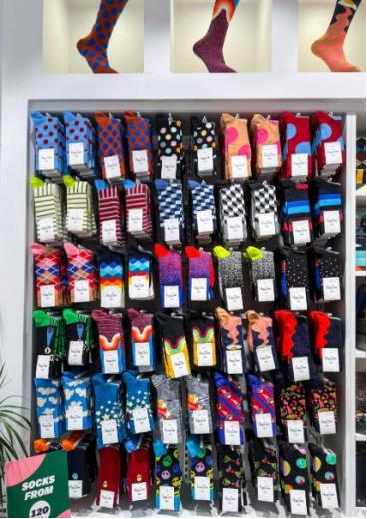
A buyer may start with tube socks because the look is familiar. Then the brief becomes more exact.
Once that happens, the next step usually depends on the product goal.
If the main need is performance, fit stability, material function, or sport use, a more shaped running sock often makes more sense.
If the main need is longer leg coverage, support, travel positioning, recovery positioning, or more structured lower-leg use, knee-high compression styles are usually a better fit.
If the main need is low visibility inside shoes, lighter casual footwear use, or a minimal look above the shoe collar, no-show or other low-cut styles usually make more sense.
That is why tube socks are often a starting point in the decision, not always the final destination. They help define the visual direction first. Then the product brief becomes more exact.
What should brands ask a manufacturer before developing tube-style socks?
A clear sock idea becomes easier to develop when the questions are practical from the start.
Before developing tube-style socks, brands should ask about size range, yarn blend, rib structure, cushioning options, stripe or logo method, MOQ, sample timing, packaging, and whether tube construction is really the best match for the intended use.
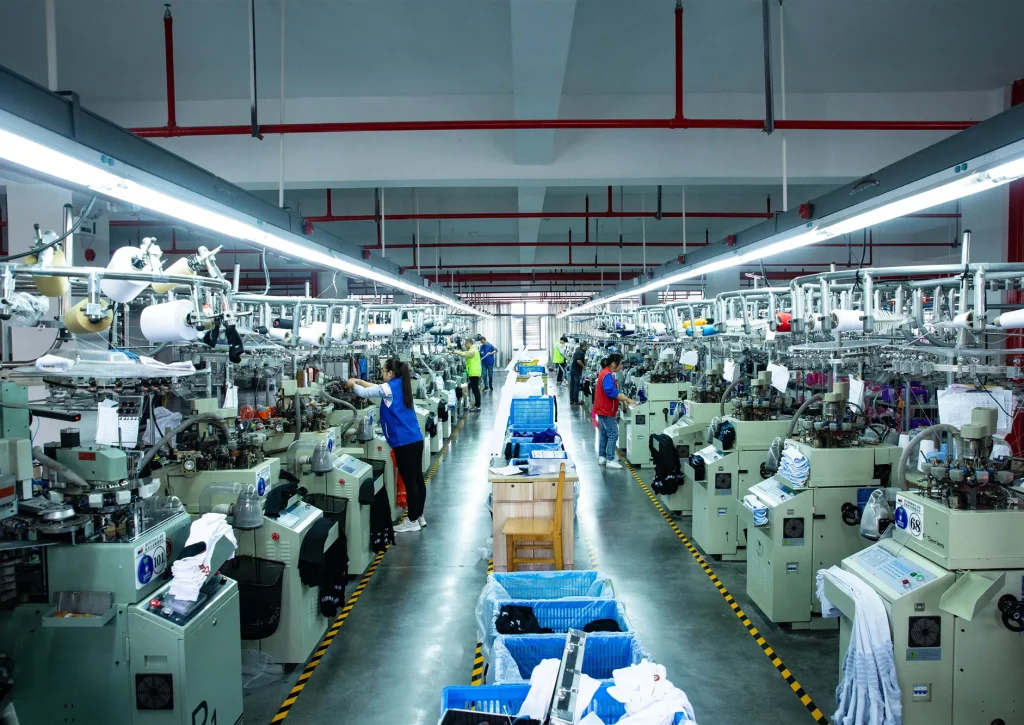
The first question should be about role. Is the sock meant to be a retro visual style, a school or club sock, a team item, a casual retail basic, or one style inside a larger collection? That choice affects everything else.
The second question should be about sizing. Tube socks are often chosen for simpler size planning, so it makes sense to ask how broad the range can be without hurting wear experience too much.
The third question should be about materials. Cotton-rich blends, polyester blends, nylon content, and elastic recovery all affect hand feel, durability, hold, and cost. The best yarn mix depends on the product’s position in the market.
The fourth question should be about design details. Stripe placement, cuff height, jacquard logo use, color consistency, and packaging all shape how the sock performs as a retail item.
The fifth question should be about alternatives. If the same collection may also need more shaped sport socks, support-led knee-high socks, or shorter low-profile styles, it is worth comparing which features belong in which product type.
The stronger the brief, the easier it becomes to develop the right product instead of simply following a familiar keyword.
Conclusion
Tube socks are defined by heel-less construction, but their value in the market goes beyond that. They remain useful because they are simple to understand, easy to style, and well suited to retro, team, casual, and promotional sock lines.
Are tube socks still worth developing for a private label sock line?
Yes, especially for brands targeting retro sport looks, teamwear, school programs, or casual basics. Tube socks are usually easier to merchandise visually and simpler to size than more technical sock structures, so they can work well as an accessible entry style in a wider collection.
FAQs
What is the real difference between tube socks and crew socks for a buyer?
The main difference is construction. Tube socks use a straight, heel-less body, while crew socks usually offer a more shaped everyday fit. For buyers, that affects wear feel, fit control, and whether the product should lean more toward simple styling or more structured daily use.
Are tube socks and knee-high socks the same thing?
No. Tube socks describe construction, while knee-high socks describe length. A product can be knee-high without being a true tube sock, and that distinction matters when the brief starts moving toward support, coverage, or more structured lower-leg use.
Are tube socks a good choice for teamwear or school programs?
In many cases, yes. Tube socks are often a strong fit for team and school use because they support bold color placement, familiar athletic styling, and simpler size planning. That makes them practical for repeat programs, club merchandise, and visually consistent retail packs.
When should a buyer choose another sock type instead of tube socks?
A buyer should usually look beyond tube socks when the project needs a more exact foot fit, more stable performance during movement, stronger support zones, or more technical positioning. In those cases, shaped running socks or more structured knee-high compression styles are often the better direction.
How long does sampling and bulk production usually take?
Your site shows slightly different timelines by product category, but the most consistent range is: free mockups within 24 hours, custom samples usually in about 3–10 days, and bulk production commonly around 20–35 days after sample approval, depending on yarn choice, order size, and packaging complexity.
What should brands confirm before developing tube-style socks?
They should confirm the target use, size plan, yarn blend, cuff height, stripe or logo method, packaging, and whether tube construction really matches the intended market. Your site also highlights in-house production, 3-stage inspection, an in-house lab, and 100% inspection before shipping, so those are useful checkpoints to discuss before moving into sampling.
Can tube socks attract buyers even if the final order becomes another sock type?
Yes. Tube socks are a familiar entry point, so they often start the conversation. Once a buyer defines the brief more clearly, the final product may shift toward shaped running socks, knee-high compression socks, or no-show socks depending on fit, coverage, and use requirements. That kind of progression is normal in custom sock development.
What support can a brand expect during development?
Based on your current site pages, brands can expect 24-hour response or mockup support, flexible customization, sample development, private label packaging support on relevant product pages, and after-sales backing including a 3-year quality warranty on key manufacturer pages. That gives buyers a clearer path from concept to bulk order.