

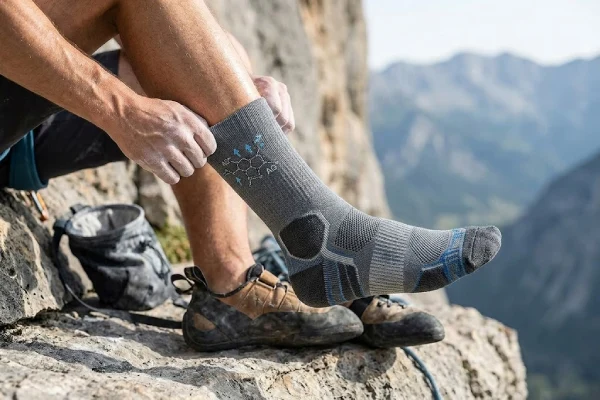
Tight climbing shoes trap heat and sweat fast. Odor builds quickly in that kind of environment. For climbers, that means more than just an unpleasant smell. It can affect comfort, freshness, and the overall wear experience inside the shoe.
Anti-odor features in climbing socks help reduce smell, support better hygiene, and improve comfort in tight-fitting shoes. For indoor climbing and long outdoor sessions, they can make socks feel fresher, more wearable, and better suited to repeated use.
If you are building or sourcing climbing socks, this feature deserves more attention. It is not just a packaging phrase. When matched with the right yarn blend, sock structure, and target use, anti-odor can become a strong product benefit that users notice early in modern climbing socks.
This article looks at why climbing socks develop odor so quickly, how anti-odor systems work, which materials are commonly used, and why this feature matters for both product performance and commercial positioning.
Why Climbing Socks Trap Odor Faster Than Most Sports Socks
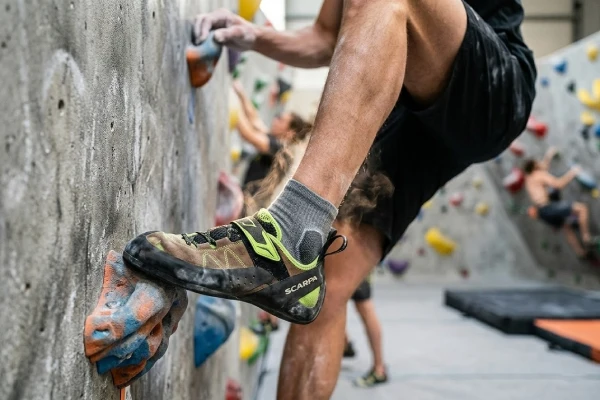
Climbing socks sit in one of the hardest footwear environments. Shoes fit close. Airflow stays low. The foot heats up quickly. Sweat has very little room to escape.
That is why climbing socks usually develop odor faster than many casual or sports socks. The fabric stays warm, damp, and pressed close to the skin for long periods, especially during repeated sessions.
Indoor climbing makes this even more obvious. A climber may wear shoes, remove them between attempts, and then put them back on again a few minutes later. The sock never fully dries. The shoe never fully airs out. That repeated cycle makes odor harder to control.
Outdoor climbing creates a different version of the same problem. Long approaches, warm weather, and full-day wear put more pressure on sock freshness. By the end of the day, even a well-fitting sock can feel much less comfortable if it holds too much moisture.
That is why anti-odor matters. It solves a real wear problem, not a minor detail.
Beyond the Smell: The Mechanics of Anti-Odor Climbing Socks
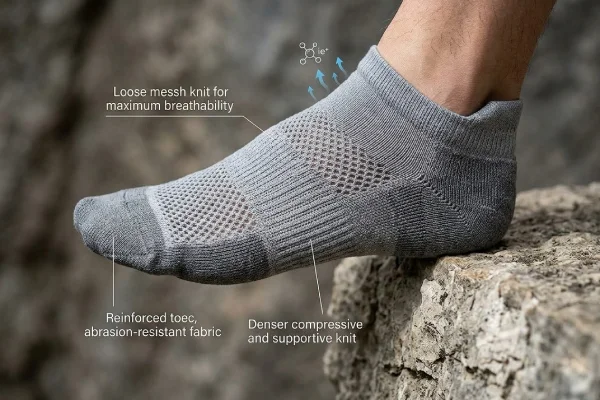
Anti-odor performance usually comes from two things working together: moisture management and odor-control support.
A strong anti-odor sock helps move sweat away from the skin and uses fibers or finishes that make the fabric stay fresher during wear. The result is a drier, cleaner, and more stable feel inside the shoe.
The first part is moisture control. When sweat spreads through the fabric and dries more efficiently, the foot feels less damp. That alone can help reduce odor pressure during a long session. This is also why moisture-wicking socks are so often linked with better comfort and less friction.
The second part is the odor-control system itself. Some socks rely on naturally odor-resistant fibers. Others use special textile finishes designed to support freshness during repeated wear in warm, enclosed conditions.
The key point is simple: anti-odor works best when the full sock structure supports it. If the sock traps heat, feels bulky, or lacks breathability, one treatment alone will not fully solve the problem.
Merino, Synthetics, and Silver-Ion: Which Anti-Odor Route Fits Best?
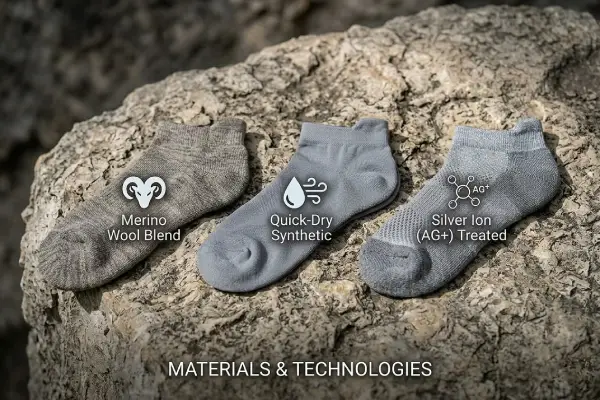
Different climbing socks use different anti-odor strategies. The right option depends on the target user, price point, and product story.
The most common anti-odor routes in climbing socks are merino blends, technical synthetic blends, and silver-ion or similar odor-control treatments. Each one brings a different balance of comfort, drying speed, durability, and freshness.
Merino wool blends
Merino is popular because it supports comfort and odor management at the same time. Woolmark notes that wool can absorb up to about 35% of its own weight in moisture while helping keep the skin surface drier, which is one reason it performs well in odor-heavy wear conditions.
Merino blend climbing socks are often chosen for:
- softer feel
- good moisture handling
- more natural odor resistance
- comfort across changing conditions
This makes merino a strong option for outdoor climbing socks and premium all-season lines. Brands that want a stronger natural-material story often look at custom wool socks when planning this kind of range.
Technical synthetic blends
Nylon, polyester, and spandex are also common in climbing socks because they support:
- faster drying
- better abrasion resistance
- stronger shape retention
- close, precise fit inside climbing shoes
These blends often work well for thinner gym-focused socks where users want a cleaner, lower-bulk feel.
Silver-ion and similar odor-control finishes
Silver-based antimicrobial systems are widely used in performance textiles to help reduce odor build-up during repeated wear. They are especially useful in socks worn in warm, enclosed footwear.
This route can be a good fit for:
- indoor climbing socks
- repeat-use training socks
- premium technical sock ranges
- products that need a stronger freshness story
| Material / Treatment Route | Main advantages | Recommended use |
|---|---|---|
| Merino blends | Soft hand feel, strong moisture buffering, reliable odor resistance | Best for outdoor climbing or premium all-season products |
| Synthetic blends | Faster drying, better abrasion resistance, stronger fit recovery | Best for thin indoor performance socks and repeat gym use |
| Silver-ion treated options | Clear freshness benefit, useful for frequent wear, strong technical product story | Best for gym-focused or technical ranges when paired with solid construction |
Why Anti-Odor Matters More in Indoor Gyms and Long Outdoor Sessions
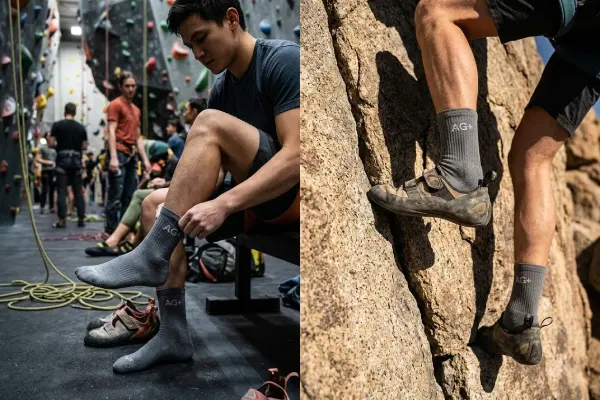
Not all climbing situations place the same demand on socks.
Indoor gyms and long outdoor sessions create the strongest need for anti-odor because they combine long wear time, repeat sweat build-up, and very limited drying opportunities.
Indoor users often climb several times a week. Their socks go through repeated shoe-on and shoe-off cycles, then end up in a gear bag before fully drying. Freshness becomes part of how they judge product quality.
Outdoor users deal with a longer wear window. A sock may be used during approach, climbing, rest, and travel in one day. If the yarn blend cannot manage moisture well, odor builds faster and comfort drops sooner. For brands developing products around this problem, socks for sweaty feet offer a useful reference point for moisture and odor management logic.
That is why anti-odor should be treated as a core use-case feature, not a side feature.
Freshness Supports Performance Too, Not Just Hygiene
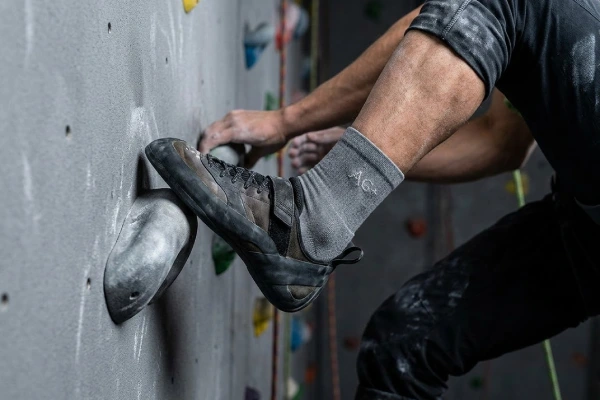
Many buyers think anti-odor is only about hygiene. In climbing socks, it also supports comfort and product feel.
When socks stay drier and fresher, they usually feel more stable inside the shoe. That can reduce distraction, improve long-session comfort, and help the sock remain more wearable over time.
A damp sock often feels sticky or uneven inside a tight shoe. That can affect the user’s perception of fit. In thin climbing socks, moisture build-up can quickly turn a precise feel into an uncomfortable one. In lightly cushioned styles, trapped sweat can make the sock feel heavier and less clean.
So anti-odor is not separate from performance. It supports the conditions that help a climbing sock stay comfortable and consistent. That broader shift toward more specialized climbing products is part of how climbing socks evolved from barefoot habits to performance gear.
Why This Feature Matters for Brands and Retailers

From a business angle, anti-odor does more than improve wear experience.
It also gives brands and retailers a product benefit that is easy to explain, easy to position, and easy for users to understand.
It can support several product directions:
- gym-focused climbing socks
- premium outdoor socks
- technical low-bulk socks
- repeat-use training lines
It also helps create clearer product messaging around:
- freshness
- comfort
- hygiene
- repeated wear
- technical value
That makes anti-odor a practical feature for product pages, retailer pitches, and private-label line planning.
Final Thoughts: A Small Sock Feature That Adds Real Product Value
Anti-odor climbing socks solve a real problem in real use. They help products stay fresher in tight shoes, support comfort during repeated sessions, and make the overall wear experience more consistent.
For brands and retailers, this feature also creates a clearer technical story. It can help define the difference between a basic climbing sock and a better-developed product built for indoor use, long outdoor wear, or premium positioning.
If you are planning a climbing sock range, this is a feature worth building in from the start, not adding at the end. The best results come when odor control is developed together with fit, yarn choice, thickness, and breathability.
For brands that want to develop climbing socks with the right balance of freshness, comfort, and performance, working with an experienced custom socks manufacturer can make product planning much easier. A stronger yarn blend, a better fit strategy, and a clearer feature focus can all help create a more competitive climbing sock line.
FAQ
Do anti-odor climbing socks really work?
Yes. They help reduce odor build-up by improving moisture control and using odor-resistant fibers or finishes. The best results come when the full sock construction supports the feature.
Are anti-odor socks only for indoor climbers?
No. Indoor climbers benefit a lot, but outdoor climbers also need freshness during long wear, travel, and changing weather. The feature supports both use cases.
Is merino wool good for anti-odor climbing socks?
Yes. Merino blends are popular because they feel comfortable and usually handle odor better than many basic fibers. They often work best when blended for durability and stretch.
Do silver-ion climbing socks feel different on foot?
Usually, the feel depends more on the yarn blend and sock construction than on the treatment itself. A well-made sock should still feel comfortable and close-fitting.
Can anti-odor socks replace washing and drying?
No. They help reduce odor during use, but regular washing, full drying, and shoe care are still needed to keep socks and climbing shoes in good condition.
Should brands mention anti-odor in climbing sock marketing?
Yes. It is easy for users to understand and connect directly with comfort, hygiene, repeated wear, and product quality. That makes it a strong message for climbing sock lines.