

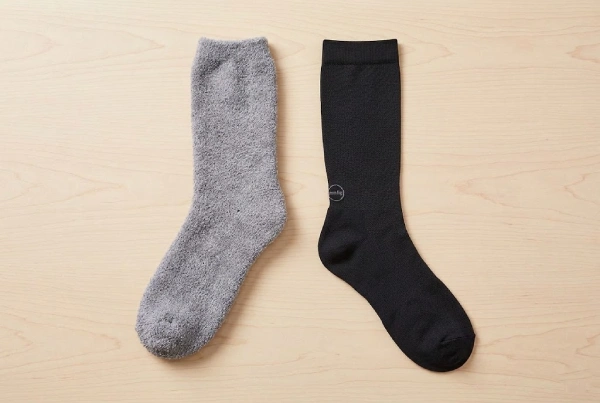
Many people treat these two products as the same thing. That leads to weak buying choices and the wrong expectations.
Circulatory socks and compression socks are made for different needs. Circulatory socks usually focus on comfort-first protection, while compression socks use measured pressure to support venous return and swelling control.
The names sound similar. The function is not.
What are circulatory socks, really?
Many buyers see the word “circulatory” and assume they are looking at a compression product. That is where confusion starts.
Circulatory socks are usually non-binding, comfort-focused socks made to reduce friction, avoid tight pressure points, and support a gentler foot environment. In many cases, they are closer to diabetic-friendly socks than true compression socks, especially when the design focuses on a smooth or seamless toe, softer contact, and less pressure at the leg opening.
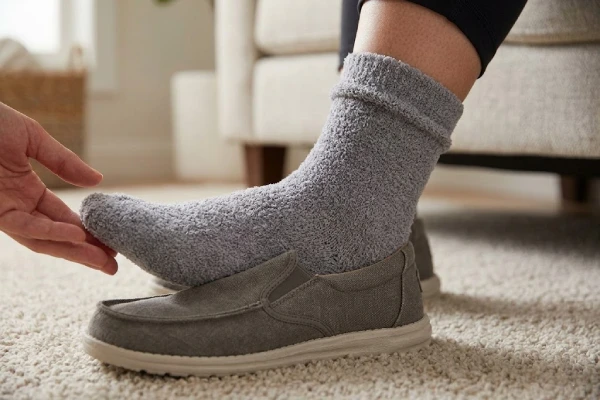
The term circulatory socks is often used more in retail language than in strict medical language. In most cases, these socks are built around one idea: do not add extra stress to the foot or lower leg.
That shows up in the construction. A circulatory sock often has a non-binding top instead of a tighter cuff. Many also use a smooth or seamless toe to reduce rubbing. Soft yarns are common. Cushioned soles are common too. Moisture control is another big feature because a drier sock usually feels better and helps create a gentler wearing environment.
Some products in this category also use material stories like copper, silver, or far-infrared yarn blends. Those features may support comfort, odor control, or wellness positioning. They do not turn a comfort sock into a true graduated compression product.
The key point is simple. A circulatory sock is usually designed to protect comfort, reduce friction, and avoid harsh pressure. It is not mainly designed to apply a structured compression system to the leg. If you want a closer side-by-side look at this comfort-first category, it helps to read diabetic socks vs compression socks and review how custom diabetic socks are usually developed.
What are compression socks designed to do?
A compression sock is not just a tighter sock. The pressure pattern is the main feature.
Compression socks are designed to apply controlled pressure to the leg, usually with the highest pressure at the ankle and less pressure higher up. This helps support venous return, reduce swelling, and improve pressure-based leg support.
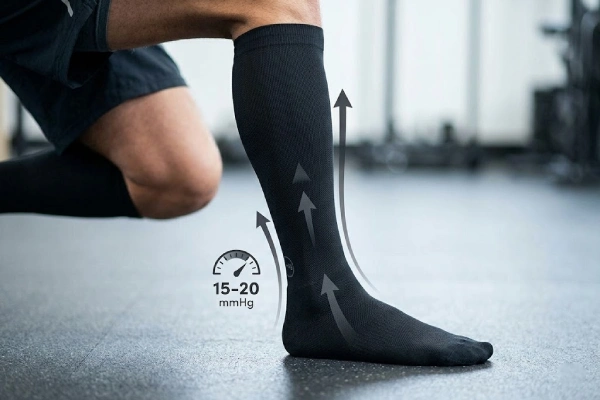
Compression socks are built around graduated compression. That means the pressure is not equal from top to bottom. It is strongest at the ankle, then lower as the sock moves up the leg. This structure matters because the product is meant to do more than feel snug. It is meant to provide planned support.
Simple tightness is not the same as compression design. A sock can feel tight and still do a poor job if the pressure is not balanced correctly. A real compression sock needs the right yarn behavior, the right knit structure, and the right size match so the pressure sits where it should.
Compression socks are often chosen for long flights, long work shifts, swelling support, leg heaviness, and other situations where people want more than basic comfort. Some are sold for light daily support. Others are made for stronger pressure levels. If you want a cleaner split between entry-level and clinical-style positioning, see everyday vs medical compression socks.
That is why compression socks should not be grouped with ordinary tight socks or comfort socks. A comfort sock tries to reduce unwanted pressure. A compression sock uses planned pressure as its main function.
Circulatory socks vs compression socks: what is the biggest difference?
The names may overlap in casual language. Their job is different from the start.
The biggest difference is simple: circulatory socks focus on passive comfort and protection, while compression socks use measured pressure to create active support for blood-flow return and swelling management.

Circulatory socks and compression socks are not two labels for the same product. They follow two different design paths.
A circulatory sock usually follows a passive protection model. It tries to avoid harsh pressure, reduce rubbing, and create a softer wearing experience. It is built for comfort first.
A compression sock follows an active support model. It uses controlled outside pressure to support venous return and help manage swelling. Pressure is not a side effect. It is the product.
There is also a clear structural split. Circulatory socks usually do not depend on mmHg-based compression levels. Compression socks often do. That means the two products are measured differently, marketed differently, and chosen for different reasons.
The use logic is different too. Circulatory socks are usually tied to daily comfort, lower friction, and non-binding wear. Compression socks are tied to leg support, travel, long standing, swelling, and pressure-based performance.
So the real difference is not just the name. It is the construction, the pressure logic, and the user need.
Who are circulatory socks usually made for?
Some users are not looking for stronger pressure. They want a sock that feels easier to wear all day.
Circulatory socks are usually better suited to users who want non-binding comfort, lower-friction construction, and gentler everyday wear rather than stronger pressure support.

Circulatory socks usually appeal to people who care first about how a sock feels on the foot and lower leg. That often includes users who dislike tight sock openings, users who notice rubbing from rough toe seams, and users who want a softer daily-wear option.
In many product lines, this category also overlaps with diabetic-friendly positioning because the design features match what those buyers often look for: less constriction, smoother inside contact, softer yarn, and moisture handling.
Some buyers in this category want comfort for long daily wear. Some are shopping for older family members who find tighter socks hard to put on or unpleasant to wear. Some simply want a sock that does not leave a deep cuff mark.
In these cases, a circulatory sock makes sense because the product goal is comfort and skin friendliness, not stronger external support. That is the value of the category. It does not need to act like a softer version of compression socks to make sense in the market. A useful next step is to compare this with what diabetic socks are and why retailers choose them.
Who are compression socks usually made for?
Some users want more than comfort. They want structured support.
Compression socks are usually chosen by people who want pressure-based support for swelling, travel, long work shifts, recovery, or venous circulation needs.

Compression socks are often bought by people who already know they want support from pressure. They may work long shifts on their feet. They may sit for long hours at a desk or on flights. They may notice leg heaviness late in the day. They may also want a more structured product for recovery or daily swelling support.
This user group tends to care about function in a different way. Comfort still matters, but it is not the first question. The first question is usually whether the sock gives the right level of support for the intended use.
That is why buyers in this category pay more attention to pressure range, sock length, fit, and performance language. A light support knee-high sock for office wear is not the same as a stronger compression sock meant for more demanding support needs.
Compression buyers usually want more clarity. They are not just buying fabric. They are buying a pressure outcome. For example, brands targeting travelers often need a very different offer from brands targeting medical or recovery categories, which is why a dedicated page on travel compression socks for flying can be useful here.
Why does compression level matter so much?
Many people compare compression socks without checking the pressure level. That misses the main point.
Compression level matters because different pressure ranges are made for different support needs. A light daily compression sock is not the same as a stronger product designed for more serious swelling or venous support.
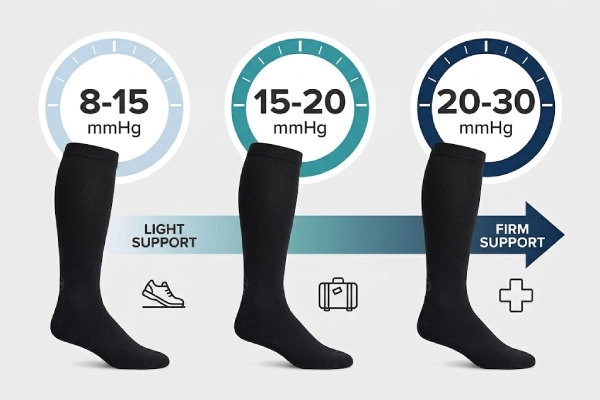
The most common way to describe compression strength is mmHg, which stands for millimeters of mercury. That number tells you how much pressure the sock is meant to apply.
Light ranges such as 8–15 mmHg are usually closer to mild daily support. 15–20 mmHg is often seen as an entry point for regular support use, especially for travel or long workdays. 20–30 mmHg moves into a firmer support range. 30–40 mmHg is stronger again and should not be treated like an ordinary retail comfort sock.
Once the mmHg changes, the product story changes too. The size chart becomes more serious. The fit risk becomes more serious. The buyer expectation becomes more serious. If you need a practical example, this comparison of 15–20 vs 20–30 mmHg compression socks helps show why those ranges should not be mixed together.
This is also where circulatory socks and compression socks part ways very clearly. Circulatory socks usually do not live inside this mmHg structure. They are not bought by pressure class. They are bought for comfort features and easier wear.
If a product does not use true graduated compression logic, it should not be described like a real compression alternative. Clear category language protects the buyer and makes the product line easier to understand.
Can the wrong sock choice create problems?
Yes. The wrong product does not just disappoint the customer. It can create real mismatch and risk.
The wrong sock choice can lead to poor results, more returns, wrong expectations, and avoidable problems when pressure products are used in the wrong situation or comfort socks are expected to do a compression job.
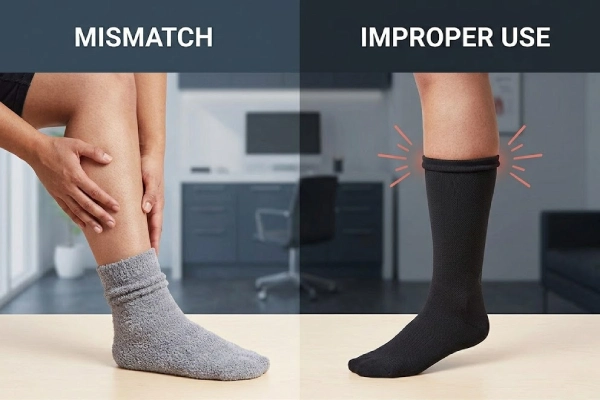
A common mistake is expecting circulatory socks to do the work of compression socks. If a buyer needs pressure-based support for swelling or venous return, a soft non-binding sock is usually not enough. It may feel good, but it is not built for that job.
The reverse mistake can be more serious. Compression socks are not right for every user. Stronger pressure products require more care, better fit, and better judgment about who should wear them.
Problems can start when the size is wrong, when the sock rolls down and forms a tight band, or when the product is used in a situation where pressure should be handled carefully. That includes concerns around PAD, severe CHF, severe neuropathy, or other situations where a buyer should not guess.
Fit matters too. A bunching sock, a rolled cuff, or a badly matched size can create uneven pressure instead of smooth support. That can hurt comfort, hurt performance, and hurt trust in the product. If sizing is part of the concern, it helps to review what size compression socks you need before setting fit expectations.
This is why clear product classification matters. It is not just a marketing issue. It affects product fit, buyer expectations, and safe use boundaries.
What should brands and retailers check before choosing one product line?
A lot of sourcing mistakes happen before the sample is even made. The real problem is unclear product direction.
Brands and retailers should decide first whether the product is meant for comfort protection or pressure support. That choice affects material selection, construction, size logic, labeling, claims, and customer communication.

If the product line is meant to be circulatory socks, the checklist should focus on comfort details:
- non-binding top construction
- seam smoothness
- softness of yarn
- moisture management
- cushioning
- comfort-driven labeling
If the product line is meant to be compression socks, the checklist changes:
- mmHg range
- graduated compression consistency
- yarn recovery
- size-chart logic
- length options
- labeling accuracy
Many mixed product lines fail because they sell a circulatory sock with compression-style wording, or sell a light support sock as if it were a true graduated product. That may help the first click, but it usually hurts long-term trust.
Better sell-through often starts with cleaner category structure. If one product is built for comfort-first use and another is built for pressure support, those products should not be blended into one vague message. Clear naming, clear feature priorities, and clear size guidance help buyers choose the right product faster.
For brands and retailers, this is about more than being technically correct. When product words match real product behavior, returns tend to drop and buyer confidence tends to rise. If your readers are also evaluating development options, a strong end-of-article path is custom compression socks: a complete guide for brands or the main custom compression socks manufacturer page.
Conclusion
Circulatory socks and compression socks may sound similar, but they solve different problems. Clear product positioning helps you choose better, source better, and set better buyer expectations.
FAQ
Are circulatory socks the same as compression socks?
No. Circulatory socks are usually comfort-focused and non-binding, while compression socks use controlled pressure to support venous return and swelling management.
Do circulatory socks have mmHg compression levels?
Usually no. Most circulatory socks are not structured or sold as graduated compression products with standard mmHg pressure classifications.
Are circulatory socks closer to diabetic socks?
In many cases, yes. They are often sold with features like non-binding tops, softer yarns, and smoother toe construction.
Can circulatory socks replace compression socks?
Not usually. If you need measured pressure support, circulatory socks are generally not a true replacement.
Who should be more careful with compression socks?
People with certain circulation, heart, nerve, or fit-related concerns should be more careful, especially with stronger compression levels.
Why do buyers confuse these two products?
Because both names suggest better circulation, even though their design logic, pressure structure, and usual use cases are different.
What should buyers check before sourcing compression socks?
Check the mmHg range, gradient design, size-chart method, yarn recovery, and whether the product claims match the actual structure.
What should buyers check before sourcing circulatory socks?
Check sock-top construction, seam smoothness, softness, moisture control, and whether the comfort positioning fits the real user group.