

Introduction
Sizing disputes are one of the most common friction points between buyers and sock factories — and most of them are preventable. The root cause is almost always the same: the buyer and the factory measured the sock in different ways, or used different reference points, and neither side realized it until the goods arrived.
This guide covers the measurement methods factories actually use, how to read a size chart, how material shrinkage affects final dimensions, and what information you need to give a factory when placing a custom order — particularly for compression socks, where sizing directly affects product performance.
Before diving in, a quick note: shrinkage tolerance is a separate but related topic. If you’re sourcing socks and want to understand how quality inspection handles size deviation, we’ve covered that in detail in our sock inspection guide on LinkedIn.
Why Measurement Method Matters More Than You Think
Most buyers assume that measuring a sock is straightforward. It’s not — because there are multiple ways to do it, and they produce different numbers on the same sock.
If you send a sock to a factory and say “the foot length should be 26cm,” but don’t specify how you measured it, the factory will use their default method. If that’s different from yours, the result will be a sock that measures correctly by their standard and incorrectly by yours — and both sides will be convinced they’re right.
The fix is simple: always confirm the measurement method before sampling.
Basic Measurement Mistakes
Before covering the correct methods, here are the two most common errors:
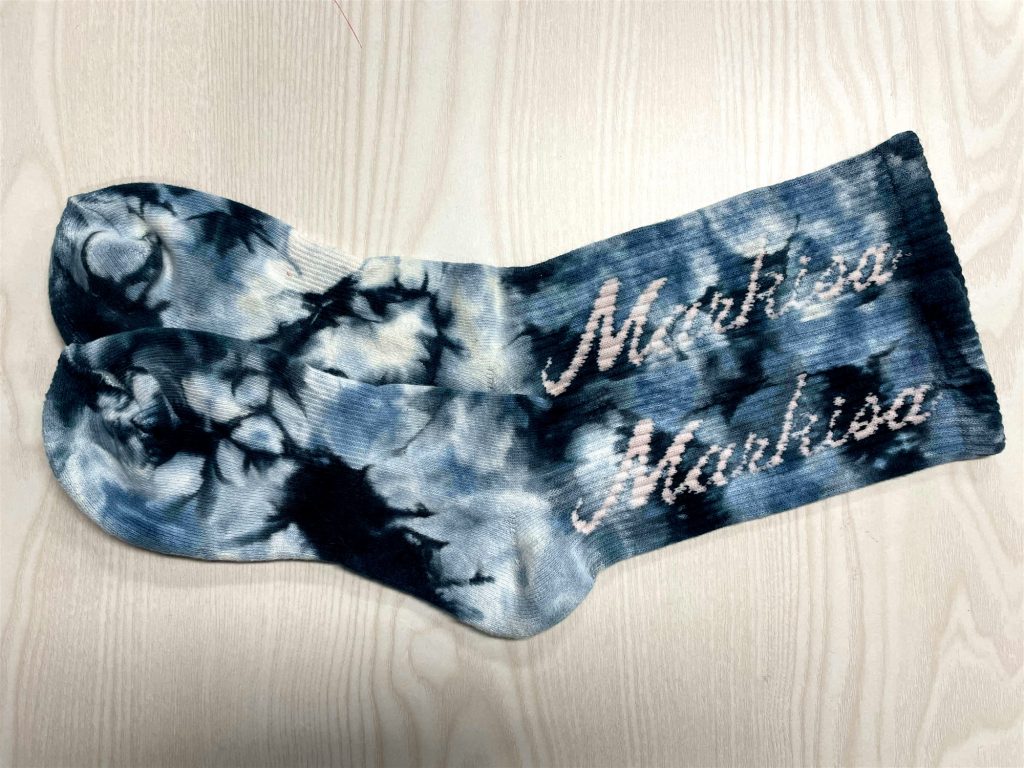
Both of these approaches fail because they don’t align to consistent reference points. A sock measured from the wrong starting position, or laid at an angle rather than flat, will consistently produce numbers that don’t match factory specs — even when the sock itself is correct.
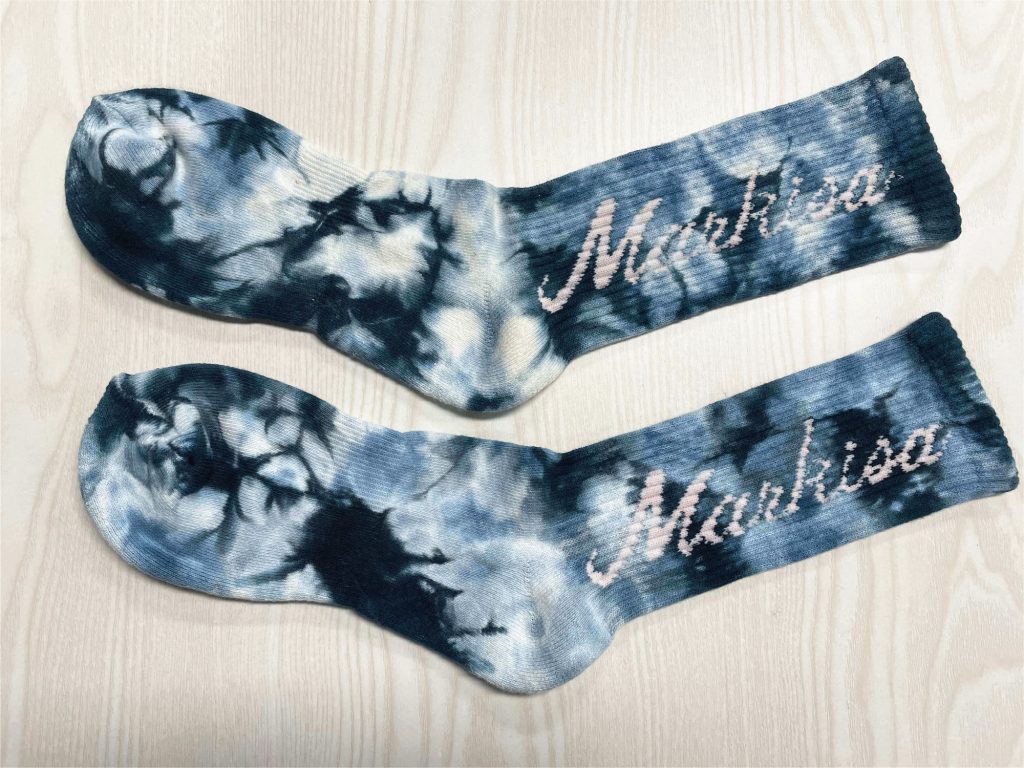
One additional factor that complicates measurement: a brand new sock and the same sock after a year of wear will measure differently, because all textile materials shrink to some degree over time. We’ll cover this in the shrinkage section below.
The Three Standard Factory Measurement Methods
1. Central Measurement
The sock is laid flat in its natural L-shape. Measurement runs in a straight line from the center point of the heel to the tip of the toe, without following the curve of the sock.
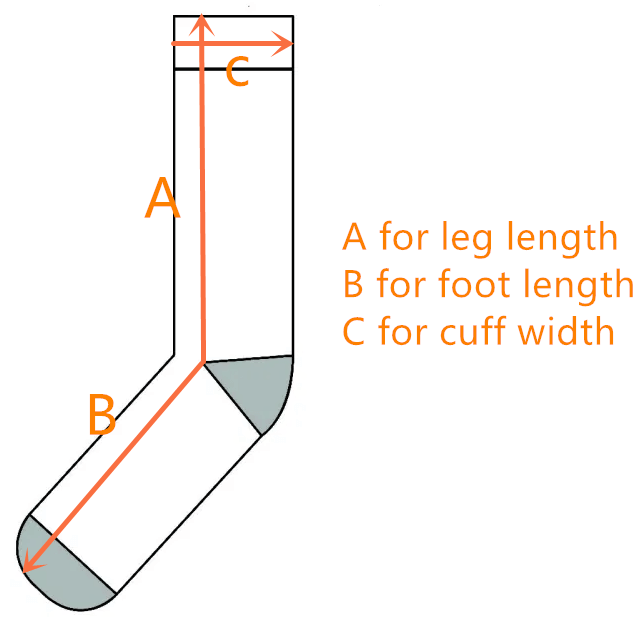
This is the factory default — the most widely used method in professional sock manufacturing. The reference points (heel center and toe tip) are easy to locate consistently, which minimizes human error across different operators. When a factory quotes a foot length specification, it is almost always based on central measurement unless stated otherwise.
When to use: Standard for all production specs and QC inspection unless otherwise agreed.
2. Folding Measurement
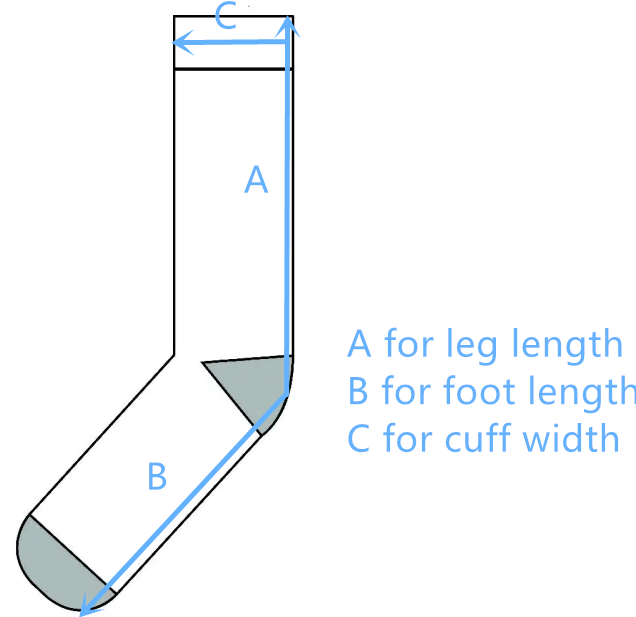
The sock is folded in half lengthwise so the toe meets the heel opening. Measurement is taken from the fold point to the top of the sock, then doubled.
This method is sometimes used by buyers who want to verify foot length quickly without a ruler along the full sock. However, it introduces more potential for error — if the fold point isn’t precisely at the midpoint of the sock, the result will be off. Avoid using this method for official specs or QC reference.
When to use: Occasional quick checks only, not for production specs.
tain shrinkage between each material. In this way, you can ask the supplier to deal with pre-shrunk material for socks/ compression socks. And here we have a guide on how to choose the material.
3. Crossover measurement:
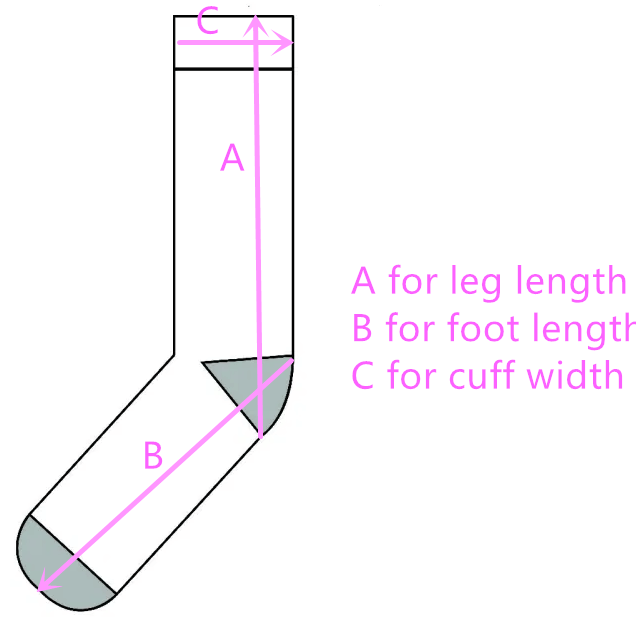
Measurement follows the contour of the sock from heel to toe rather than in a straight line. Because it traces the curve of the sock shape, the resulting number is always slightly larger than the central measurement of the same sock — typically by 1–2cm depending on the sock’s heel shape.
This method is used by some buyers and certain market standards, particularly in Europe. If your supplier uses crossover and you’re using central, or vice versa, you will have a systematic discrepancy on every size.
When to use: Only if your market standard or customer spec explicitly requires it — and always confirm alignment with the factory.
Measuring Straight-Boarded vs. Bent-Boarded Socks
The measurement methods above apply to bent-boarded socks — the most common type, where the sock is shaped on a foot-form board that gives it the natural L-shape of a foot. Bent boarding is used for most athletic socks, compression socks, dress socks, and casual socks because the shape holds better and the finished product displays more naturally.
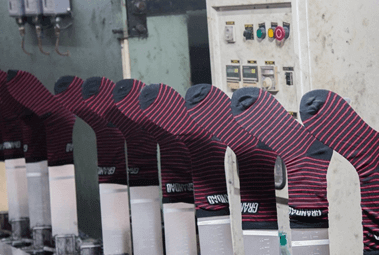
A smaller category uses straight boarding, where the sock is shaped on a flat, straight board rather than an angled one. Straight boarding is primarily used for sublimation-printed socks and certain flight socks — the flat shape allows the printing press to apply even heat and pressure across the entire sock surface. On a bent sock, the curved heel area would cause uneven contact and result in print quality issues.
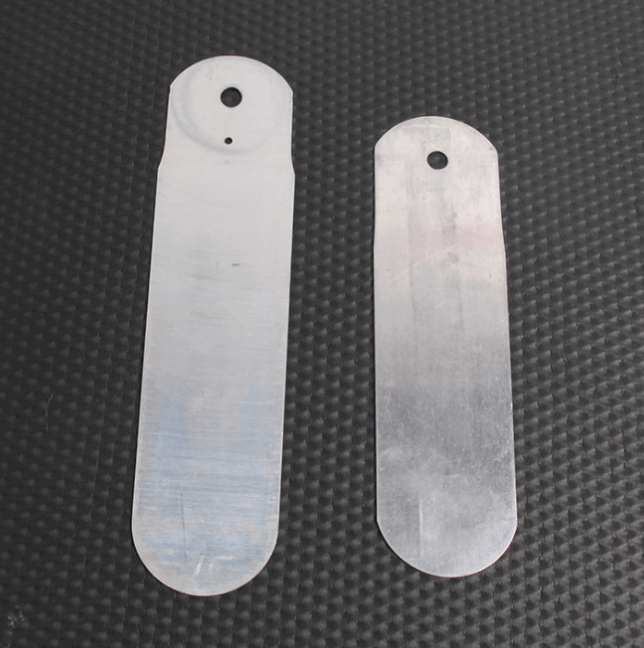
For straight-boarded socks, foot length is measured along the flat bottom of the sock from heel end to toe end. Because there is no angle, central and straight-line measurements produce the same number.
We’ve also made a measurement video for visual reference:
Sizing for Compression Socks: A Different Set of Measurements
Standard socks require only one key measurement: foot length. Compression socks require two.
Because compression socks apply graduated pressure to the leg, fit is a functional requirement — not just a comfort one. A compression sock that fits the foot correctly but is too tight or too loose at the calf will not deliver the intended pressure profile, and may cause discomfort or fail to provide the therapeutic benefit.
The two measurements needed for compression sock sizing are:
1. Foot length (cm) — determines the sock size as usual, measured by central method.
2. Calf circumference (cm) — measured at the widest point of the calf. This determines which compression size range the sock falls into (S/M/L/XL), and ensures the graduated pressure zones in the leg portion of the sock will sit at the correct anatomical positions.
Some compression sock specifications also include ankle circumference and calf length (distance from floor to below the knee), which are needed for precise medical-grade compression products. For most standard OEM compression sock orders, foot length + calf circumference is the minimum required.
If you’re developing a compression sock line and haven’t finalized your size spec yet, our custom compression socks page includes the size ranges we work with across different compression levels.
How Material Shrinkage Affects Sock Dimensions
This is something buyers often overlook when reviewing samples — the sock they’re measuring may not be the same size as the sock their end customer will wear after the first wash.
All natural and semi-natural fibers shrink to some degree. Here’s a practical reference for the materials most commonly used in sock manufacturing:
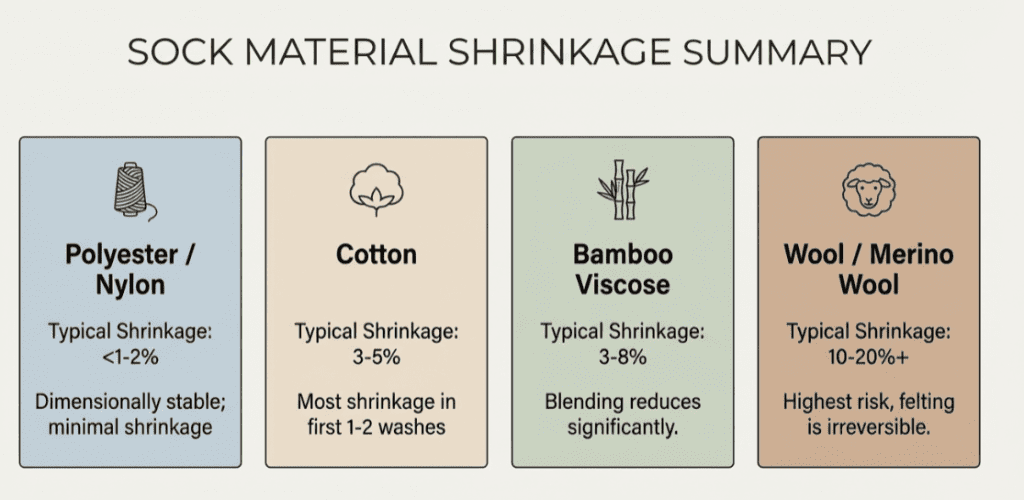
A few practical points this creates for brands:
Bamboo socks: Pure bamboo viscose is more prone to shrinkage than a bamboo blend. Most commercial bamboo socks use 70–80% bamboo with nylon and spandex, which stabilizes dimensions considerably. If your bamboo content is high and your customer is likely to machine-wash, pre-shrunk yarn or a tighter construction spec is worth discussing with the factory.
Wool and merino socks: The shrinkage risk is significant enough that most quality wool sock specs require either pre-shrunk yarn or a superwash wool treatment — a process that removes or coats the fiber scales to prevent felting. If your wool socks are spec’d without superwash treatment, size tolerances on the finished product need to account for 10%+ shrinkage after first wash.
Measurement state: When reviewing samples, always clarify whether you’re measuring a new, unwashed sock or one that has been washed once. For natural fiber products especially, the two will produce different numbers. If your QC tolerance is tight, specify that measurement should be taken after one cold-water wash and air dry.
If you’re still finalizing material choice for your product, this guide on sock materials covers the properties and trade-offs of the main options in detail.
Size Charts: US, EU, and How to Brief a Factory
The chart below shows standard foot size conversions across the main markets:
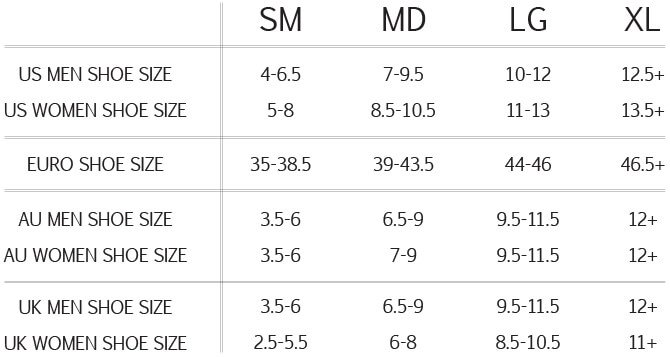
A few things worth knowing when using this as a reference:
Different markets express sock size differently. The US market typically uses shoe size ranges (e.g., Men’s M = shoe size 6–9), while European markets use EU shoe numbers. Some brands use S/M/L/XL sizing with their own internal conversion. None of these systems are universal — “Large” at one brand is not necessarily the same foot length as “Large” at another.
When briefing a factory, always provide foot length in centimeters rather than relying on a size label. This eliminates ambiguity entirely. A brief that says “Size M = 26cm foot length, central measurement” is unambiguous; a brief that says “Size M” without a cm value requires the factory to make an assumption.
The size chart above covers foot size only. Leg length is custom — it’s specified separately based on your product design (ankle, crew, knee-high, etc.) and does not follow a standard chart.
Sock sizing looks simple until you’re dealing with a factory dispute over a 1.5cm discrepancy that both sides are convinced they didn’t cause. Most of those disputes trace back to one of three things: different measurement methods, shrinkage not accounted for, or specs given in size labels rather than centimeters.
The fix is straightforward — align on method, specify in cm, and account for the shrinkage behavior of your material before signing off on a sample.
If you have a sizing spec you’d like us to review, or you’re starting a new custom sock project and want to make sure the brief is set up correctly, contact us and we’ll go through it with you.
FAQ
1. What is the most accurate measurement method for factory orders? Central measurement is the factory standard and produces the most consistent results. It measures in a straight line from the center of the heel to the toe tip, with the sock laid flat in its natural L-shape. When placing a custom order, always confirm with your factory that central measurement is being used for all specifications and QC inspection — especially if you’re providing a reference sample from a different source.
2. Do compression socks require different size measurements than regular socks? Yes. In addition to foot length, compression socks require calf circumference to ensure the graduated pressure zones sit at the correct positions on the leg. Without calf circumference, the factory cannot guarantee that the compression level will be effective or comfortable. For medical-grade products, ankle circumference and calf length may also be needed.
3. How does material shrinkage affect the final sock size? It depends on the fiber. Polyester and nylon are stable with less than 2% shrinkage. Cotton shrinks 3–5%, mainly in the first wash. Bamboo viscose ranges from 3–8% depending on blend content. Wool is the most significant — 10–20%+ shrinkage is possible without superwash treatment. For natural fiber products, always specify whether size tolerances apply to new or post-wash dimensions, and consider requesting pre-shrunk yarn if end-customer size consistency is critical.
4. What sizing information does a factory need to produce custom socks? At minimum: foot length in centimeters (specify measurement method), leg length or sock height, and size range (how many sizes, and the foot length for each). For compression socks, add calf circumference. For products with strict size tolerances, also specify the measurement state (new vs. post-wash) and acceptable deviation range.
5. Why do the same-size socks from different factories sometimes fit differently? Usually because of three variables: different measurement methods (central vs. crossover), different yarn shrinkage handling (pre-shrunk vs. not), and different stretch assumptions when boarding the sock. A sock boarded under high tension will measure correctly on the board but relax to a smaller dimension once removed. Standardizing on central measurement, cm-based specs, and pre-shrunk yarn eliminates most of these discrepancies.