

Compression level
-
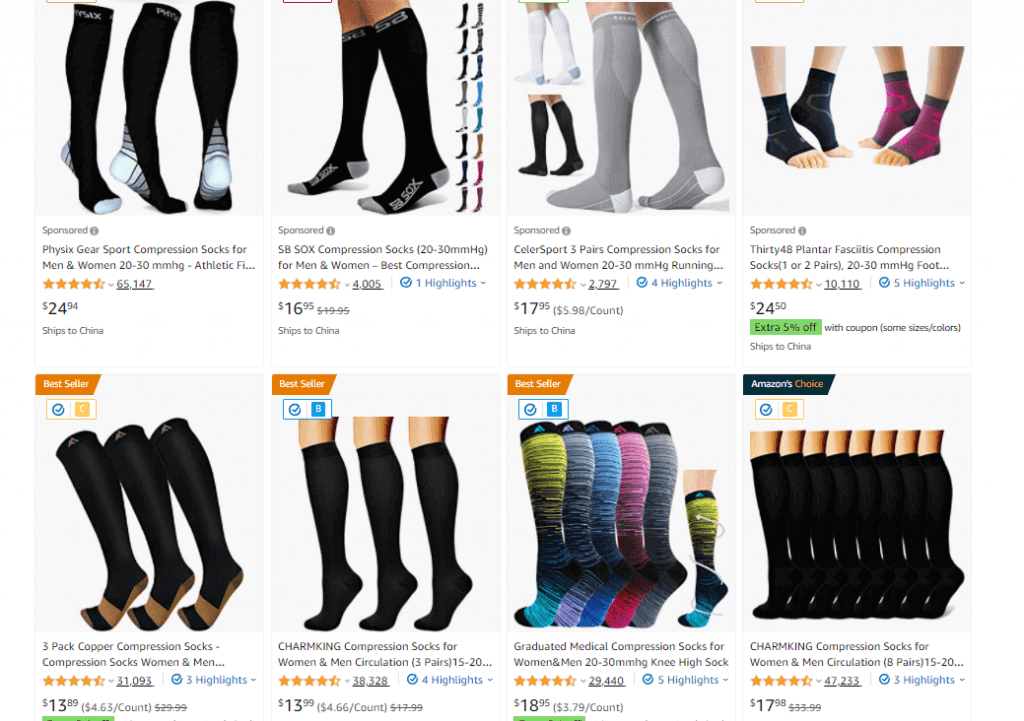
8–15 mmHg — light, for everyday comfort and air travel
-
15–20 mmHg — moderate, for daily wear, sports and pregnancy
-
20–30 mmHg — firm, the most common medical and athletic level
-
30–40 mmHg — extra firm, used under medical direction for serious vascular conditions
Length
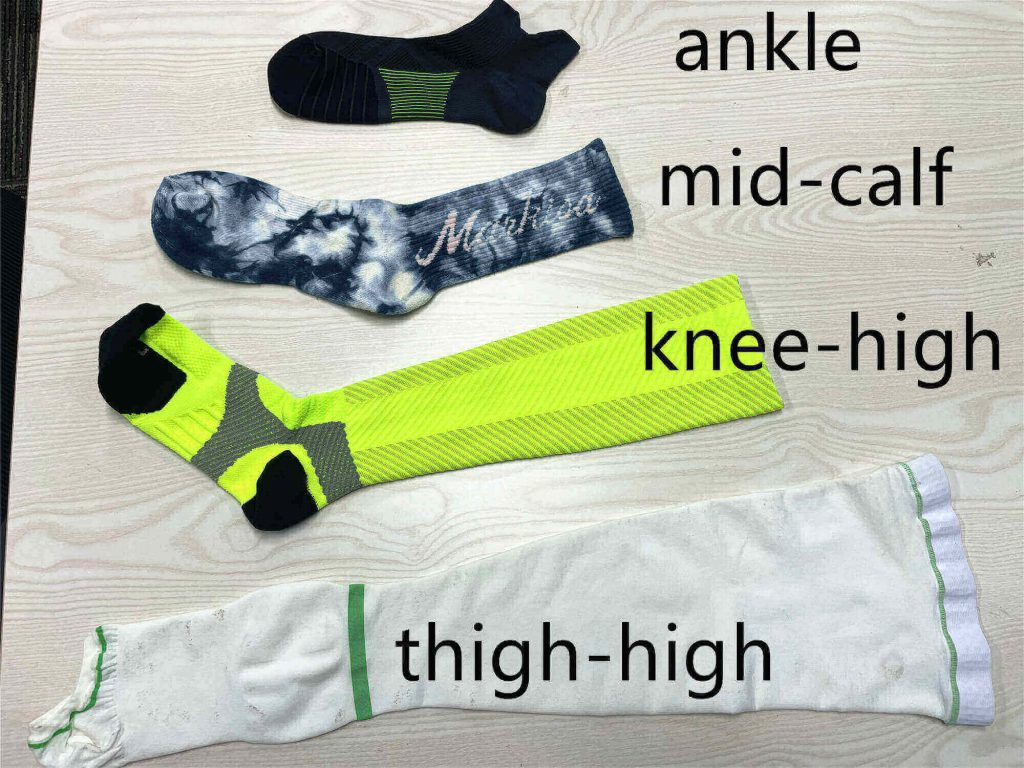
The length categories of compression socks are not as many as regular socks, mainly in ankle, mid-calf, Knee-high and thigh-high length.
The latter two lengths are more common, because the veins are mainly concentrated in the calf part, and compression socks of knee-high or above length can promote blood flow in this part.
Therefore, athletic socks are usually Knee-high length, and it is not hard to find that marathon runners always wear Knee-high compression socks.
Thickness
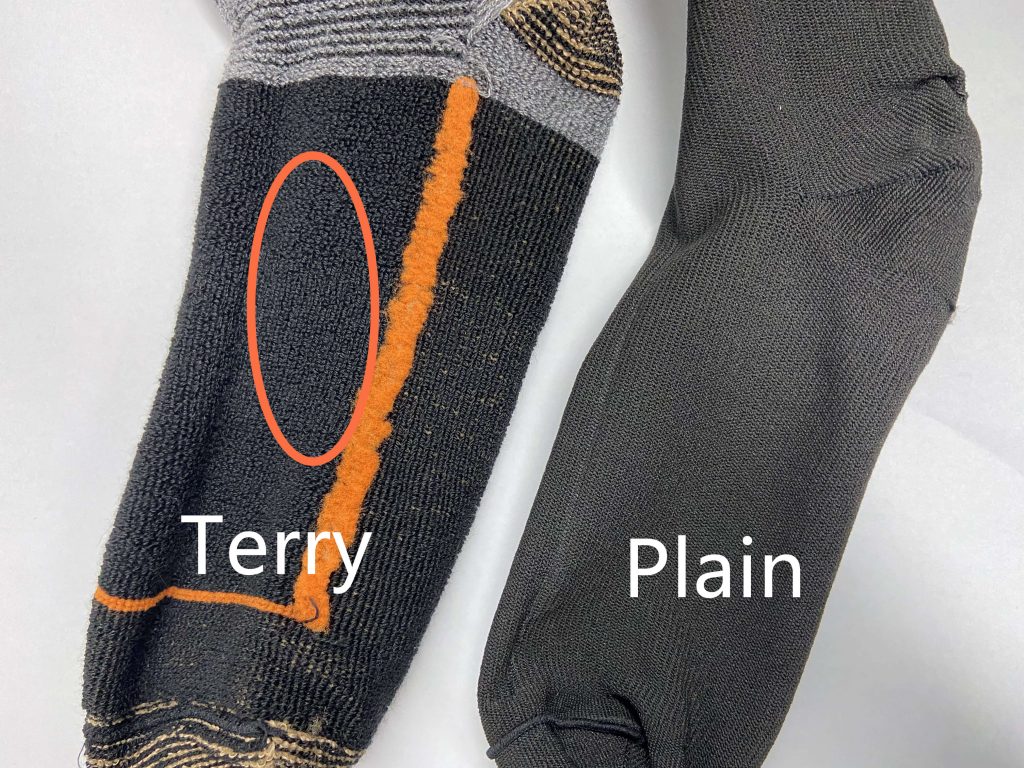
The distinguishing method of thickness is consistent with that of regular socks, which is mainly divided into flat plate and terry knit.
Adding the terry on the sole of the compression socks can absorb sweat and shock, as shown in the image below.
Pattern Technique
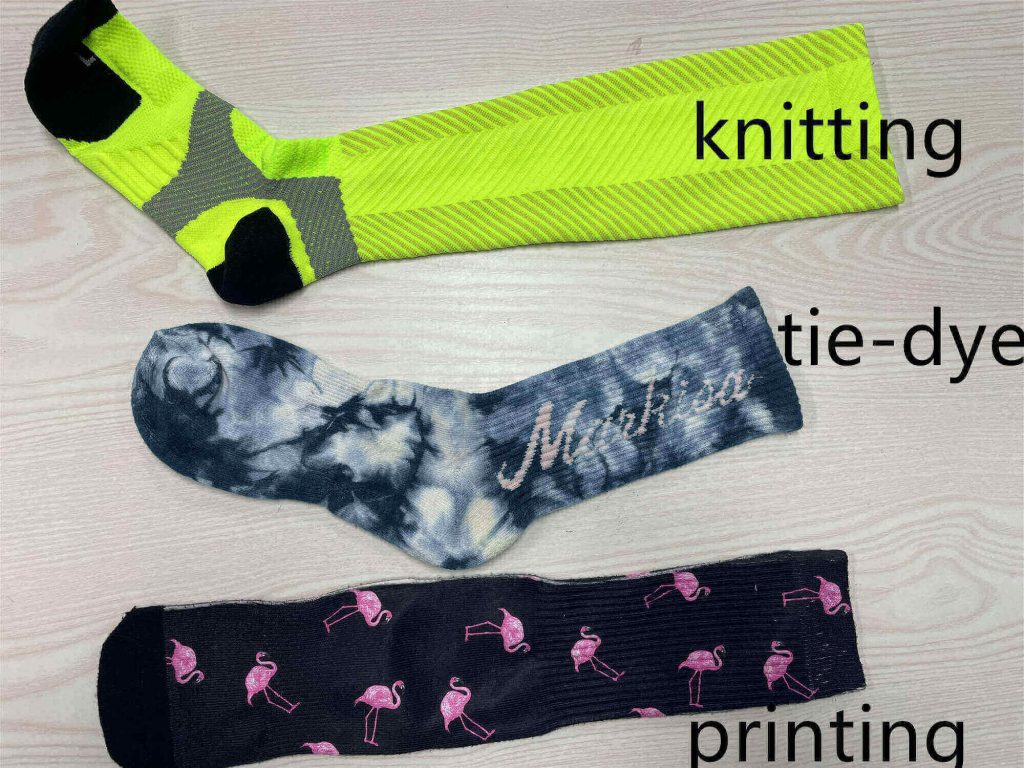
There are three main pattern techniques of compression socks: jacquard, printing and tie-dyeing.
Jacquard is to weave the pattern directly on the socks, printing is to print the pattern on the socks by high-temperature printing, tie-dyeing is also divided into many different processes, including hanging dyeing, tie-dyeing, printing-dyeing and so on. Before we specially wrote articles about tie-dyeing process, read here.
Toe linking
The seams are also differentiated in the same way as regular socks, mainly includes rosso and hand-linking. Socks with rosso have a raised thread across the toe, while a seamless sock will be more comfortable to wear.
Material
Compression socks are usually made of nylon, while other popular materials on the market are cotton, bamboo fibre, polyester and so on. The characteristics of different materials are also different, bamboo and cotton are more skin-friendly as they are natural fibres and are also more environmentally friendly. In terms of abrasion resistance, nylon and polyester perform better, and the nylon we use in our factory is anti-pilling nylon, which is more suitable for sports wear.
User Group
Compression socks can be used by pregnant women, sedentary or standing people, sportspeople and so on. At the same time, socks should be designed according to different user groups. For example, the first two categories should consider the comfort of socks, and natural fibers such as cotton and bamboo fibers can be considered. Compression socks for sports people should consider more wear-resistant and more durable materials such as nylon.
The above are several kinds of classification of compression socks, if there is no direction for your own socks after reading, please feel free to contact us. In addition, we will also provide you with a style catalog of compression socks as a reference. Contact us now!
Looking to design your own compression socks? Browse our custom compression socks collection for options to materials, patterns, and compression levels tailored to your needs.
Common Compression Sock Categories by Use Case
Graduated Compression Socks
Anti-Embolism Stockings (TED Hose)
Maternity Compression Socks
Nursing & Healthcare Compression Socks
Athletic & Recovery Compression Socks
Travel & Flight Compression Socks
Medical / Therapeutic Compression Stockings
FAQ
1. What is “graduated” compression and why is it important?
Graduated compression is tightest at the ankle and gradually loosens up the leg. This design helps push blood flow back towards your heart, improving circulation, reducing swelling, and energizing your legs. It’s the most effective and common type of compression for active individuals.
2. How do I choose the right compression level (mmHg) for my needs?
For daily wellness or travel, 15–20 mmHg is ideal. For athletic recovery or moderate swelling, choose 20–30 mmHg. Higher levels, like 30–40 mmHg, are considered medical-grade and should only be used under a doctor’s direction for specific health conditions like DVT or lymphedema.
3. What’s the difference between everyday compression socks and medical anti-embolism stockings?
Compression socks are designed for mobile people to boost circulation while walking or standing. Anti-embolism stockings (or TED hose) are for non-mobile, bed-bound patients, typically post-surgery, to prevent blood clots. They have a different pressure profile and are not meant for walking around.
4. When should I consult a doctor before choosing compression socks?
You should always consult a doctor if you plan to use a firm compression level of 20–30 mmHg or higher. These are often used to manage medical conditions, and a professional can ensure you select the safest and most effective pressure for your specific health needs.
5. Do different styles (e.g., knee-high vs. thigh-high) offer different compression?
The compression level (e.g., 20–30 mmHg) is consistent, but the style determines the coverage area. Knee-highs focus support on the lower leg, while thigh-highs or pantyhose extend that support further up. Choose the style based on where you experience discomfort or swelling for targeted relief.