Nurse Compression Socks: Product Line Development for Healthcare & Uniform Brands
As an experienced compression sock manufacturer, we help healthcare, scrub, and uniform brands build nurse-focused product lines around the realities of long shifts — from compression positioning and calf-based sizing to breathability, cushioning, wash durability, and scrub-friendly design. With in-house compression testing and established production experience, we help turn those workplace needs into specifications your brand can develop and scale.
Why Nurse Compression Socks Need a Work-Shift Product Strategy
Nursing is a large, physically demanding workforce. But the product opportunity is not simply the number of nurses — it is the way long shifts, repeated standing and walking, frequent washing, and uniform requirements change what a compression sock needs to deliver.
Consumer Insights — What Nurses Actually Care About
A nurse-focused compression sock has to work through long shifts, repeated wear, regular laundering, and uniform requirements. The six areas below turn those workplace conditions into practical product decisions for healthcare, scrub, and uniform brands.
Compression Positioning — Give Each Level a Clear Role
Different compression levels can serve different positions within a nurse-focused line, but the assortment should not be built around mmHg numbers alone. Define the intended use, target customer, sales channel, and labeling requirements first, then give each compression level a clear role.
Heat & Moisture Management — Comfort Across a Long Shift
Long shifts, closed footwear, and repeated movement can make heat and moisture management an important part of wearing comfort. Yarn choice matters, but so do fabric density, ventilation zones, cushioning, and overall construction. Evaluate the complete sock rather than choosing materials by fiber name alone.
Fit & Sizing — Beyond Shoe Size
Compression performance depends on how the sock fits the ankle and calf, so shoe size alone is a weak foundation for a nurse-focused sizing system. Build the range around leg measurements, then decide whether dedicated wide-calf or extended-size constructions are needed for the target workforce.
Sensory Comfort Details — Small Features Matter Over a Full Shift
Small construction details become much more noticeable when a sock is worn for many hours. Toe-seam placement, plantar cushioning, heel reinforcement, cuff pressure, and overall hand feel should be evaluated during extended wear testing, not only during a short fitting.
Durability & Wash Resistance
A workwear product has to maintain more than its appearance after repeated laundering. Define a wash protocol and evaluate dimensional stability, color retention, elastic recovery, and compression performance after repeated wash cycles. Any specific durability claim should be supported by an actual test method and recorded results.
Style Within Workplace Boundaries
Nurse-focused products still need to fit both the visual rules of the workplace and the positioning of the brand. A scrub or uniform brand may build around coordinated core colors, while a lifestyle or DTC range may have more room for seasonal patterns. Let the sales channel and dress environment define the visual direction.
Choose the Right Nurse Compression Sock Program for Your Sales Channel
The same nurse compression sock should not automatically be sold the same way across every channel. Amazon and DTC brands, scrub companies, uniform suppliers, medical retailers, and gifting programs each place different demands on sizing, assortment, design, documentation, and replenishment. Use the sales channel to decide how the product line should be structured before sampling begins.
| Sales Channel | Line Strategy | Channel-Specific Priority |
|---|---|---|
| Amazon / DTC Sellers | Start with a focused core assortment, then add new SKUs only when they solve a clearly different need — such as extended sizing, seasonal comfort, or a different compression position. | Keep sizing guidance, product differences, and visual presentation easy to understand online. Avoid building too many near-identical SKUs that customers cannot easily compare. |
| Scrub & Apparel Brands | Use compression socks as a functional extension of the existing scrub or healthcare apparel line rather than treating them as a disconnected accessory. | Use Pantone-matched color development to coordinate the sock range with your scrub palette, while keeping core and seasonal colorways repeatable across future collections. |
| Uniform Suppliers & Hospital Programs | Build a workforce-oriented range that can cover broader sizing needs and remain consistent across repeat staff orders. | Prioritize extended calf coverage, clear size allocation, organization-aligned designs, and repeatable specifications so future replenishment can match the original program. |
| Pharmacy & Medical Retail | Build a clearly structured compression range with straightforward product positioning and documented specifications. | Keep compression labeling, sizing, intended-use language, and supporting product information consistent with the requirements of the target market. Pressure specifications should also be easy for the retailer to review and verify. |
| Gifting & Nurses Week Programs | Create a limited or gift-oriented assortment for Nurses Week, staff appreciation, onboarding, or healthcare wellness programs. | Focus on easy size selection, giftable presentation, controlled seasonal designs, and a repeatable program structure that can be reused for future campaigns. |
Not sure which program fits your market? Tell us your sales channel and target price range — we’ll recommend a nurse sock spec before sampling.
Why Partner With Us
Verified compression performance, maintained compliance documentation, and production controls that carry from development into bulk orders.
-
Certifications & Compliance Documentation
Our current documentation includes an FDA-registered establishment, ISO 13485:2016, OEKO-TEX® Standard 100, and BSCI audit. These provide healthcare, retail, and brand buyers with supplier documentation they can review as part of their own quality and market compliance process.
-
In-House Compression Verification
We use a Swisslastic MST MK V system to verify compression performance during product development and quality control. Bulk production is also checked through sampling, so pressure performance can be verified against the approved specification without implying that every individual pair is tested.
-
Production Control From Sample to Bulk
Core production steps including knitting, shaping, and packaging are handled in-house. Yarn dyeing is completed by specialist external partners, while incoming materials and confirmed specifications are controlled before production. This gives us clearer control over fit, construction, compression targets, and repeat-order consistency.
Frequently Asked Questions
How should a nurse brand plan compression levels across the product line?
Different compression levels can serve different positions within the same nurse-focused range. Start by defining the intended use, target customer, sales channel, and labeling requirements, then decide whether the line needs one core compression position or multiple clearly differentiated tiers. Avoid choosing a pressure level simply because it appears to be the most common option in the market.
How should sizing be developed for nurse compression socks?
Shoe size alone is usually not enough for a compression product. A stronger size system considers ankle and calf circumference together with foot size, then adds wide-calf or extended-size constructions where the target workforce requires them. The goal is to make the size chart easy for the end customer to use while keeping compression fit consistent across the range.
What materials should a nurse compression sock line prioritize?
Material selection should be based on the complete wearing environment rather than one fiber name. For long-shift workwear, consider moisture management, softness, ventilation, cushioning, wash durability, and the construction needed to maintain compression performance. Cotton, synthetic performance yarns, wool blends, or other fibers can all have a role depending on the product position and season.
Should a nurse line include a dedicated wide-calf or extended-size option?
It depends on the audience the brand needs to cover. If the standard construction cannot serve the intended calf range without compromising fit, a dedicated wide-calf or extended-size SKU is usually a better product decision than simply stretching the same size system further. For staff or uniform programs, broader size coverage should be planned before sampling so allocation and replenishment are easier later.
How should scrub and uniform brands plan colors for nurse compression socks?
Start with the visual role of the sock within the existing apparel line. Core colors can be developed to coordinate with the scrub palette using Pantone references, while seasonal or limited designs can be planned separately. The important decision is whether the sock should function as a permanent uniform extension, a seasonal accessory, or both.
Should a nurse product line include calf sleeves or other compression products?
It can, but only when the additional SKU serves a distinct use case. A brand may start with compression socks as the core product and add calf sleeves or related compression products later for customers who want a different wearing format. The assortment should be expanded because each product has a clear role, not simply to create more SKUs.
Explore More Solutions
Beyond nursing, we develop compression sock lines for other end-use segments. Each one starts from a different product brief — see what changes in construction, sizing, and positioning.
Maternity & Pregnancy
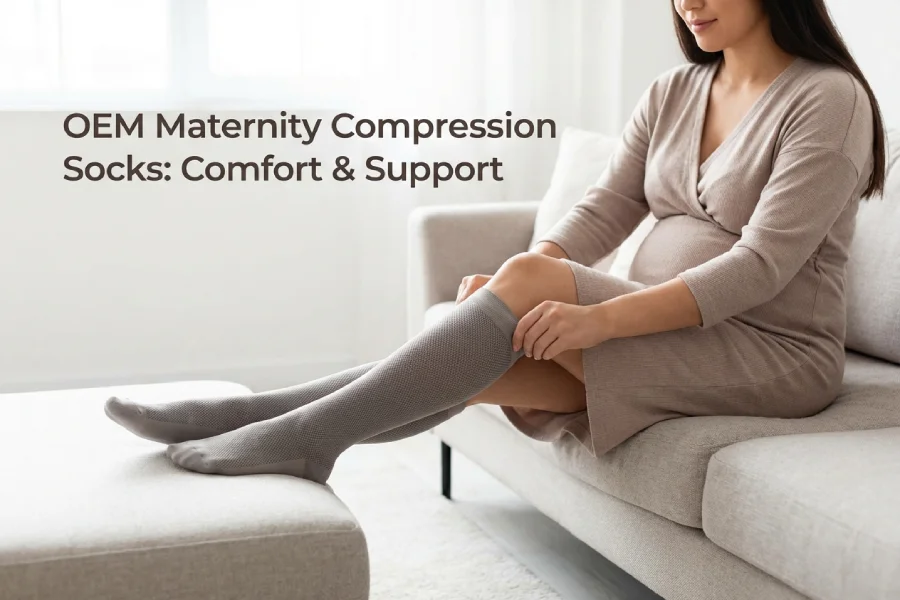
Products worn through pregnancy, when fit requirements change over time. The brief usually centers on calf and ankle measurement, cuff comfort, easy on/off, and how clearly the sizing is explained to the end customer.
Learn More
Sports & Recovery
Products built around a specific sport and wearing moment rather than a general fit. Key decisions include footwear pairing, cushioning zones, sock height, and whether training and post-activity products need separate specifications.
Learn More
Travel & Flight
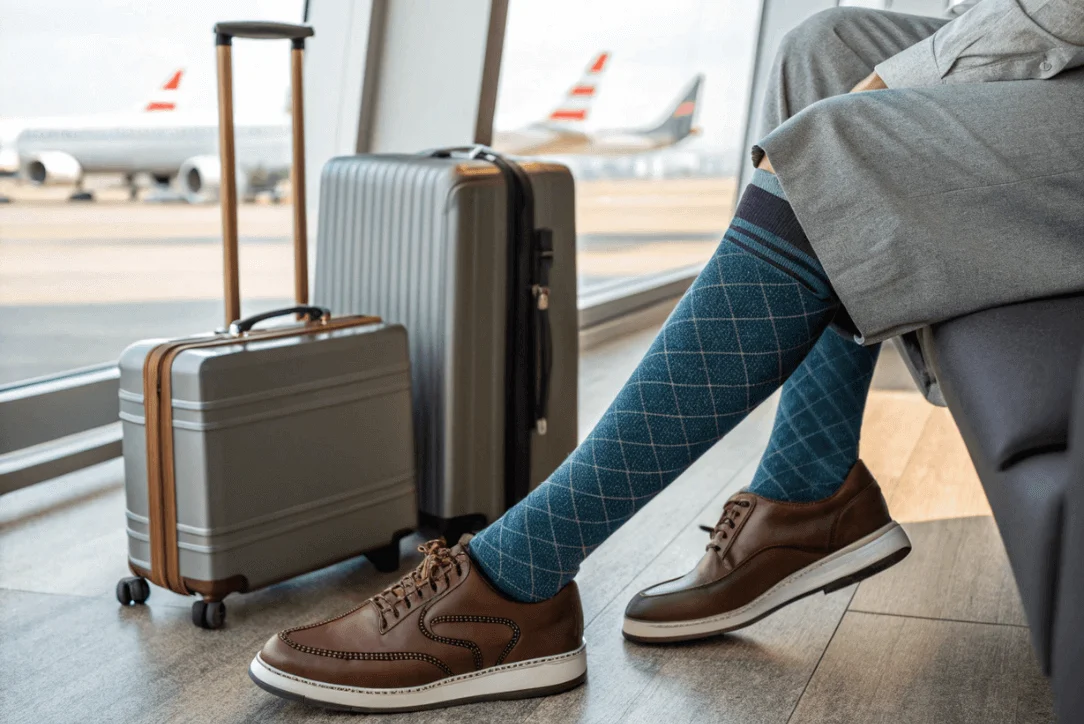
Products worn for extended periods in transit and across changing climates. The main decisions are long-wear comfort, calf-based sizing, footwear compatibility, and whether the product reads as a lifestyle or a wellness item.
Learn MoreReady to Start Your Nurse Compression Socks Project?
Tell us about your business and requirements. Our team will respond within 24 hours with product recommendations and pricing for your specification.
Inquiry & Consultation
Share your project details, and our experts will reply within 24 hours with price and solutions.
Sample Development
We craft samples to your specs and send approval photos within 3-7 days.
Sample & Order Confirmation
Confirmation Review your samples and request any refinements. Upon approval, we finalize your order details with a deposit to begin production.
Bulk Production
Production time varies by quantity; regular production time is 3-4 weeks.
Quality Inspection & Shipping
We will ship the bulk order after QC inspection. Choose between express air shipping (5-7 days) or sea freight (3-5 weeks) for most areas. Transit times are estimates and may extend for remote destinations, customs inspection, or peak-season congestion.
🔒Your information is secure. We’ll respond within 24 hours with a customized proposal.