Wide-Calf & Plus-Size Compression Sock Line Planning for Retail, Medical & DTC Brands
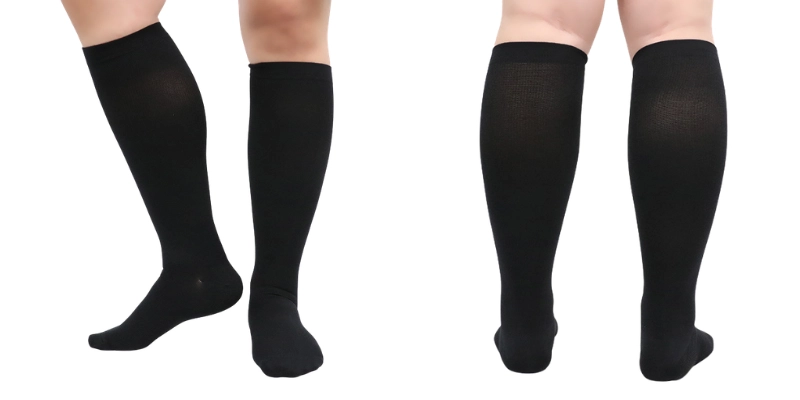
Wide-calf and plus-size compression socks need more than larger size labels. They require a different sizing strategy. We help brands, retailers and medical channels define the right calf ranges, compression levels and product mix before sampling begins.
- Sizes to 2XL–6XL · up to 71cm / 28" calf
- 15–20 / 20–30 / 30–40 mmHg, pressure-verified in development
- Factory-direct since 2010
Why Extended Sizing Needs Its Own Product Strategy
What Plus Size Wearers Actually Say About Compression Socks
Extended sizing addresses a real fit gap in the compression sock market, but entering the category is not as simple as adding 2XL, 3XL or 4XL to an existing range. The real work starts with understanding how wider-calf wearers differ from standard sizing — and turning those differences into better product decisions. For the market opportunity behind this category, see Why Stock Wide-Calf Compression Socks This Year?
When I buy compression socks that fit my calves, the feet are HUGE.
Wide-calf wearer discussionScaling the whole sock around calf circumference can leave the footbed too large, move the heel out of position, or make the leg length wrong even when the calf itself fits.
Grade calf circumference separately from foot length and leg length. Build size bands around actual measurements rather than relying on a single XL, 2XL or 3XL label.
See extended-size construction and specifications →All others eventually roll down.
Wide-calf verified-purchase reviewA cuff that is too narrow or too tight for a larger calf can dig in, roll down or create a pressure ring during wear. Simply enlarging the sock does not solve the top-band problem.
Treat cuff width and top-band tension as part of the extended-size system. Do not automatically carry the same cuff construction from standard sizes into wider calf bands.
They might be a little hot to wear in warmer months.
Plus-size verified-purchase reviewHeat, sweat and friction can make long wear uncomfortable when the yarn blend or knit density does not match the intended wearing environment.
Choose yarn blend and knit density around wear duration and use case. Occupational, travel, medical and active styles do not necessarily need the same material strategy.
If I had to offer constructive criticism, it would just be to offer more color variations.
Wide-calf verified-purchase reviewExtended sizes are sometimes treated as a smaller side range, with fewer colors, patterns or style choices than the standard assortment.
Decide whether extended sizes should mirror the core colors and patterns of the standard range or launch with a smaller, channel-specific assortment. SKU breadth is a line-planning decision, not just a sizing decision.
Build the Size System Before You Knit the Sock
Before choosing a size label, first decide what kind of extended-size range you actually need. Wide calf, plus size, extra wide and different leg lengths solve different fit problems — and they should not all be handled with the same grading rule.
Wide Calf
For wearers whose foot size remains within a standard range but who need more room through the calf.
Plus Size
For ranges where calf, ankle, foot or overall leg proportions may require broader grading beyond a standard size extension.
Extra Wide
For calf circumferences beyond the regular wide-calf bands, where a separate measurement range may be needed.
Petite / Regular / Tall
For wearers with similar circumferences but different leg lengths, so sock height does not have to scale with calf size.
For the actual size bands, circumference ranges and compression matrix available for production, see the full specification table on our plus size manufacturing page.
Why Plus Size Compression Needs Different Engineering
Extended sizing is not a pattern-enlargement exercise. The larger the circumference, the more important it becomes to control stretch, recovery, cuff tension — and to confirm the result through pressure testing during development.
Stretch & Recovery Across Larger Circumferences
As circumference increases, the knit works across a wider stretch range. The yarn and elastic structure need enough recovery to maintain fit through repeated wear and washing — not just enough stretch to reach the target calf size.
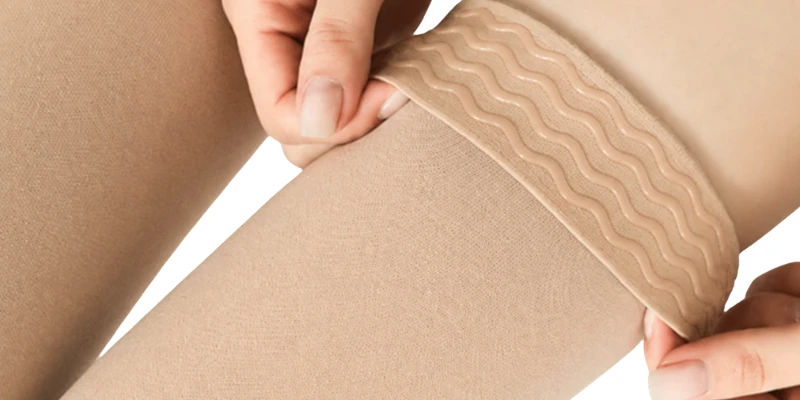
Top-Band Width & Tension
The top band has to balance hold with comfort. Wider calf bands may need different cuff width and tension settings from standard sizes to reduce rolling, digging in and localized pressure while still keeping the sock in place.
03 · Pressure Validation
Pressure Validation Across the Size Range
Compression should not be extrapolated blindly from a single reference size across the full extended-size range. During development, representative or boundary sizes can be checked against the target pressure profile. After the construction is approved, batch-level pressure testing can be added as a production QC step where required by the program or buyer specification.
Our in-house Swisslastic MST MK V supports pressure verification during development and production QC. Testing scope can be defined according to the size range, program requirements and buyer specification.
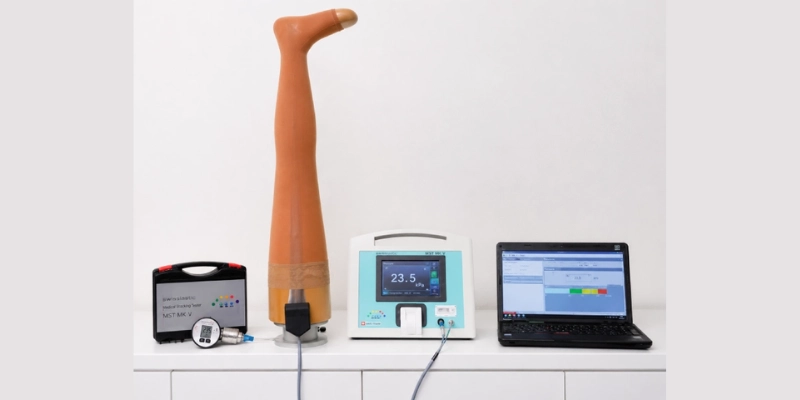
See the knitting and pressure-testing equipment behind our compression sock development and production.
Tour Our Compression Sock Production Equipment →Plan the Right Plus Size Line for Your Market
A pharmacy range, an Amazon listing and a DTC compression brand do not need the same SKU strategy. The right starting point changes with the buyer, use case and sales model — from size coverage and compression level to material, assortment and packaging.
01 · Consumer Retail
DTC, Amazon & Marketplaces
When customers choose their own size, the range has to be easy to understand without assisted fitting. At the same time, every new calf band multiplies the number of possible color, style and compression combinations, so the brand has to decide how far the core collection should extend.
Planning Focus
Why It Matters
The goal is not to put every design into every possible size. It is to extend the right parts of the core range while keeping self-selection clear for the customer.
See the available production specifications on our plus size & wide calf compression socks manufacturing page .
02 · Medical & Pharmacy
Distributor, Pharmacy & Medical Programs
Medical and pharmacy programs usually place more weight on clear measurements, defined compression levels and consistent product information. The range should make it easy to understand which size and compression option is intended for which wearer.
Planning Focus
Why It Matters
A clearer range reduces ambiguity when buyers, fitters or end users need to distinguish between size bands and compression options.
See clinical-line specifications on our custom medical compression socks page .
Why Partner With Us
Extended-size compression programs need more than a larger size chart. Buyers also need documentation they can review, a practical way to verify compression performance, and production controls that carry an approved specification into bulk manufacturing.
Certifications & Compliance Documentation
Available documentation includes FDA establishment registration, ISO 13485:2016, OEKO-TEX® Standard 100 and BSCI audit records. These can support your own supplier qualification, quality review and target-market compliance process.
In-House Compression Verification
Our Swisslastic MST MK V supports compression checks during product development and production QC. Testing scope can be defined around the approved specification, size range and buyer requirements.
Production Control From Sample to Bulk
Confirmed size and construction specifications are carried from approved samples into bulk production, with incoming materials, knitting, shaping and final inspection checked against the agreed production requirements.
We have manufactured compression and specialty socks since 2010. Extended sizing is developed within the same compression-sock production system rather than treated as a separate oversized version of a standard product.
Building a Plus Size Compression Sock Line
What is the difference between wide-calf and plus-size compression socks?
Wide-calf sizing usually addresses a larger calf circumference while keeping the foot within a relatively standard size range. A plus-size program may require broader grading across the calf, ankle, foot and overall leg proportions. The right approach depends on the measurements of your target wearer rather than the size name alone.
Can shoe size alone be used to build a plus-size compression sock range?
No. Shoe size does not tell you enough about calf circumference, ankle circumference or leg height. For extended sizing, these measurements should be considered separately where they affect fit and compression performance.
How many extended-size bands should a new product line have?
There is no fixed number. The size bands should reflect the measurement distribution of your target customer and avoid unnecessary overlap between adjacent sizes. Some brands only need a wider-calf extension to the core range, while others need a separate multi-band plus-size system.
Should extended sizes use the same colors and designs as standard sizes?
Not necessarily every SKU. Consumer-facing brands may extend core colors or best-selling designs into wider sizes while keeping the overall assortment manageable. The decision should be made at product-line level rather than treating extended sizing as a completely separate collection by default.
Does every size need a separate compression test?
Not necessarily. During development, representative or boundary sizes can be checked against the intended pressure profile. Once the construction is approved, the production testing scope can be defined according to the product specification, size range and buyer requirements.
When should petite, regular and tall lengths be added?
When leg height varies enough within the target population that one sock length no longer fits the full circumference range correctly. Leg length should not automatically increase just because calf circumference increases.
Explore More Solutions
Beyond plus-size & wide-calf, we develop compression sock lines for other end-use segments. Each one starts from a different product brief — see what changes in construction, sizing, and positioning.
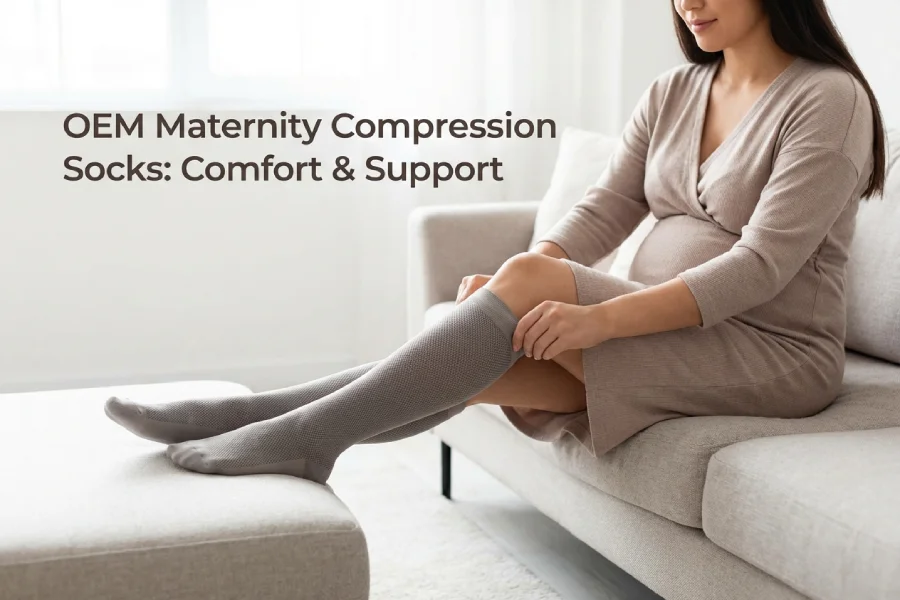
Maternity & Pregnancy
Products worn through pregnancy, when fit requirements change over time. The brief usually centers on calf and ankle measurement, cuff comfort, easy on/off, and how clearly the sizing is explained to the end customer.
Maternity Compression Sock Line Guide

Healthcare & Nurses
Workwear worn for long shifts and laundered frequently. That puts the emphasis on moisture management, cushioning, wash durability, size coverage, and how the sock fits an existing uniform or scrub range.
Nurse Compression Sock Line Guide

Sports & Recovery
Products built around a specific sport and wearing moment rather than a general fit. Key decisions include footwear pairing, cushioning zones, sock height, and whether training and post-activity products need separate specifications.
Sports Compression Sock Line GuidePlan Your Wide-Calf & Plus-Size Compression Sock Range
Tell us who the product is for, your target calf range, compression level and any existing size chart or reference product you already have. We can review whether you need a wide-calf extension, a separate plus-size grading system, or a combination of both before sampling begins.
Inquiry & Consultation
Share your project details, and our experts will reply within 24 hours with price and solutions.
Sample Development
We craft samples to your specs and send approval photos within 3-7 days.
Sample & Order Confirmation
Confirmation Review your samples and request any refinements. Upon approval, we finalize your order details with a deposit to begin production.
Bulk Production
Production time varies by quantity; regular production time is 3-4 weeks.
Quality Inspection & Shipping
We will ship the bulk order after QC inspection. Choose between express air shipping (5-7 days) or sea freight (3-5 weeks) for most areas. Transit times are estimates and may extend for remote destinations, customs inspection, or peak-season congestion.
Helpful details to include: target market, calf / ankle measurements, compression level, expected size range and reference styles.
🔒Your information is secure. We’ll respond within 24 hours with a size and line-plan review.