
Travel & Flight Compression Socks: Product Line Development for Travel & Wellness Brands

Long-distance travel creates a different product brief from everyday compression wear. We help travel, wellness, and retail brands develop compression sock lines around journey duration, extended-wear comfort, calf-based fit, easy on/off, footwear compatibility, climate, and channel positioning.

CHANNEL-BASED PRODUCT STRATEGY

How the Sales Channel Changes the Travel Product Brief

A travel compression sock sold as a lifestyle accessory should not automatically use the same product architecture as one sold through a wellness retailer or corporate travel program. The sales channel changes what matters most — from appearance and sizing complexity to labeling, presentation, and how clearly the product needs to explain its function.

Travel Accessories & Lifestyle Brands

For a travel or lifestyle brand, the sock usually needs to feel like part of a broader travel collection rather than a clinical product. Appearance, hand feel, color direction, long-wear comfort, and compatibility with business or casual travel footwear become especially important.

PRODUCT PRIORITIES
Lifestyle-led appearance
Coordinated colors & branding
Long-wear comfort
Travel-footwear compatibility

Amazon & DTC Brands

In e-commerce, customers usually choose the product without trying it on first. That makes sizing logic, clear use-case positioning, calf fit, easy on/off, and meaningful differences between SKUs especially important before additional materials or features are added.

PRODUCT PRIORITIES
Clear sizing architecture
Easy-to-explain positioning
Fit & don/doff balance
Meaningful SKU differences

Corporate & Travel Programs

Employee travel kits, corporate gifting, crew programs, and other group-use applications may need to work across a broader range of wearers. In these cases, a simpler size structure, consistent brand presentation, and a repeatable product specification can matter more than building a large consumer-facing assortment.

PRODUCT PRIORITIES
Simpler size structure
Broad wearer compatibility
Clean brand integration
Repeatable specification

Pharmacy & Wellness Retail

Health- and wellness-oriented retail generally places more emphasis on clear compression labeling, understandable sizing information, product documentation, and easy comparison between options. A wellness-led travel sock may therefore need a different communication and assortment strategy from a lifestyle-first product.

PRODUCT PRIORITIES
Clear compression labeling
Easy-to-read sizing
Documentation readiness
Straightforward comparison
TRAVEL PRODUCT DEVELOPMENT

Four Product Decisions That Shape a Travel Compression Sock

Travel compression socks are often worn for extended periods and across different travel environments. Before selecting materials or adding features, brands need to define four practical areas: long-wear comfort, sizing and calf fit, footwear compatibility, and the product's visual positioning.

01
LONG-WEAR COMFORT

Build for Several Hours of Continuous Wear

Travel compression socks are often worn continuously for several hours, so comfort needs to be considered beyond the first few minutes of wear. Cuff construction, yarn hand feel, breathability, moisture management, and footbed thickness all influence the long-wear experience.

What to Define
Cuff width and elastic construction
Yarn softness, breathability and moisture management
Thin, standard or cushioned footbed
Overall sock thickness for extended wear
02
FIT & SIZING

Build the Size System Around Foot and Calf Fit

Travel compression socks should not be sized only like ordinary socks. Shoe size, calf circumference, and sock length need to be considered together, especially when the target market covers a wider range of body types. Wide-calf or extended sizes may also be needed.

What to Define
Measurements used in the size chart
Calf circumference ranges for each size
Need for wide-calf or extended sizes
03
FOOTWEAR COMPATIBILITY

Match the Foot Section to the Expected Footwear

Travelers may wear sneakers, business shoes, casual shoes, or boots, so the thickness and cushioning of the foot section should be planned around the expected footwear. A version designed for sneakers may allow more cushioning, while a business-travel product will usually need a slimmer construction.

What to Define
Primary footwear type
Thin, standard or cushioned footbed
Need for heel and toe reinforcement
04
PRODUCT POSITIONING

Define the Product Style Before Choosing the Artwork

Travel compression socks can be developed as a business-travel product, a lifestyle accessory, or a more wellness-oriented retail item. That positioning should influence the color palette, pattern direction, logo treatment, and overall visual language — not just the packaging.

What to Define
Business, lifestyle or wellness positioning
Color palette and Pantone direction
Solid, stripe, geometric or branded patterns
Logo placement and scale
JOURNEY-BASED PRODUCT STRATEGY

How Journey Duration Changes the Product Brief

A short business trip and an overnight long-haul journey do not automatically require two different compression socks. The question is whether longer wearing time creates a meaningful change in comfort, fit, materials, or product positioning — enough to justify a separate SKU.

SHORT & ROUTINE TRAVEL

Keep the Product Simple When the Use Case Is Simple

For shorter or more frequent journeys, brands may prioritize lighter construction, straightforward sizing, and compatibility with business or casual footwear. A separate short-haul SKU is only useful if the intended product experience is genuinely different from the main travel product.

What to Define
  • Lightweight or standard construction
  • Business or casual footwear direction
  • Simple sizing structure
  • Whether a separate SKU is actually needed
LONG-HAUL TRAVEL

Longer Wear Makes Comfort Decisions More Important

As wearing time increases, cuff construction, breathability, moisture management, calf fit, and footbed thickness become more important. These factors should be reviewed together before deciding whether a long-haul product needs a different specification.

What to Define
  • Cuff construction for extended wear
  • Breathability and moisture management
  • Calf fit and size coverage
  • Footbed thickness and cushioning level
HEALTH-ORIENTED POSITIONING

Define the Market Position Before Increasing the Compression Level

If the product is intended for pharmacy, wellness, or more health-oriented channels, compression claims, labeling, sizing information, testing, and supporting documentation need to be defined more carefully. This is a positioning decision, not simply a reason to increase the compression level.

What to Define
  • Intended use and product claims
  • Compression labeling
  • Sizing information
  • Testing and documentation requirements
Do not create separate short-haul and long-haul SKUs just because the journey duration is different. Split the line only when the product specification or market positioning actually needs to change.
MATERIAL STRATEGY

Choose Materials for the Journey — Not Just the Cabin

Travel products may move between different climates, footwear, and wearing conditions during the same journey. Material selection should therefore start with expected wear time, temperature, breathability, moisture management, softness, and durability rather than choosing a fiber because it is marketed as a “travel material.”

LIGHTWEIGHT ROUTE

Lightweight & Breathable

A lighter construction can suit business travel, warmer climates, or products designed to be worn with closer-fitting shoes.

  • Prioritize breathability and moisture management
  • Keep footbed thickness controlled
  • Consider frequent washing and repeat wear
  • Coordinate construction with the intended footwear
Possible direction: lightweight polyamide, nylon, polyester performance yarns, elastane, or blended systems according to the product brief.
COMFORT ROUTE

Softness & Extended-Wear Comfort

For products positioned around long-wear comfort, yarn hand feel and moisture management may carry more weight in the brief than simply minimizing thickness.

  • Consider skin feel during several hours of wear
  • Balance softness with compression structure
  • Review breathability alongside cushioning
  • Match the material direction to the target climate
Possible direction: soft synthetic blends, Merino-blend systems, bamboo-viscose blends, or other comfort-oriented yarn combinations where they fit the intended product.
REPEAT-WEAR ROUTE

Durability & Repeat Use

Products intended for frequent travelers or corporate programs may place more emphasis on repeat washing, elastic recovery, abrasion resistance, and specification consistency.

  • Plan for repeat wear and laundering
  • Consider elastic recovery over time
  • Reinforce heel or toe where required
  • Maintain consistent color and construction across repeat orders
Possible direction: nylon or polyamide and elastane-based systems, with other yarns added according to comfort, moisture, or positioning requirements.

Why Partner With Us

Manufacturing compression socks since 2010, with pressure verification, maintained compliance documentation, and production controls that carry an approved travel product from sampling into bulk production.

  • Certifications & Compliance Documentation

    Our current documentation includes an FDA-registered establishment, ISO 13485:2016, OEKO-TEX® Standard 100, and BSCI audit. These documents can support supplier qualification and compliance review for travel, wellness, retail, and healthcare-oriented product programs.

  • In-House Compression Verification

    We use a Swisslastic MST MK V system to verify pressure performance during compression sock development and quality control. Bulk production is also checked through sampling, so pressure performance can be verified against the approved compression specification without implying that every individual pair is tested.

  • Production Control From Sample to Bulk

    Core production steps including knitting, shaping, and packaging are handled in-house. Yarn dyeing is completed by specialist external partners, while materials and approved specifications are controlled before production. This helps carry confirmed sizing, compression, construction, cushioning, color, and other travel-specific details from the approved sample into bulk orders.

Jiaxing Max Hosiery compression sock manufacturing facility

Frequently Asked Questions

How should a brand choose the compression level for a travel sock?

Compression level should not be selected only by flight duration. Start with the product’s intended use, target customer, sales channel, market positioning, and the claims the brand plans to make. The final pressure specification should then be confirmed through actual product development and pressure testing.

Do short-haul and long-haul travel need separate SKUs?

Not necessarily. A separate SKU is useful only when longer wearing time creates a meaningful difference in construction, materials, cushioning, sizing, or product positioning. If the same specification works for both use cases, there is no reason to add complexity just because the journey is longer.

What measurements should be used for travel compression sock sizing?

Shoe size alone is usually not enough for a compression product. A travel compression sock size chart should consider shoe size together with calf circumference and sock length. Wide-calf or extended sizing can also be added when the target customer group requires broader fit coverage.

Which materials are suitable for travel compression socks?

There is no single “best” travel fiber. Material direction should depend on wearing duration, climate, footwear, desired softness, breathability, moisture management, and repeat-wear requirements. Lightweight synthetic blends, Merino blends, bamboo-viscose blends, and other yarn systems can all be considered when they fit the product brief.

How much cushioning should a travel compression sock have?

Start with the footwear the customer is most likely to wear. Business-travel products may need a thinner foot section, while products designed for sneakers can allow more cushioning. Heel and toe reinforcement can also be added where the product brief requires additional durability.

Can travel compression socks be developed with a business or lifestyle appearance?

Yes. The product can be developed around a business, lifestyle, travel-accessory, or wellness positioning. Color palette, Pantone references, patterns, logo placement, and overall visual direction can then be developed around that positioning rather than treating the sock as a purely clinical-looking product.

Explore More Solutions

Beyond travel, we develop compression sock lines for other end-use segments. Each one starts from a different product brief — see what changes in construction, sizing, and positioning.

Maternity Compression Socks

Maternity & Pregnancy

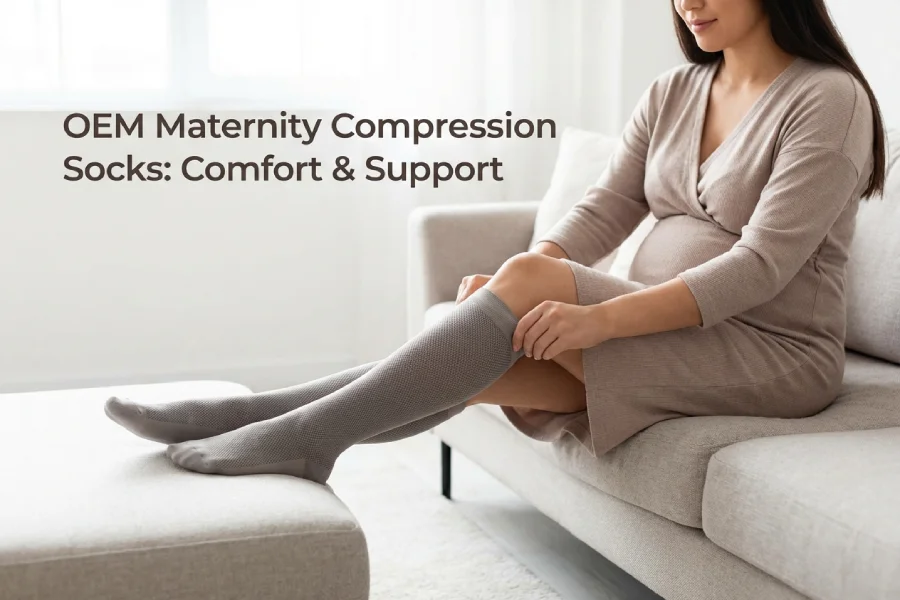
Products worn through pregnancy, when fit requirements change over time. The brief usually centers on calf and ankle measurement, cuff comfort, easy on/off, and how clearly the sizing is explained to the end customer.

Learn More

Healthcare & Nurses Compression Socks

Healthcare & Nurses

Workwear worn for long shifts and laundered frequently. That puts the emphasis on moisture management, cushioning, wash durability, size coverage, and how the sock fits an existing uniform or scrub range.

Learn More

Sports Compression Socks

Sports & Recovery

Products built around a specific sport and wearing moment rather than a general fit. Key decisions include footwear pairing, cushioning zones, sock height, and whether training and post-activity products need separate specifications.

Learn More

Ready to Start Your Flight Compression Socks Project?

Tell us about your business and requirements. Our team will respond within 24 hours with product recommendations and pricing for your specification.

Day 1-2

Inquiry & Consultation

Share your project details, and our experts will reply within 24 hours with price and solutions.

Day 3-7

Sample Development

We craft samples to your specs and send approval photos within 3-7 days.

Day 8-10

Sample & Order Confirmation

Confirmation Review your samples and request any refinements. Upon approval, we finalize your order details with a deposit to begin production.

Day 20-30

Bulk Production

Production time varies by quantity; regular production time is 3-4 weeks.

Day 20-30

Quality Inspection & Shipping

We will ship the bulk order after QC inspection. Choose between express air shipping (5-7 days) or sea freight (3-5 weeks) for most areas. Transit times are estimates and may extend for remote destinations, customs inspection, or peak-season congestion.

🔒Your information is secure. We’ll respond within 24 hours with a customized proposal.

Get Your Custom Socks Quote Today

Fill out the form below and our team will contact you within 24 hours with personalized recommendations and pricing.

🔒Your information is secure.
If you experience any issue submitting the form, please contact us at [email protected]. We usually respond within 24 hours with next steps for your project.

Don’t Miss Out: Read This Before You Order Socks

Swipe Our “10 Killer Questions” Checklist

Every serious buyer uses these questions to expose hidden defects, slash lead-time, and squeeze the best price from any sock supplier.

Free download • No purchase required

🔥Exclusive Download for Pro Buyers