
Consumer Pain
Marley is temperature-sensitive — slick in a cold studio, tacky in a warm one. Dancers can't rely on one friction level, so they hoard half-worn cotton socks whose fibers happen to hit the sweet spot between slide and stop.
In Their Words
"The best turning socks are the ones about to go in the trash — worn down just enough to slide, but they still let you stop."— recurring sentiment across r/BALLET turning-sock threads
Why It Matters
Community "rules" show how fragile the workaround is — never wash with fabric softener (residue turns the floor into an ice rink), never wear fluffy socks (they polish the Marley), rosin is banned. The dancer is doing your product's job by hand, badly.
Manufacturing Answer
Friction has to be designed, not left to fiber wear. We map sole friction by zone — a smooth spin area under the ball of the foot, braking elements at heel and lateral edge — calibrated for Marley rather than hardwood. Your product replaces the "lucky old sock" with a repeatable spec.
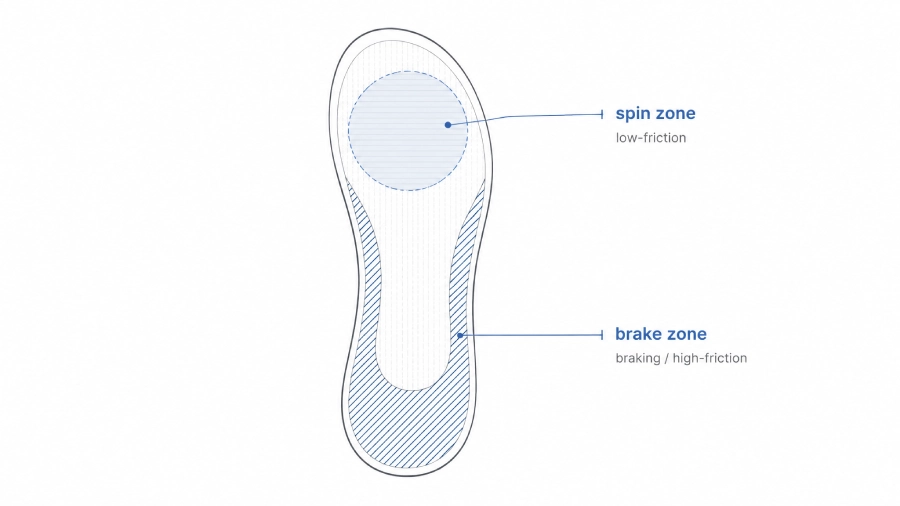
Friction, mapped by zone A schematic sole map: a low-friction spin area under the ball of the foot, braking zones at the heel and lateral edge — the repeatable spec that replaces the worn-out "lucky sock."
Consumer Pain
Dancers who borrow pilates or yoga grip socks discover full-sole silicone "locks" the foot to Marley. Mid-pirouette the rotational force has nowhere to go — it transfers straight into ankle ligaments and knees.
In Their Words
"Grippy pilates socks stick to the Marley completely — you can't turn at all, and it wrenches your knee when you try."— paraphrased from dancer forum discussions on studio grip socks
Why It Matters
Sports-safety guidance warns that an uncalibrated, excessive friction coefficient interferes with the foot's natural shear release and can raise ankle/knee sprain risk during rapid direction changes. More grip is a design fault here, not a feature — and buyers who've been burned know it.
Manufacturing Answer
"Grip where you land, glide where you turn." A targeted-zone grip layout puts braking where deceleration happens and keeps a low-friction spin-spot for rotation — the opposite of a full-sole studio sock. Grip block thickness and adhesive formulation are calibrated during sampling, not left to chance in production.
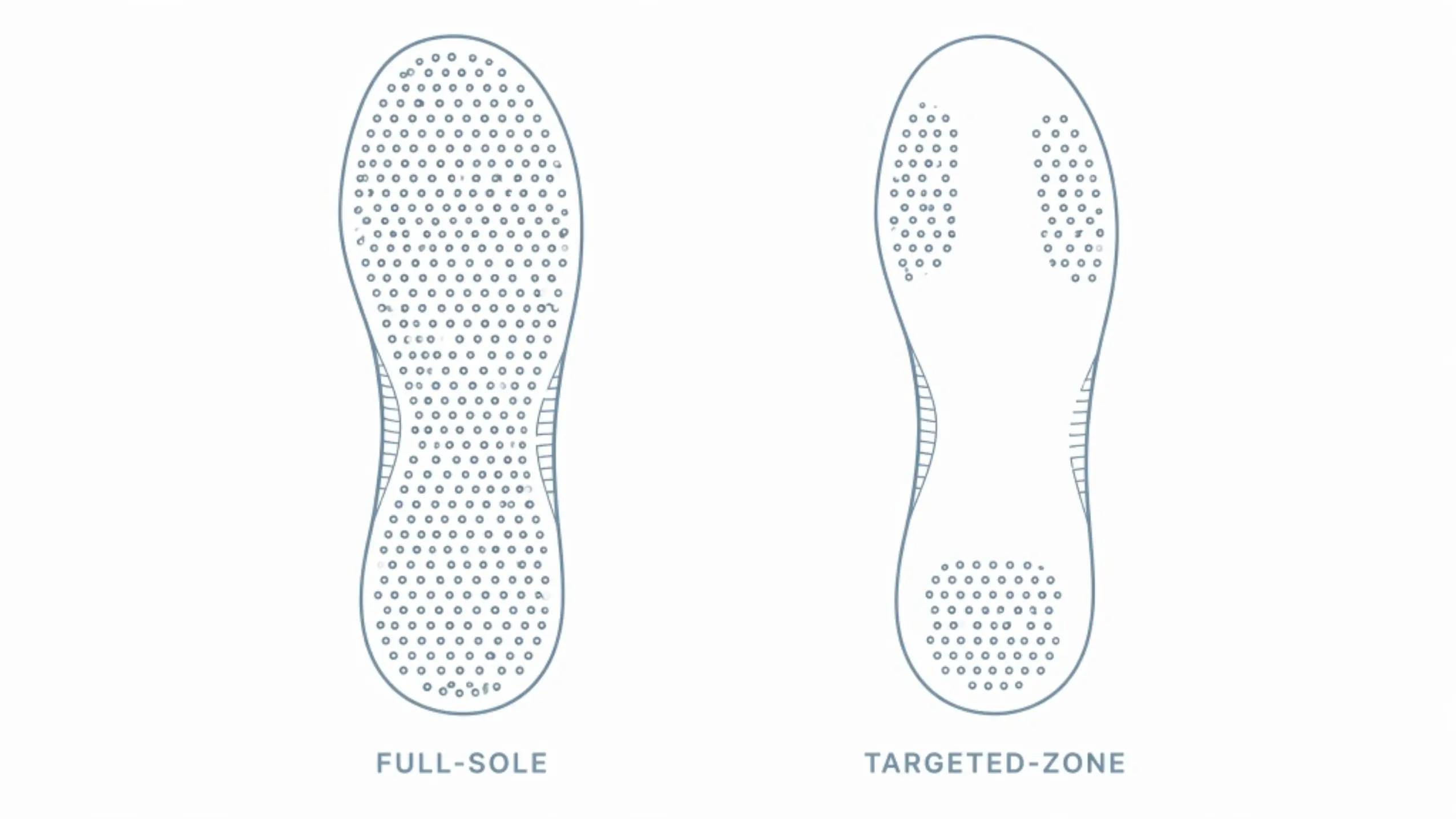
Targeted-zone vs full-sole Side-by-side sole comparison: a full-sole studio grip locks the foot to the floor, while a targeted-zone dance layout brakes on landing yet frees the spin.
Consumer Pain
The #1 complaint category for grip products: silicone dots that crack, peel or fall off after a handful of washes. Sweat acidity, hot dryers and cheap surface-bonded adhesives age the grip long before the knit wears out.
In Their Words
"The seams wore through after one class. Not worth the price."— verified 1-star review of a leading $38 dance sock
Why It Matters
With a 3–6 month working lifespan, every early failure inside that window becomes a return, a refund and a lost repeat customer. On Amazon, one batch of peeling dots sinks a listing's rating and its ad economics.
Manufacturing Answer
High-temperature bonded silicone (not low-end surface heat-pressing), reinforced heel/toe stitch density, and wash-cycle grip-retention testing to an agreed cycle count under AQL 2.5 inspection. Or knit non-silicone anti-slip yarn directly into the sole — nothing to peel.
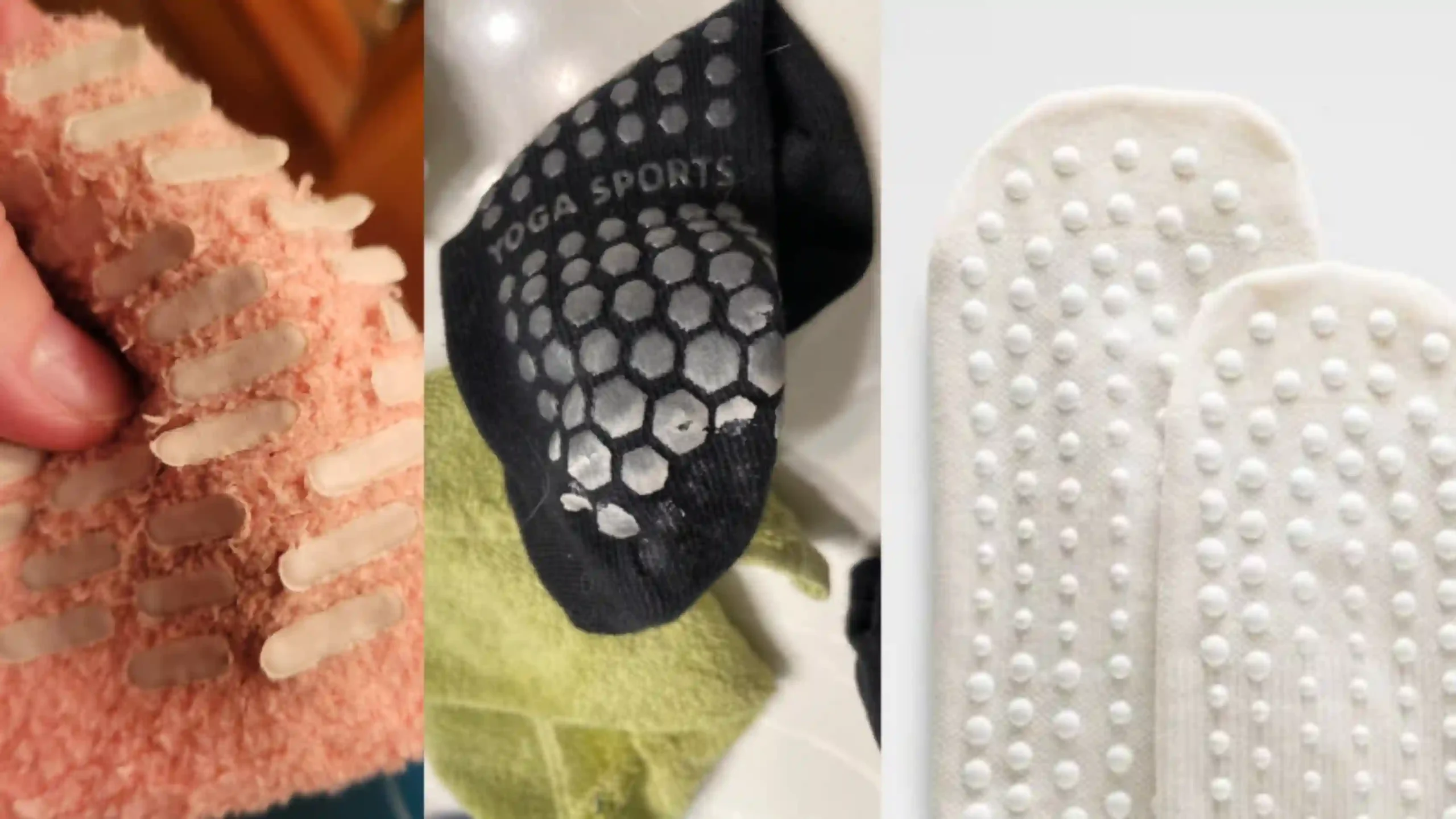
Bonded to last, or knitted in Cross-section contrast: high-temperature bonding and reinforced stitching resist the sweat-and-dryer aging that peels surface-pressed dots — or skip silicone entirely with anti-slip yarn knitted into the sole.
Consumer Pain
Repeated jumps and hard landings on thin socks send impact straight up the kinetic chain — plantar fasciitis, shin splints, Achilles pain. End-of-day foot fatigue is a constant theme in every community we mapped.
In Their Words
"By the third hour of rehearsal my feet are done — I double up two pairs of cotton socks just to get some padding."— common workaround reported by contemporary dancers
Why It Matters
Peer-reviewed dance-medicine research (Russell & Mueller, Journal of Dance Medicine & Science, 2022) found padded dance socks significantly reduced peak foot-impact force when landing from a jump, versus bare feet — early published evidence that cushioning construction changes how load reaches the foot, not just how it feels. The authors note the effect merits further study.
Manufacturing Answer
High-density terry cushioning knit into the heel and ball of foot absorbs landing load without adding bulk underfoot. For dancers who also want graduated compression over long rehearsal days, that's a separate build — see our sports compression solution page for dance compression specs.
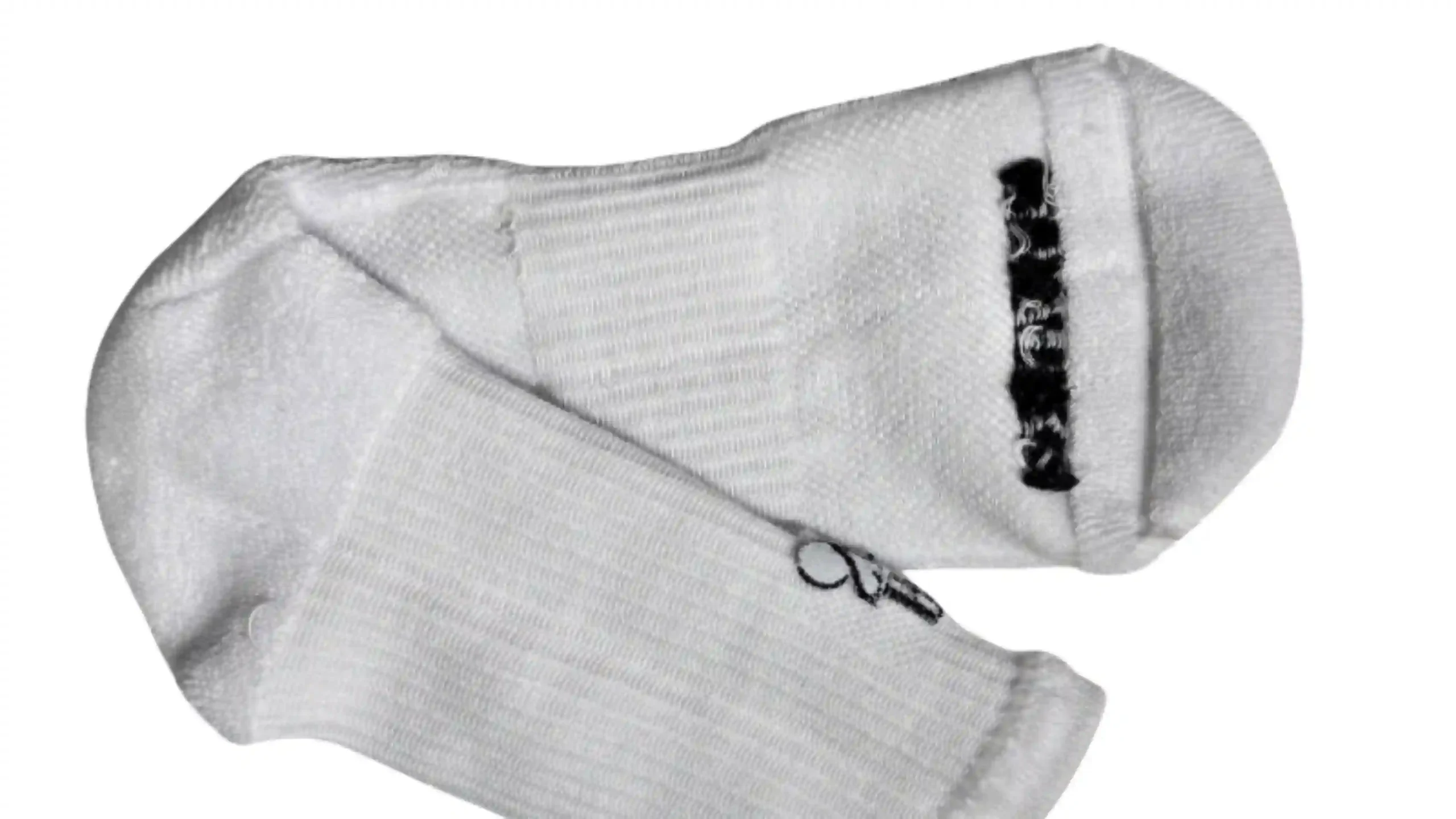
Cushioning where impact lands High-density terry zones knitted into the heel and ball of foot absorb landing load without the bulk of doubling up cotton socks.
Consumer Pain
On stage the sock is supposed to disappear. Visible logos break the costume, wrong "nude" shades break the barefoot illusion for many skin tones, thick knits flatten the arch line dancers train years to show.
In Their Words
"Directors want it to read as bare feet from the tenth row — no logo, no shine, and it has to match the dancer's skin, not 'nude' from one catalog."— synthesized from stage and theatrical costuming discussions
Why It Matters
European stage-sock specialists have built entire businesses on exactly two features — no visible branding and a multi-shade nude range. Proof of an underserved, premium-tolerant niche within performance.
Manufacturing Answer
Ultra-thin high-density flat knit with a seamless toe closure, zero external branding, and a custom nude-tone dye program matched to your brand's shade range — with lab-dip approval and color-fastness testing to hold shades consistent across batches.
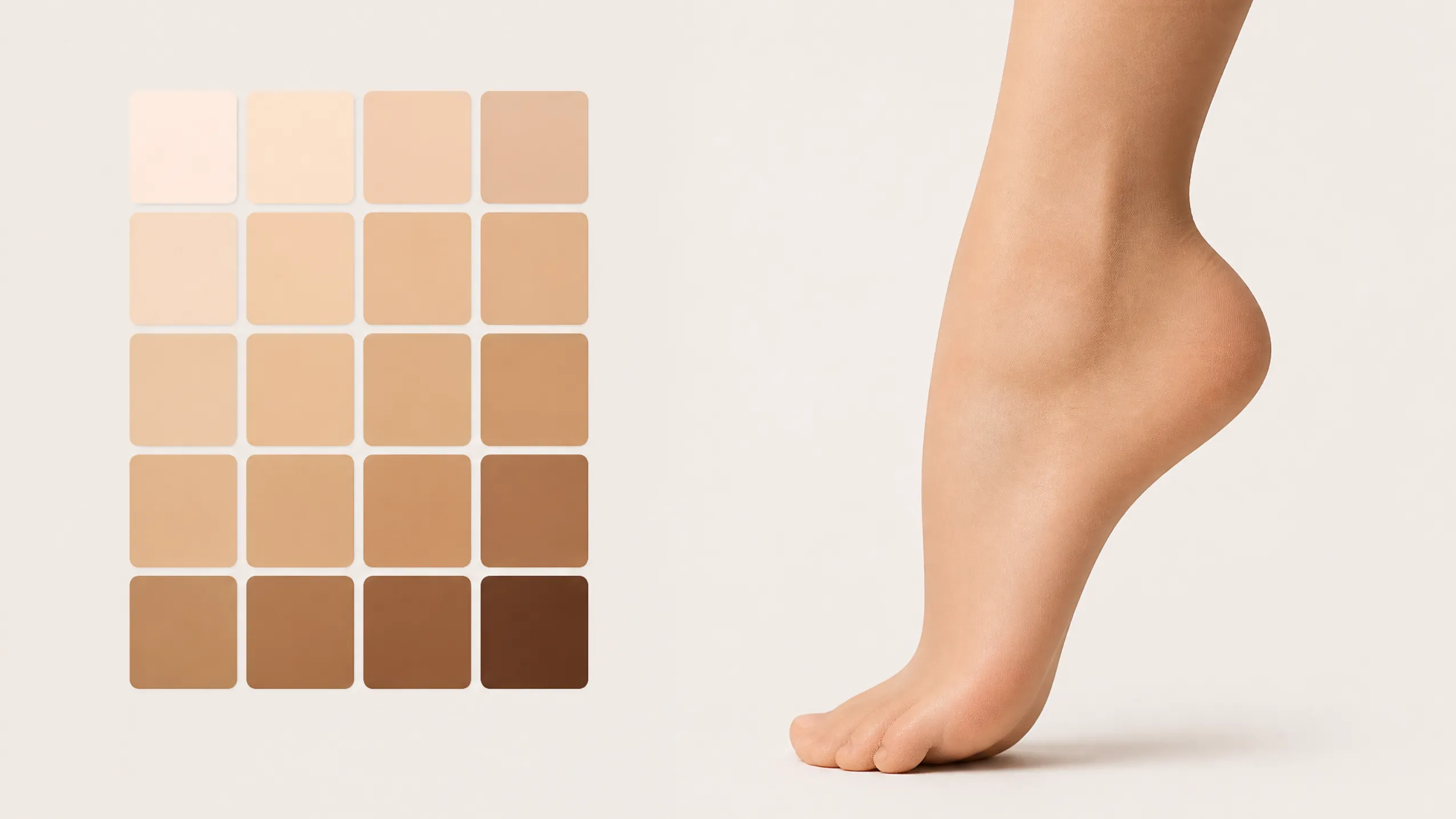
A nude range, not one "nude" A multi-shade skin-tone ladder plus a logo-free ultra-thin knit — the two features that let a stage sock read as bare feet across every dancer.
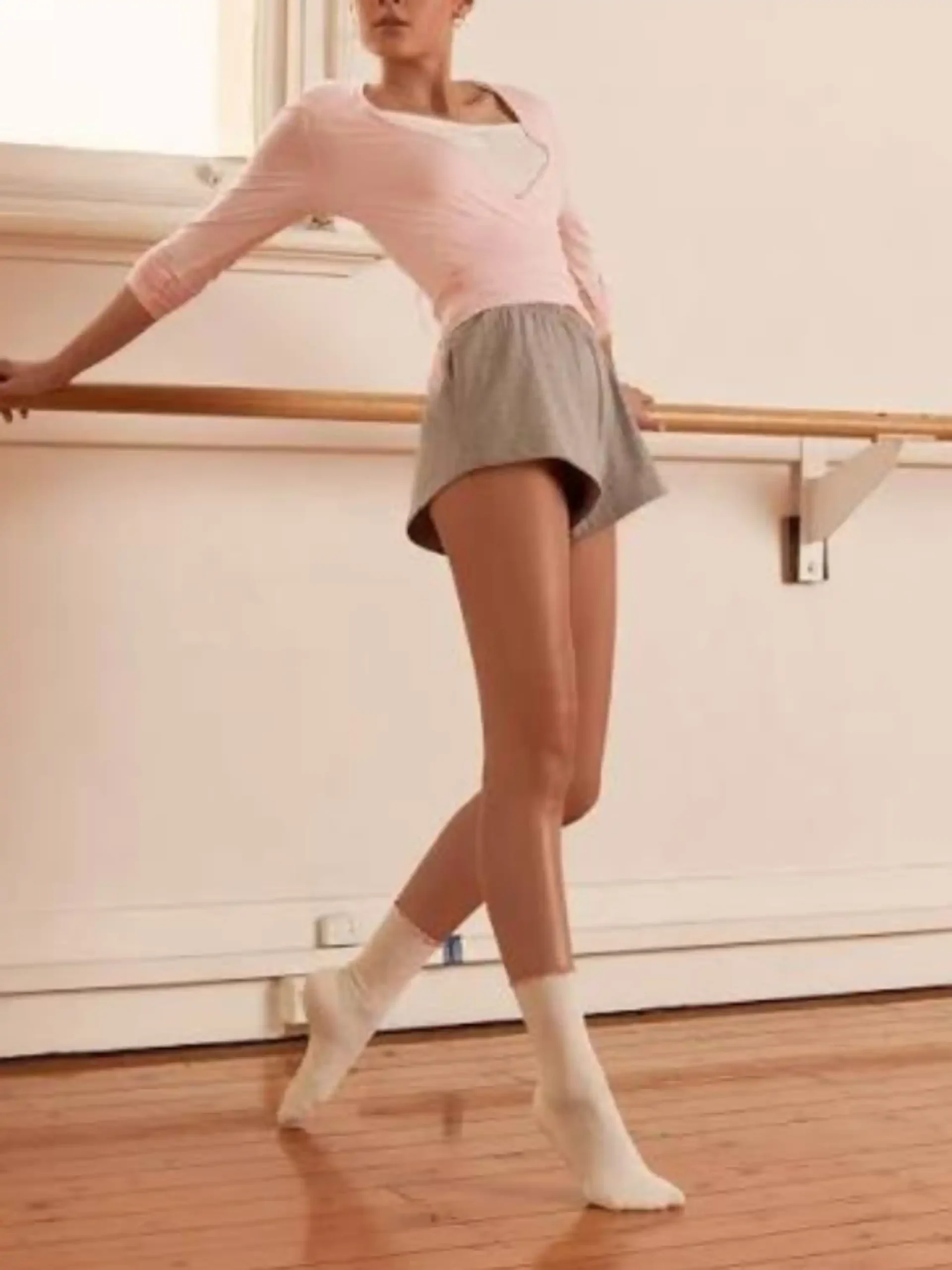
"The Turning Sock"
Priority: controlled glide + a clean foot line
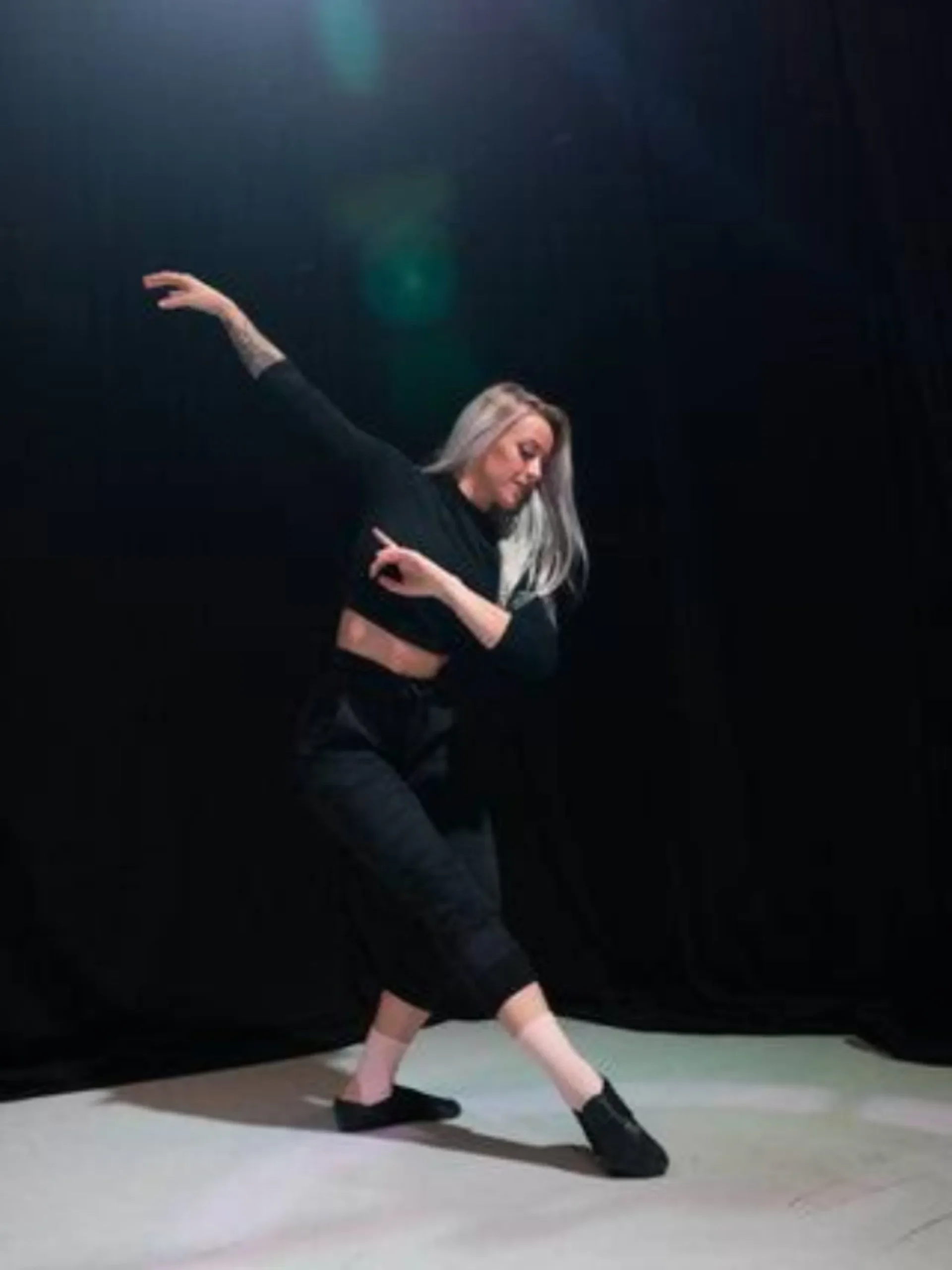
"The Spin & Brake Sock"
Priority: rotate freely, stop on command — on Marley
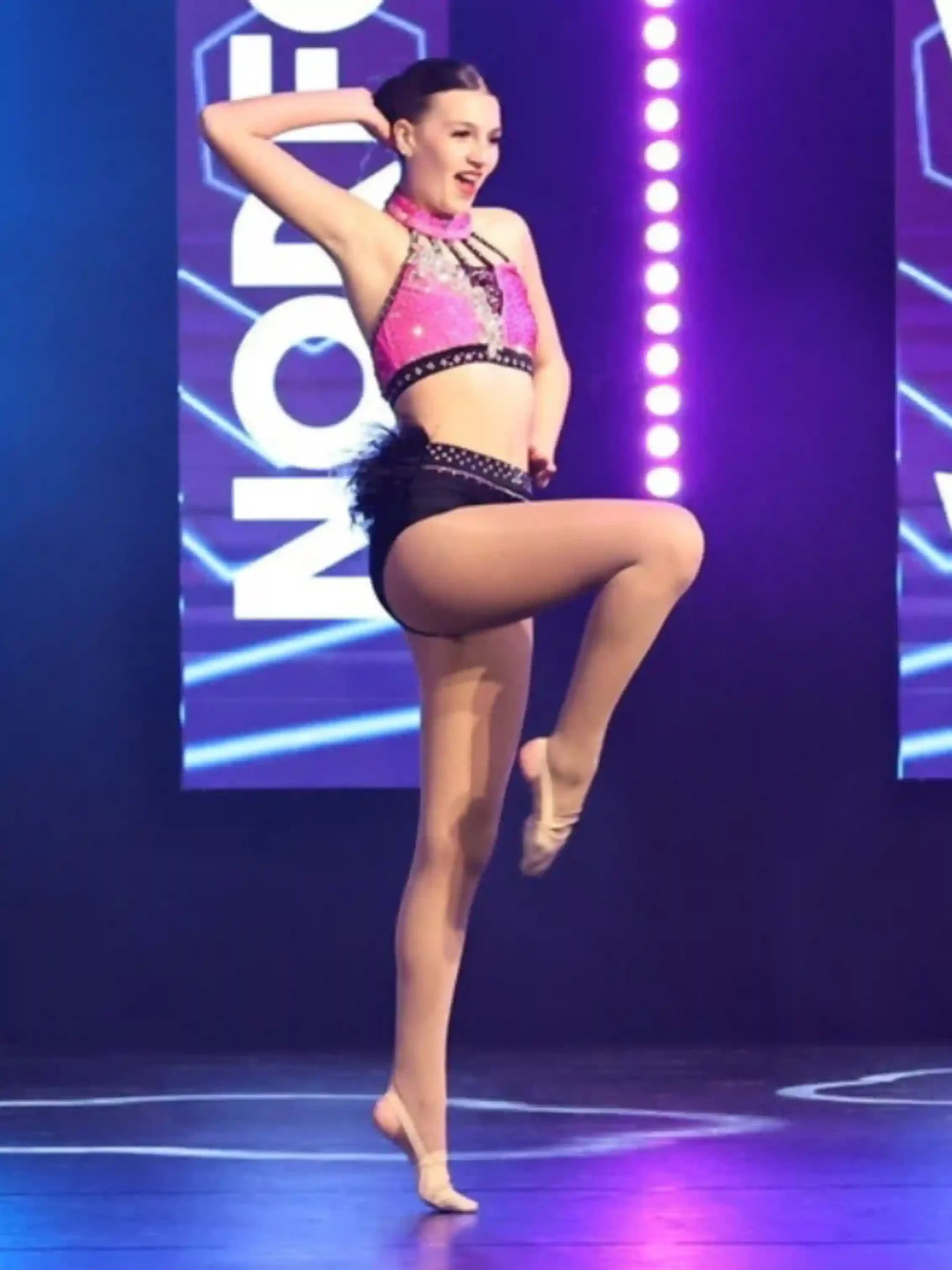
"The Slide-Step Sock"
Priority: grip at push-off, glide through the slide
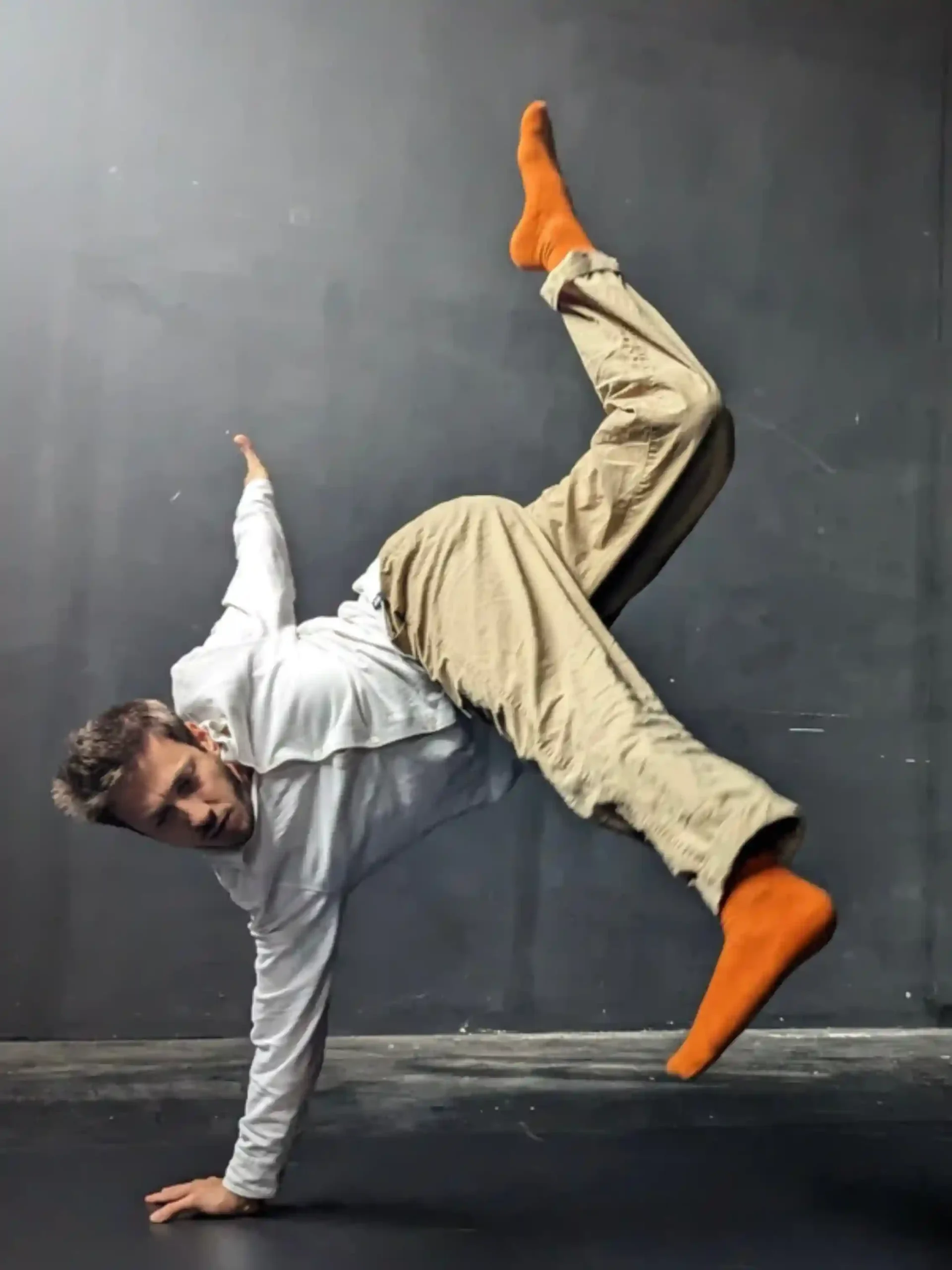
"The High-Impact Sock"
Priority: cushioning and durability under repeated impact
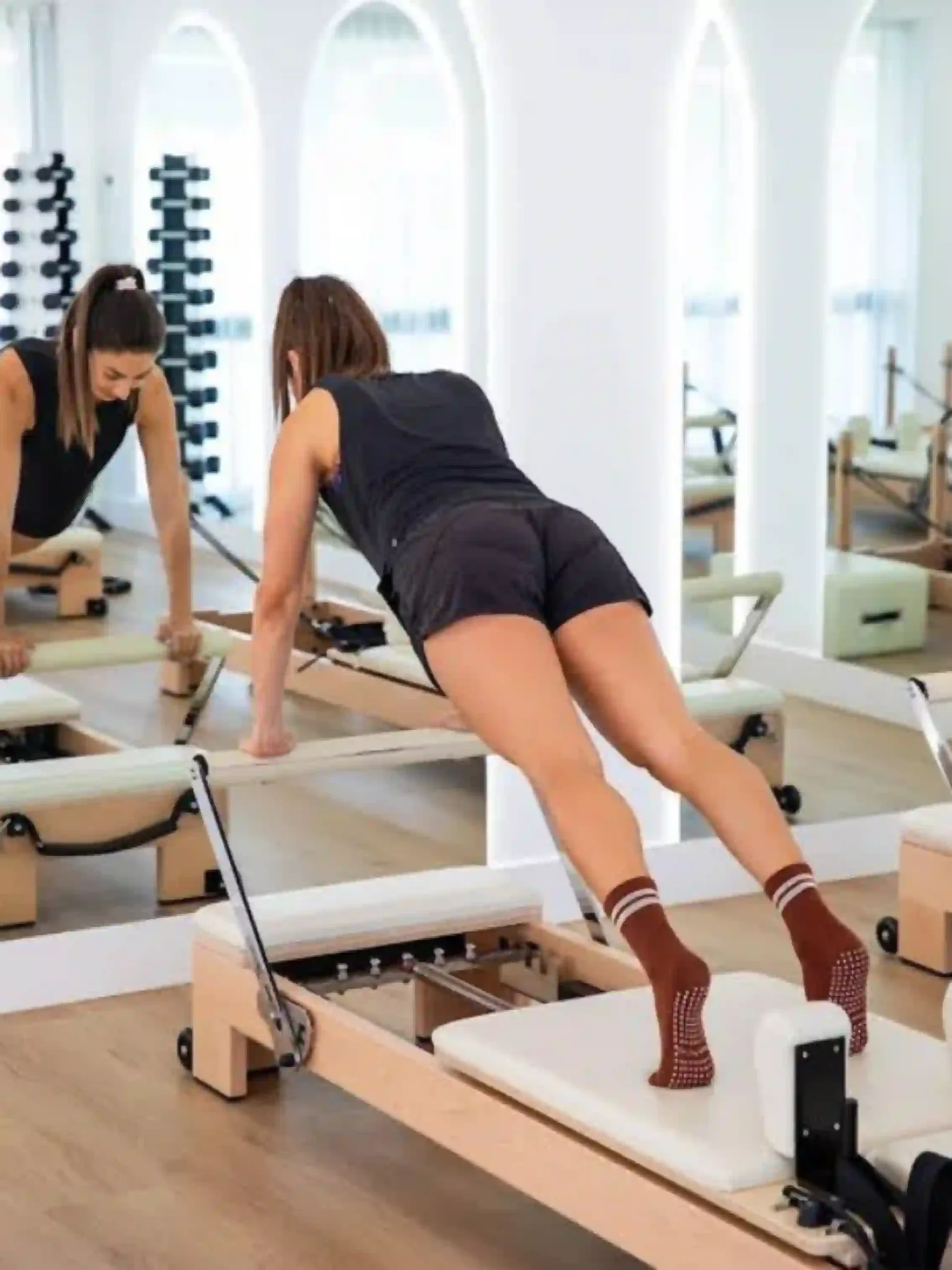
"The Full-Sole Studio Sock"
Priority: full-contact stability on reformers and barre floors
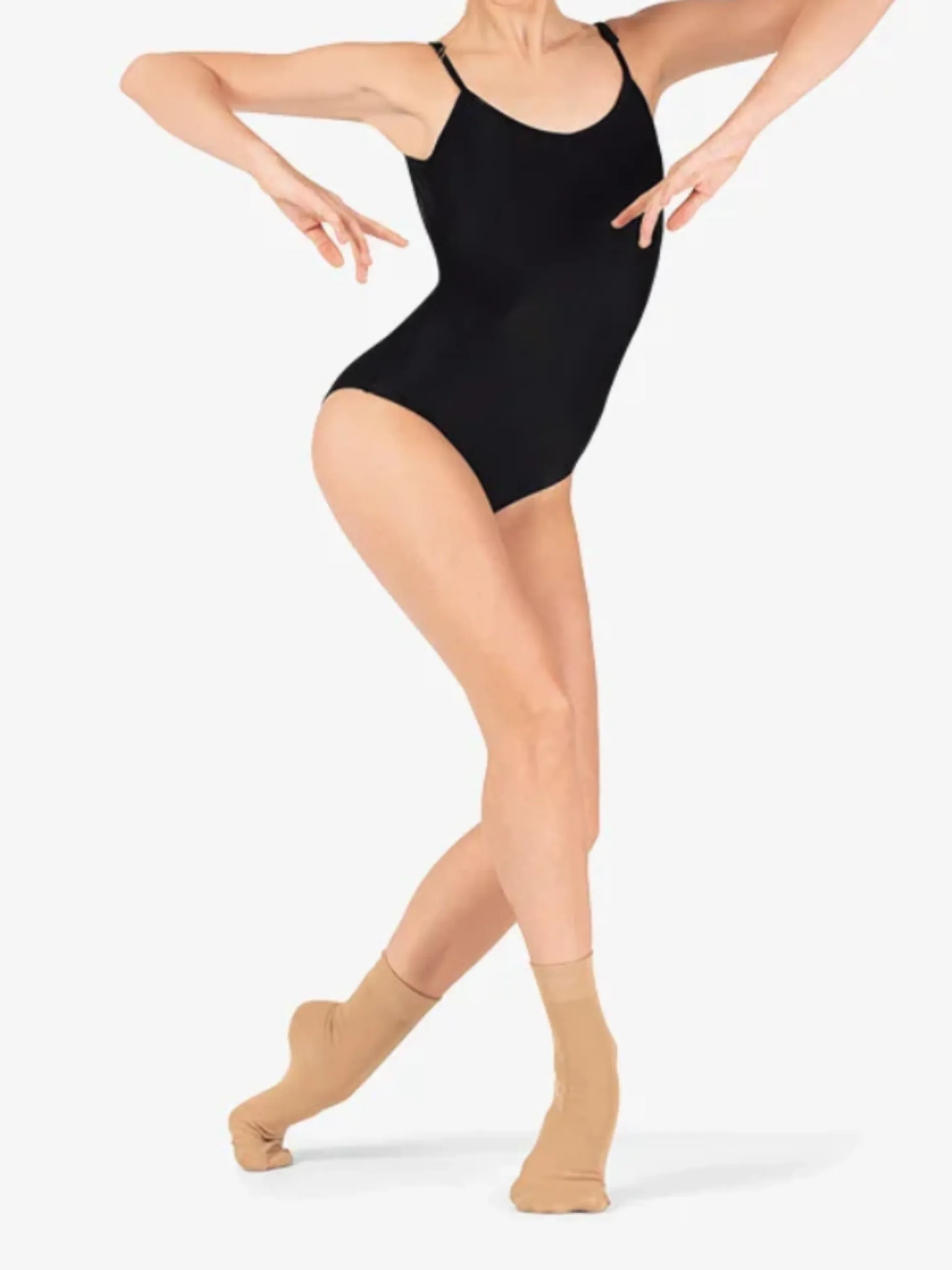
"The Second-Skin Stage Sock"
Priority: invisible from the tenth row
Zoned Silicone Printing
High-temperature bonded silicone placed by function — spin-spots, brake lines, weight-bearing pads — block thickness calibrated at sampling and locked for production.
Patterned Grip + Ventilation
Corrugated and linear grip patterns combined with mesh breathing zones, so traction doesn't come at the cost of a sweat-sealed sole.
Non-Silicone Anti-Slip Yarn
Friction-enhanced yarn knitted directly into the sole — nothing to peel, nothing to irritate silicone-sensitive skin. → anti-slip yarn engineering article
Since 2010 our group has manufactured performance and functional socks for brands, studios and retailers worldwide — with knitting, grip application, finishing and inspection under one roof. That vertical integration is what makes friction calibration and wash-cycle validation practical rather than theoretical.
Dance and performance socks sit alongside our dance socks range, grip socks and kids dance tights lines — so as your brand grows from one dance SKU into a full studio-and-performance range, your supply chain is already in place.
