

There are three separate stages in sourcing socks: finding a supplier, auditing the factory, and inspecting the finished product. These stages are often confused.
Finding a supplier is about building a shortlist. A factory audit is about confirming a shortlisted factory can actually make your product consistently. Final product inspection happens after bulk production is complete.
This checklist covers the middle one. If you are still at the first stage, start with our guide on how to find a sock manufacturer in China instead.
We wrote this from an unusual position: we are a sock factory that gets audited — by third-party auditors and by customers who fly in. Below is what they actually look at, and what we would tell you to look at.
Confirm who is actually making your order
Start here, because everything else depends on it.
- Does the company name on the quotation match the entity on the business licence?
- Is this a manufacturer, or a trading company placing your order elsewhere?
- Which processes physically happen at this address?
- Is there a second production site, and will your order run there?
A factory that answers these clearly is easier to audit than one with an impressive showroom. If the answers are vague, nothing further on this list can be verified.
Yarn and incoming material control
You don’t need to audit this in depth, but you should confirm the basics exist.
- Yarn is received against a specification, not just a name
- Different lots of the same yarn are identified and kept separate
- Colour batches are recorded and traceable to a production order
Two lots of the same yarn, in the same colour and the same specification, can still differ in shade and hand-feel. A factory with no lot identification cannot explain why your second shipment looks different from your first.
Check the machines that will make your sock
The question is not “how many machines do you have.” It is which machine will run my product, and is that written down.
Coarse gauge vs fine gauge. The dividing line sits around 120 needles. Below 120 is coarse gauge — the fabric comes out thicker and loftier, which is why coarse-gauge machines are typically used for wool socks and fluffy socks. Above 120 is fine gauge, which covers most everyday and performance categories.
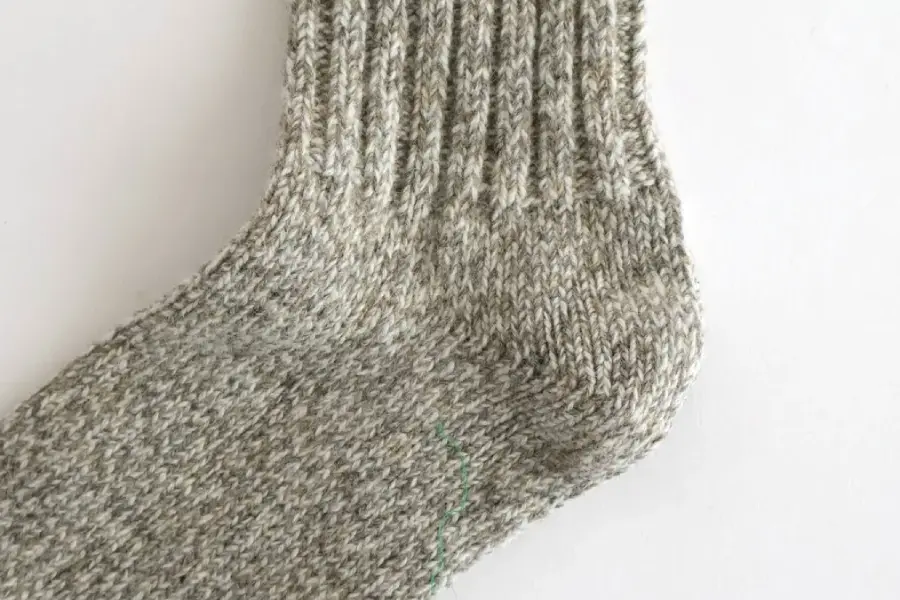
If you want a fuller explanation of what sock needle count means and how it affects yarn choice, fabric density and product type, see our detailed guide.
As a rough guide:
- Up to 200 needles — regular socks and general compression socks
- Above 200 needles — plus-size compression and medical-grade products
- 320 needles and above — medical compression typically starts here
Treat this as a range, not a rule. The same sock can often be produced on a lower needle count. It comes out at a different density and hand-feel, and it costs less to make.
That is the point buyers miss: needle count is a parameter the factory chooses, not a property of your sock. If your bulk specification doesn’t lock it, you have delegated that choice.
So ask:
- What needle count was the approved sample knitted on?
- Is that needle count written into the bulk production specification?
- How many machines of that type are available for my order?
How the factory transfers a sample to the bulk line
Separating the sample room from bulk production is normal, and good factories do it on purpose. Development work needs machines that can be stopped, re-programmed and re-run, which would interrupt bulk output. A separate sample room is not the problem.
The real question is what happens next: what mechanism moves the approved sample onto the bulk line?
Ask the factory to describe theirs. Ours has three steps:
- The knitting program is copied, not retyped. The knitting program used for the approved sample is exported as a file and loaded onto the bulk machines, so the bulk line starts from the same knitting program parameters rather than having them re-entered from a spec sheet— rather than being re-entered from a spec sheet, where a single value can drift unnoticed.
- A physical reference hangs at the machine. A confirmed sample is hung beside the bulk machine so the operator compares output in real time, during the run, not after it.
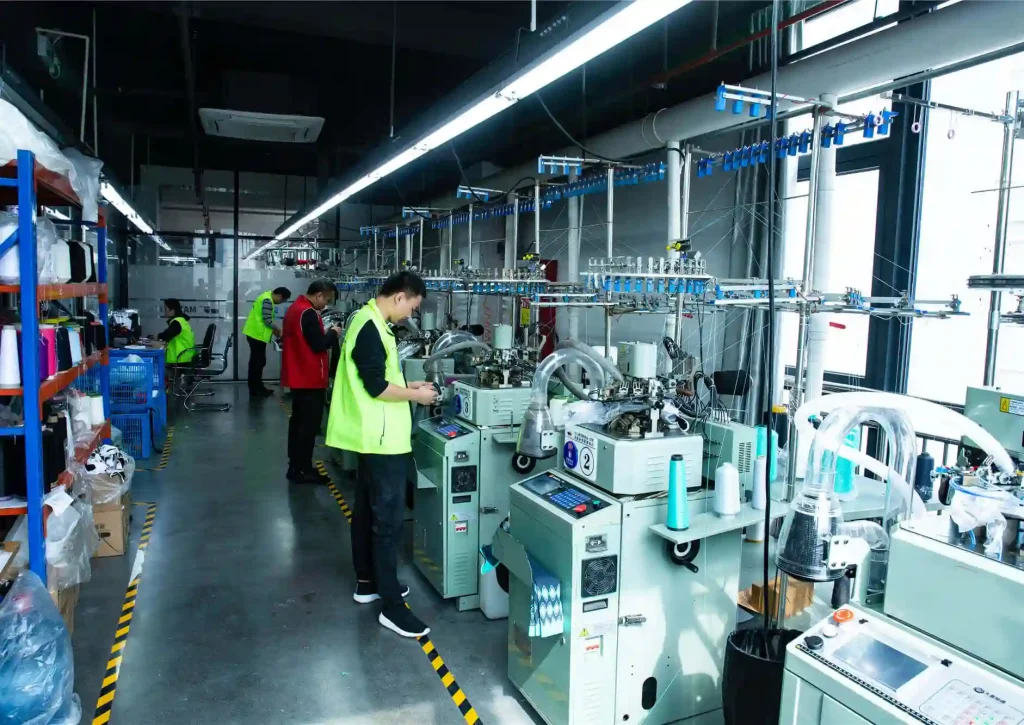
- A trial run comes before bulk. After startup, a few pairs are knitted and checked before the order is released into full production.
If a factory cannot describe an equivalent process, the approved sample is a picture, not a control.
Also worth asking: how many machines of that type are assigned to your order, and what the current load on that line looks like against your delivery date.
How the approved sample controls bulk
The transfer mechanism above gets bulk started correctly. Sealing is what keeps it honest to the end.
The process should look like this:
- Customer and factory confirm the sample together
- Both sides keep one set
- Both sets are sealed and signed
- The sealed sample is not opened during production
- At final inspection, QC opens the sealed sample and compares it against the bulk
Sealing matters because it removes the argument. If either side can open, adjust or substitute the reference during production, there is no reference.
During an audit, ask to see a real past order: the sealed sample, its identification, the production specification attached to it, and the inspection record that references it.
Which processes are in-house, and which are outsourced
“In-house” is too vague to be useful. Ask process by process.
Typically in-house at a sock factory: knitting, linking (toe closing), boarding (heat setting), inspection, packing.
Commonly outsourced: grip printing, embroidery, heat transfer. These are add-on processes with their own equipment, and most sock factories — including ours — send them out.
Outsourcing is not a red flag. Undisclosed or uncontrolled outsourcing is.
What to ask:
- Which processes are outsourced, and to whom?
- Who transmits the specification to that facility?
- What is inspected when the goods come back?
- Who carries the cost if the outsourced process fails?
A factory that names its outsourced processes and can describe its incoming inspection is giving you something to verify. A factory claiming everything is in-house is giving you something to verify carefully.
Look at QC records, not the QC flowchart
Many factories have a quality procedure on the wall. The audit question is whether it is actually followed. The audit question is whether it runs.
Check that these exist as separate steps: incoming material inspection, in-line inspection during production, final inspection, defect handling, and a defined owner for each.
Then ask to see the records from one real previous order. This single request separates a documented system from a decorative one.
Check that the defect standard is visible on the floor, not only written in a document. Ask how operators on the line know what counts as a defect. Our factory maintains a dedicated defect area displaying rejected pieces, so the standard is something an operator can look at and compare against. Criteria that exist only in a QC document rarely reach the person actually knitting or packing.
On test reports: ask what has actually been tested and whether the report carries numbers. A report that says “pass” with no measured values tells you nothing. Check which laboratory issued it, whether it is third-party, and whether it covers a sample or a bulk batch.
Our published test reports cover AZO dye content, bursting strength, colourfastness, fibre composition, flame retardancy and BPA in wool. Our certification page also carries ISO 9001, ISO 13485, OEKO-TEX® Standard 100, EN71-1/-2/-3 and our current amfori BSCI report — all downloadable without having to ask.
For AQL sampling levels and how pre-shipment inspection works, see our guide to AQL inspection standards.
Product-specific checks
General audit first, then add the checks your product needs.
Grip socks
Grip is the most commonly outsourced process, so it needs its own incoming inspection. We check four things on every batch that comes back:
- Grip colour — is it the approved colour, not an approximation
- Glue overflow — has the print bled outside its intended shape
- Grip shape — does the pattern or logo match the approved artwork
- Adhesion — does any part lift, peel or detach
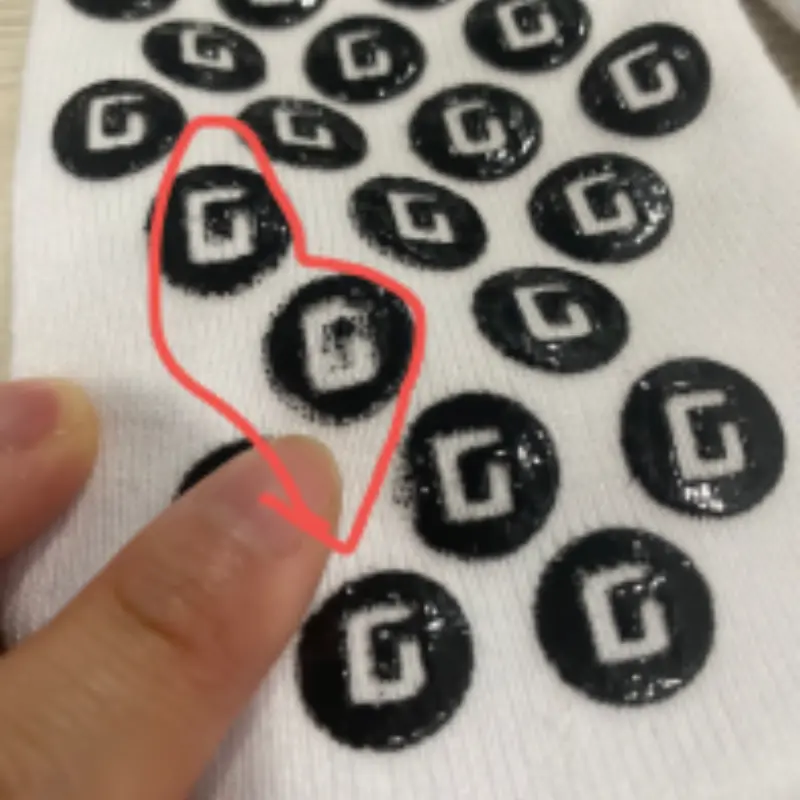
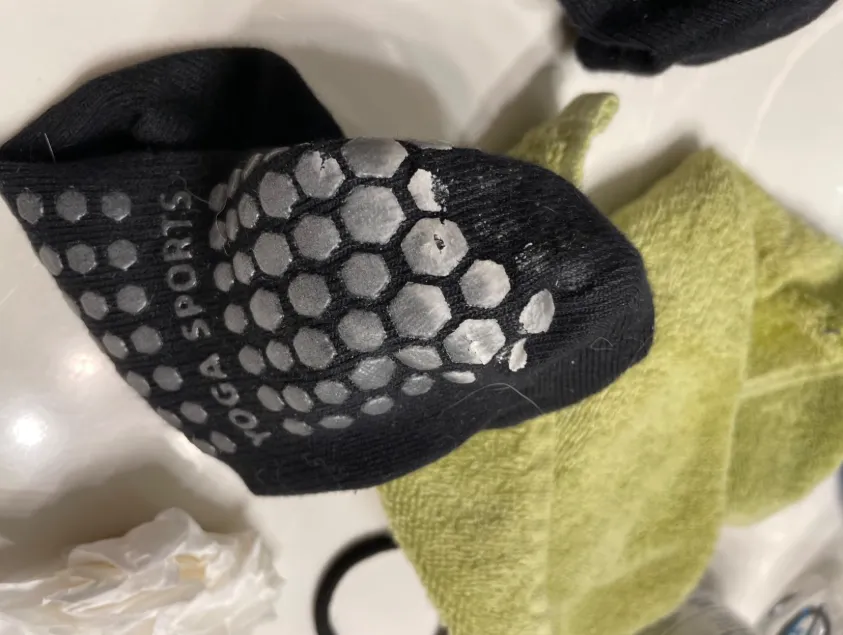
The one buyers forget: grip retention after washing. A grip that passes inspection and fails after ten washes is still a failure — ask what the factory has tested, not just what it inspected.
Trampoline and kids’ grip socks
Same four checks, plus:
- For children’s products, confirm which chemical or migration safety standards apply to your market and buyer requirements. Where EN 71-3 is specified, ask to see the relevant test report
- Size-sorted bulk packing, so venues can identify and distribute sizes quickly at the counter
- Honest peak-season capacity against your delivery date
Ask about grip material, not just grip pattern. PVC and silicone behave differently under commercial wear. Ask which the factory is quoting, why, and what wash-cycle data they have for that combination — not a general claim about durability, an actual tested number.
Ask for tested wash-cycle data. For reusable venue socks, that data can help you set an appropriate replacement cycle based on your own usage and laundering conditions. Venue socks in a reusable program get laundered constantly. If a factory quotes a specific wash-cycle life, ask to see the test method and record behind that number. A specific claim is only useful if it can be verified.
Ask how the size range is structured. Child / Youth / Adult three-tier or a full XS–XL run changes your cartons, your counter workflow and your reorder pattern. Confirm the tier structure before sampling, not after.
If you are sourcing for a park or a kids’ venue, see our custom trampoline socks page for build options.
Compression and medical socks
Confirm the factory actually owns machines in the needle-count range your product needs, that bulk will run on those machines, and that there is compression testing equipment on site — with test records, not just the machine in a photo.
Red flags
- Cannot say which machine and needle count will run your product
- Machine capability does not match the product being quoted
- Needle count is not written into the bulk specification
- No described mechanism for transferring the sample program to the bulk line
- Excellent sample, no explanation of how it transfers to bulk
- Claims everything is in-house, but processes are clearly outsourced
- No incoming inspection for outsourced processes
- No sealed sample, or a sample either side can open
- Cannot produce QC records from a real past order
- Defect criteria exist only on paper, with nothing on the floor
- Test reports show “pass” with no measured values, or have expired
- No yarn lot identification
- Stated capacity does not match visible machines, staff and current load
After the audit
Document what you found, ask for corrective action on anything that failed, verify the correction, confirm the approved sample and production specification, and only then release bulk.
We publish our licences, certifications and test reports openly because we would rather you check than assume. If you want to run this checklist against us, get in touch.
FAQ
What should buyers check during a sock factory audit?
A sock factory audit should verify who is actually producing the order, whether the factory has the right machines and needle-count range, how approved samples are transferred into bulk production, which processes are outsourced, how materials are traced, and whether real QC and test records can be produced.
What is the difference between a factory audit and product inspection?
A factory audit checks whether the supplier has the production capability and control system to make your product consistently. Product inspection checks the finished goods themselves, usually during or after bulk production, against the approved specification and quality standard.
Is outsourcing a red flag during a sock factory audit?
Not by itself. Grip printing, embroidery, heat transfer and other add-on processes are commonly outsourced. The real risk is undisclosed or uncontrolled outsourcing. Buyers should confirm which processes are outsourced, who receives the specification, how returned goods are inspected, and who is responsible if the outsourced process fails.
What documents should buyers ask to see during a sock factory audit?
Useful records include the business licence, production specifications, approved or sealed sample records, yarn lot records, in-line and final QC records, relevant test reports, and inspection records for outsourced processes. The goal is not just to confirm that documents exist, but to check whether they can be traced back to a real production order.