

Introduction
A grip sock is a sock with rubberized or silicone pads on the sole that create traction against floors or the inside of shoes. The textured grip prevents your feet from slipping during activities like yoga, Pilates, soccer, and hospital care.
Grip socks come in many forms — from thin studio socks for barre class to cushioned athletic socks for football. What they all share is a non-slip sole designed to keep you stable, safe, and in control.
Common non-slip grip socks
Grip socks were originally designed for yoga and Pilates, where practitioners need traction on smooth studio floors without wearing shoes.
In sports like soccer and football, soccer grip socks serve a different purpose — they lock the foot inside the boot, reducing internal slippage during quick turns and sprints. This improves both comfort and control.
Trampoline parks require trampoline grip socks for safety and hygiene. Shoes aren’t allowed on trampolines, and bare feet are slippery and prone to bacteria — grip socks solve both problems while keeping kids comfortable.
For toddlers learning to walk, non-slip socks with grippers provide the traction they need on hardwood and tile floors at home — much safer than bare feet or regular socks.
In hospitals, non-slip socks are standard fall-prevention gear for elderly patients. These medical-grade grip socks must meet strict safety standards, and many hospitals now issue them as part of patient care protocols.
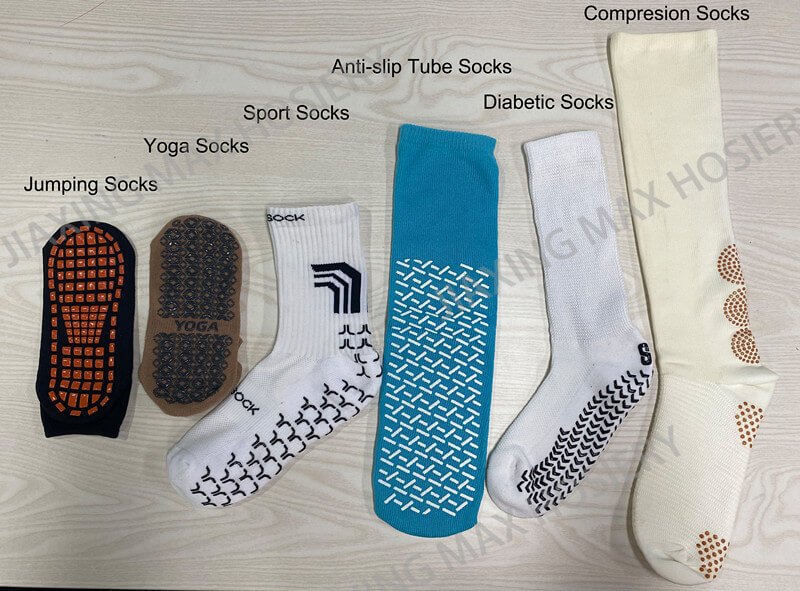
The image below shows the most common types of grip socks, including yoga and Pilates socks, soccer grip socks, trampoline socks, children’s non-slip socks, and hospital socks. For a full breakdown of each type, see our guide to grip sock types.
Material of grip
PVC & Silicone grip socks
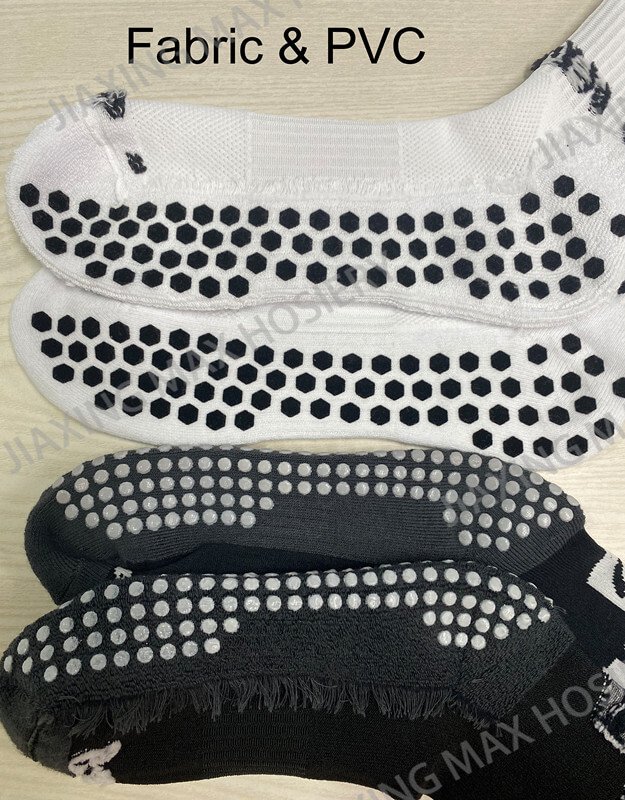
The three main grip materials are PVC, silicone, and flocking fabric. Each has different characteristics that suit different applications.
PVC and silicone are the most widely used. PVC is the more affordable option — it’s soft, heat-resistant, and provides strong anti-slip performance. Silicone offers a similar feel with slightly better durability. Both materials share these properties:
- Skin-safe and non-toxic — certified to OEKO-TEX® Standard 100 and AZO-free standards
- Available in a wide range of Pantone colors
- Durable with high wear resistance
- Can be applied by hand for multi-color designs on a single sock
- Support 3D raised patterns for logos and branding
How grip pads are made:
- Mold creation — A custom mold is designed and CNC-carved based on the grip pattern.
- Color matching — The material is mixed to match the target Pantone color and hardness.
- Application — Liquid PVC or silicone is applied into the mold and heat-cured to bond permanently with the sock fabric. This is done layer by layer to build up thickness.
- Quality control — Every sock is inspected for air bubbles, color consistency, and clean edges before it passes.
This short video shows how we produce custom grip socks.
Flocking fabric
Flocking fabric is a thinner, softer grip material favored for yoga, Pilates, and football socks. It was popularized by the brand TruSox, which uses a flocking-style grip on both the inside and outside of the sock — the inner grip locks the foot to the sock, while the outer grip locks the sock to the shoe or floor. This dual-sided design makes it especially effective for sports that demand quick direction changes.
Shape of grips
Grip pads can be shaped into dots, bars, hexagons, waves, or custom patterns — and the shape matters. Different shapes distribute friction differently, which affects how well the sock grips on various surfaces.
PVC and silicone grips can be made with a raised 3D profile, which increases surface contact. One interesting example: a client designed a gecko-claw-inspired grip pattern, and testing showed it outperformed standard dot patterns in traction.
Flocking fabric can also be cut into custom shapes, but it stays flat due to its thin material — no 3D effect is possible.
Thickness of grips: How thick should grip socks be?
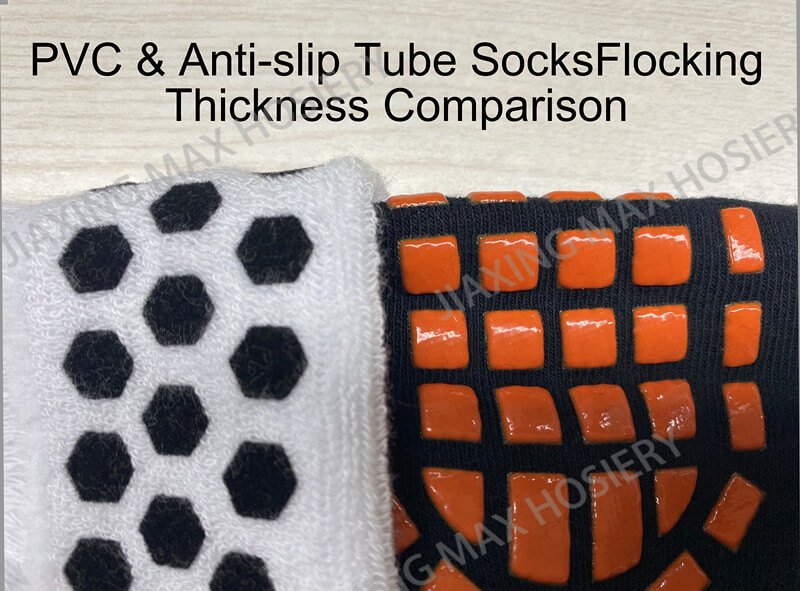
Grip thickness depends on the material. Flocking fabric is the thinnest option — just a single layer, making it lightweight and flexible. PVC and silicone grips are thicker because they’re built up layer by layer during the curing process. This layered application means quality control is important — poorly made grips can trap air bubbles between layers, weakening the bond. A well-made PVC or silicone grip should feel solid and uniform with no visible defects.
Conclusion
Grip socks have become essential gear across sports, fitness, healthcare, and everyday life — and the technology keeps evolving. Whether you’re looking for the right pair for your next yoga class or exploring custom grip socks for your brand, understanding the materials, grip patterns, and construction behind them helps you make a better choice.
Have a custom grip sock design in mind? Contact our team to discuss your project — we manufacture grip socks for brands worldwide with full OEM/ODM support.
FAQ
1. Are there different grip socks for athletic and medical use?
Yes, athletic grip socks are designed for performance, while medical grip socks prioritize safety and hygiene.
2. Why do so many professional athletes, like footballers, use grip socks?
For a competitive edge, athletes use grip socks to lock their feet inside their shoes. This enhances stability, agility, and power, while also reducing blisters. Many pros cut their team socks to wear performance grip socks underneath, ensuring they have the best possible traction and confidence during a match.
3. Are grip socks a worthwhile investment?
Yes! For athletes, they mean better performance and fewer blisters. For daily wear, they offer safety and stability on slippery home surfaces. The cost reflects durable, high-quality materials like silicone grips, ensuring you get a reliable product for enhanced comfort, confidence, and safety in any activity.
4. Are there any activities where I shouldn’t wear grip socks?
Grip socks are versatile but not for every sport. Avoid them for high-impact activities like running or basketball, which demand socks with superior cushioning and ankle support. Grip socks excel in providing stability for studio workouts, home use, and sports where in-shoe traction is key to performance and safety.
5. Are athletic grip socks the same as the ones used in hospitals?
While both prevent slips, they differ in design. Hospital socks offer basic, often disposable, safety. Athletic grip socks are engineered for performance and longevity, using durable materials, strategic grip patterns, and breathable fabrics. They provide superior comfort and traction designed specifically for sports and active lifestyles.