

Most people see 4–12 months of useful life from grip socks, depending on use and care. If you’re new to grip socks, start with our grip socks guide: benefits, uses, care & buying tips before dialing in lifespan and replacement cycles. That range covers studio work (Pilates, yoga), field sports (soccer/football), home wear, and medical non-slip socks. The average sock lifespan is shorter with high friction and heat; it’s longer with gentle surfaces and air drying. In short: more sweat + more abrasion = shorter life.
Typical lifespan by use
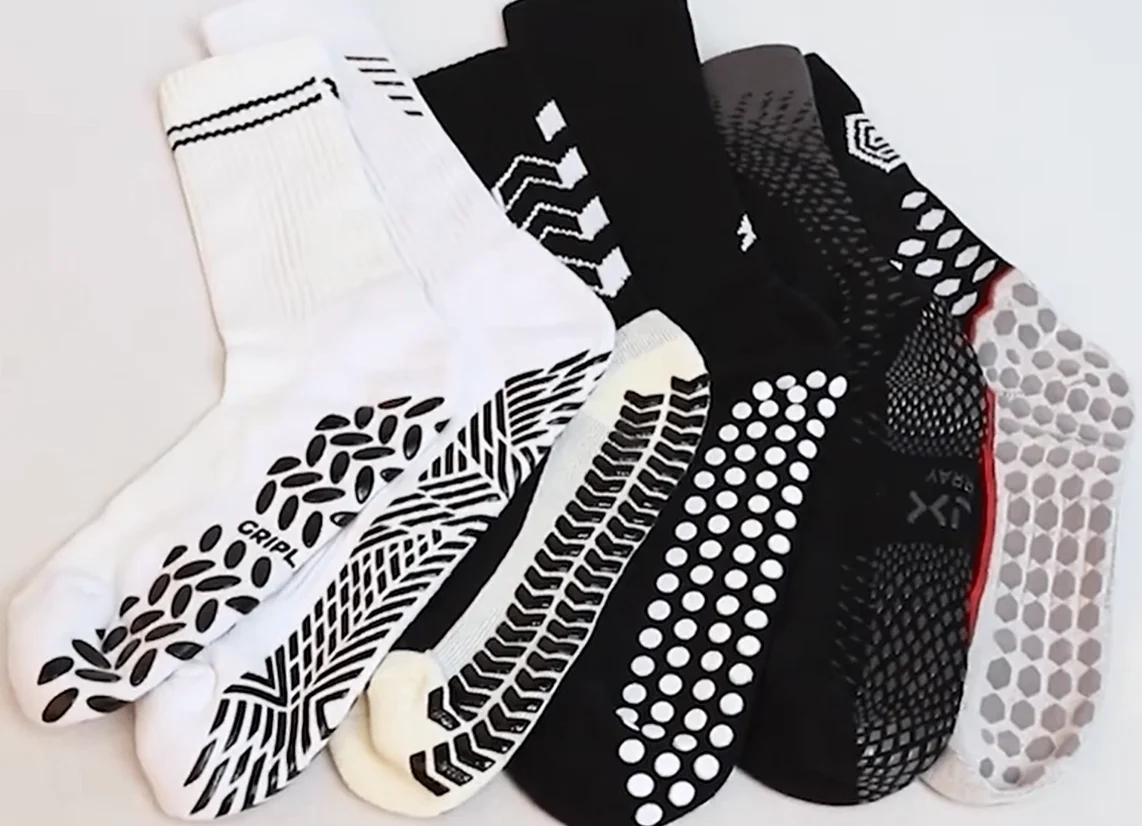
Short answer: it depends on friction, heat, and humidity—not the calendar. Instead of months, think in wear-hours. Our simple Wear-Score is:
Wear-Score = Hours of use × Friction factor × Humidity factor × Heat factor
- Friction factor is higher in cleats and on abrasive tiles; lower on studio floors.
- Humidity factor rises with sweat accumulation; moisture accelerates microbial growth and softens yarns.
- Heat factor spikes with tumble drying and high-temp storage; thermal stress fatigues stretch fibers and grip bonding. Research on accelerated aging of elastomeric or fiber materials supports this mechanism.
A pair usually crosses its “useful-grip” threshold when the score hits ~100–140 (Pilates at the low end; indoor soccer at the high end). Think of it as the average sock lifespan translated into hours you can actually track. If you want to see how material blends and grip compounds actually affect long-term durability, explore how grip sock materials and grip compounds are engineered in our manufacturing deep-dive.
Do grip socks lose grip?
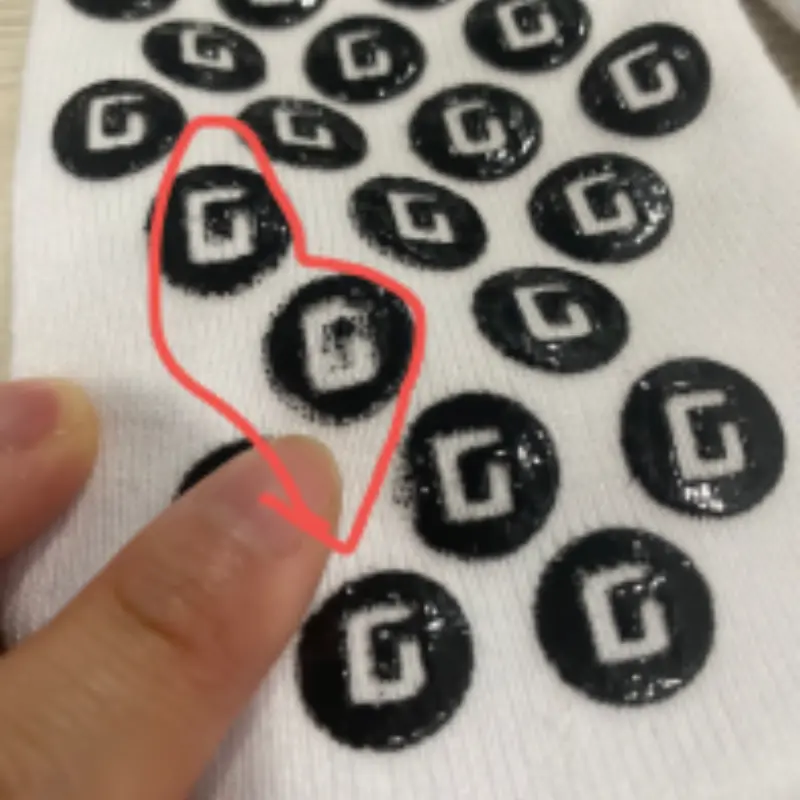
Yes—through pad glazing, residue fouling, or bond fatigue. We break down why grip socks slip and how to fix them fast in a dedicated guide, but the short version is simple: wrong care and mismatched surfaces accelerate traction loss.
- Residue fouling: fabric softeners and some detergents coat fibers/surfaces, reducing moisture transport and altering feel; that coating can also dull traction on silicone/rubber pads. Multiple studies and industry testing show softeners decrease absorbency/wicking in cotton/Blended fabrics
- Heat fatigue: high heat degrades stretch components and can embrittle certain compounds; repeated wet-dry cycles measurably change fabric structure.
- Glazing: high shear polishes pads smooth—common in soccer boots, where in-shoe micro-slip concentrates pressure at the forefoot.
Quick note on care: keep it cold-wash/air-dry; details live here (we won’t repeat the steps).
How Long Do Grip Socks Last for Different Users?

Let’s look at how long grip socks typically last across different user groups.
Athletes & Sports Professionals
Usage Pattern: High-friction, sweat, quick movement
Typical Lifespan: 4–6 months
Athletes—especially in sports like football, basketball, or soccer—put socks under extreme pressure. Friction inside the shoe, sweat buildup, and frequent training sessions all cause the grips and fabric to degrade faster.
🟠 Most common wear signs:
- Grip pads flatten or fall off
- Heels thin out
- Compression loosens quickly
🟢 Pro tip: Rotating between 2–3 pairs reduces damage from sweat and friction buildup.
For game-level traction and season-long durability, many brands spec soccer grip socks for teams and clubs rather than generic athletic socks.
Yoga and Pilates Users
Usage Pattern: Indoor, low-impact movement on smooth surfaces
Typical Lifespan: 6–10 months
These users often wear grip socks on studio floors. Since the contact is smooth and the movement is more controlled, socks generally wear more slowly. However, regular washing can still affect grip texture over time.
Measured by classes, grip feel remains reliable for a few dozen sessions before texture levels off. Lifespan stretches when pads are evenly distributed and the upper has stable recovery (good elastane/nylon blend), so the sock doesn’t creep under load. Avoid high heat; thermal treatments change elastic recovery behavior over time.
🟠 Wear signs:
- Silicone grips begin to peel after repeated washes
- The fabric gets loose in the arch or ankle area
🟢 Pro tip: Air dry after every wash and avoid softeners to preserve grip.
For studio sourcing, our custom Pilates & yoga grip socks cover everything from low-cut barre styles to compression recovery socks.
Medical or Rehab Patients
Usage Pattern: Low-mobility, often standing or walking on indoor surfaces
Typical Lifespan: 8–12 months
In hospitals, elderly homes, or recovery centers, grip socks are used for fall prevention and gentle support. Their wear depends less on impact and more on hygiene cycles—like frequent industrial washing.
🟠 Wear signs:
- Grip is fading from the commercial detergent
- Elastic breakdown if tumble dried
🟢 Pro tip: Use hospital-grade grip socks that handle heat sterilization better.
General Everyday Users
Usage Pattern: House chores, walking on tiles or wood floors
Typical Lifespan: 5–8 months
These users tend to wear grip socks like indoor slippers. They might walk a lot around the house, especially on abrasive tile floors. Some even use them in place of shoes—leading to quicker grip erosion.
🟠 Wear signs:
- Grip smoothing on the ball of the foot area
- Threads loosening around toes or heel
🟢 Pro tip: Use different pairs for different areas (e.g., kitchen vs living room) to slow wear.
Children or School Gym Use
Usage Pattern: Active play, indoor gym, jumping
Typical Lifespan: 3–5 months
Kids run, slide, and jump—all while dragging their socks over floors or mats. This group typically sees the shortest lifespan, not because of sock quality, but due to intense, chaotic activity.
🟠 Wear signs:
- Holes in the toe box
- Grip pads rubbed off completely
- Elastic is fully stretched out
🟢 Pro tip: Encourage teachers or parents to rotate pairs weekly and wash gently.
For schools and play centers, trampoline grip socks and Infant/kids’ grip socks with reinforced toes and higher pad density usually survive rough play much better than budget options.
| User Group | Lifespan | Primary Wear Cause |
|---|---|---|
| Athletes | 4–6 months | Friction, sweat, shoe pressure |
| Yoga/Pilates Users | 6–10 months | Wash frequency, grip softening |
| Medical Patients | 8–12 months | Heat drying, commercial washing |
| Home Users | 5–8 months | Floor abrasion, overuse |
| Children | 3–5 months | Rough play, over-stretching |
How Businesses Can Plan Sock Lifecycles Smarter

For businesses selling grip socks, planning replacement cycles is key to keeping customers satisfied and controlling costs. Grip socks usually last between 4 to 12 months, depending on use. Light users, like office workers, may replace socks every 10 to 12 months, while heavy users—athletes or medical patients—should replace socks every 4 to 6 months. This helps prevent issues like worn grips or loss of compression.
Encouraging customers to rotate between multiple pairs can extend the lifespan of each pair. Offering bundle packs with 3 to 5 pairs helps customers switch socks regularly, reducing wear and improving comfort. Proper care is also essential. Remind customers to wash grip socks in cold water and air dry them to maintain elasticity and grip performance.
Tracking customer feedback on sock durability and comfort can help businesses adjust their recommended replacement schedules. By combining clear replacement guidelines, rotating socks, and care tips, companies can provide reliable long grip socks that meet different needs while optimizing inventory and reducing returns.
Conclusion
Grip socks don’t last forever, but knowing when to replace them keeps users safe and comfortable. Whether it’s worn-out grips, thinning fabric, or stretched elastic, these small signs matter—especially for active or medical users.
For businesses, clear replacement advice and proper care tips go a long way in improving product satisfaction and reducing returns. Simple changes like offering multi-pair packs or rotation tips can also extend product life.
At Max Hosiery, we understand how important performance and durability are. That’s why we help brands create grip socks that hold up to real-world use. If you’re planning your next product line or need custom support, we’re here to help—quietly and reliably behind your brand.
FAQ
Do grip socks lose grip over time?
Yes—three drivers are residue (fabric softener films), heat (dryer damage to stretch fibers/bonding), and abrasion (pads polished smooth). Keep washes cold and skip softener; heat accelerates loss of elasticity and adhesion.
Can I put long grip socks in the dryer?
Avoid it. High heat degrades elastane/nylon recovery and can weaken pad bonding; this speeds up sagging and slip. Air-dry to preserve stretch and grip feel.
How do I make grip socks sticky again?
Remove films first: cold wash inside-out, no fabric softener, then air-dry. A dilute white-vinegar rinse can help lift residues. If pads are visibly smooth/peeling, replacement is safer than DIY recoating.
Why do Pilates socks have a hole on top (or open-toe designs)?
To improve ventilation and toe articulation while keeping underfoot traction. Many studios prefer open-top/strap styles for breathability without sacrificing grip.
Are hospital non-slip socks effective—and when are they used?
Hospitals commonly issue non-slip socks as part of falls-prevention protocols, especially when patients lack suitable footwear; several NHS trusts explicitly list them, and CDC materials emphasize safe, supportive footwear in fall-prevention programs.