

The Short Answer
Compression socks work by pushing fluid upward against gravity. When you lie down, your legs sit at roughly heart level and that gravitational load disappears — so for a healthy person, wearing compression to bed adds very little.
At low pressure it is usually not dangerous. It is usually just unnecessary.
Overnight compression is genuinely useful in a short list of diagnosed conditions, all of them supervised. And in most of those cases the garment a doctor prescribes is not a daytime compression sock at all — it is a different product, built with a different pressure profile. That distinction is where almost all the conflicting advice online comes from.
Why Lying Down Changes What Compression Does
Three things change the moment you go horizontal.
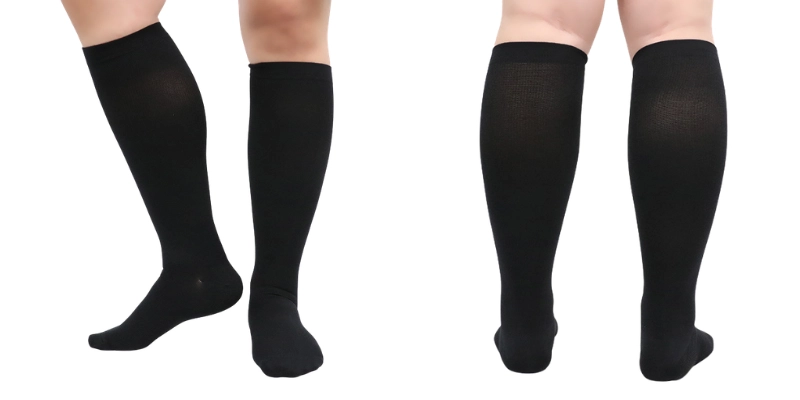
Gravity stops loading your veins. Standing, blood in your leg veins has to climb roughly a metre back to the heart against a standing column of pressure. Lying down, that column disappears. Graduated compression is engineered specifically to counteract it — remove it and the sock is solving a problem that is no longer there.
Your calf muscle pump switches off. During the day, every step squeezes the deep veins of the calf and drives blood upward. That pump moves far more blood than any garment does. Asleep, it stops completely, and a sock cannot substitute for it.
Your peripheral vessels widen. Blood pressure and heart rate fall during deep sleep and peripheral vessels dilate. A garment fitted to a daytime leg sits differently on a night-time one — which is why socks that feel fine at 9pm can leave marks by morning.
Safe Pressure Levels for Overnight Wear
| Pressure | Pressure Overnight | Overnight |
| 8–15 mmHg (light) | Everyday support, mild swelling | Generally safe; limited added benefit |
| 15–20 mmHg (moderate) | Travel, standing work, sport | Only on clinical advice |
| 20–30 mmHg (firm) | Prescribed venous conditions | Not without a prescription |
| 30–40 mmHg (extra firm) | Prescribed only | Never self-prescribed |
| 8–18 mmHg anti-embolism (TED) | Not intended for mobile use | Designed for it — for immobile patients |
Two fit details matter far more overnight than they do during the day, because you cannot feel a problem developing while you are asleep.
The cuff. A narrow top band that leaves a deep ring after eight hours is doing something a wide, non-binding welt would not. The band is where most overnight complaints start, not the ankle.
Bunching behind the knee. A sock that rides down and folds concentrates pressure over the fibular nerve on the outside of the knee. Sustained pressure there is the most common reason people wake with a numb outer calf, and in rare cases with a temporary foot drop.
Who Should Never Wear Compression Socks to Bed
The NHS lists five conditions under which anti-embolism stockings should not be offered at all. The same cautions apply to wearing ordinary compression socks overnight, with one addition at the end of this table.
Do not wear compression to bed with any of the following, unless your own clinician has specifically told you to:
| Condition | Why it matters overnight |
|---|---|
| Peripheral artery disease or arterial insufficiency | Compression assists venous return. It does nothing for arterial inflow and can reduce it further in a leg already short of arterial blood. This is the most important one on the list, and it is frequently undiagnosed. |
| Peripheral neuropathy or any loss of sensation | The safety mechanism for compression is that it hurts when it is wrong. Remove the sensation and the mechanism is gone. |
| Recent stroke | Reduced mobility and altered sensation on the affected side, combined with a raised risk of skin complications under sustained pressure. |
| Recent skin graft | Grafted skin has no tolerance for shear or sustained pressure while it is taking. |
| Eczema, fragile skin, open wounds or ulcers | Eight hours of pressure plus trapped moisture is how maceration starts, and macerated skin breaks down at pressures that would not mark healthy skin. |
| Uncontrolled or decompensated heart failure | Shifting fluid out of the legs and back into central circulation is not neutral in a heart already struggling with volume. |
The last row is a general caution rather than part of the NHS list above, but it belongs on the same page.
Diabetes and Overnight Compression
Diabetes by itself is not a reason to avoid compression socks. Two of its complications are.
Most people with diabetes do not need overnight compression and should not start it without their care team, because diabetes raises the odds of both of the contraindications above being present at the same time:
Peripheral neuropathy removes the pain feedback that would otherwise tell you a sock is too tight.
PAD is substantially more common in people with diabetes, and often silent until it is advanced.
There is also a product confusion worth clearing up: diabetic socks and compression socks are opposite designs. Diabetic socks are deliberately non-binding — loose cuff, seamless toe, often light-coloured so that a wound or discharge shows up immediately. Compression socks apply graduated pressure by design. One sock cannot do both jobs well, and the trade-off between a non-binding diabetic sock and a graduated compression sock is why people with diabetes are often told to own both and wear them at different times of day.
Anti-Embolism Stockings Are Not Compression Socks
This is the distinction that nearly all nighttime-compression advice skips, and it is why the same question gets opposite answers.
| Anti-embolism stockings (TED) | Graduated compression socks | |
|---|---|---|
| Pressure | 8–18 mmHg | 15–20 mmHg and above |
| Designed for | A body lying down | A body standing or sitting |
| Pressure profile | Calibrated for a reclining leg, where there is no gravitational column to fight | Steep ankle-to-calf gradient engineered against gravity |
| Intended user | Immobile or bedridden patients | Mobile users |
| Worn overnight | Yes — that is the design intent | Not the design intent |
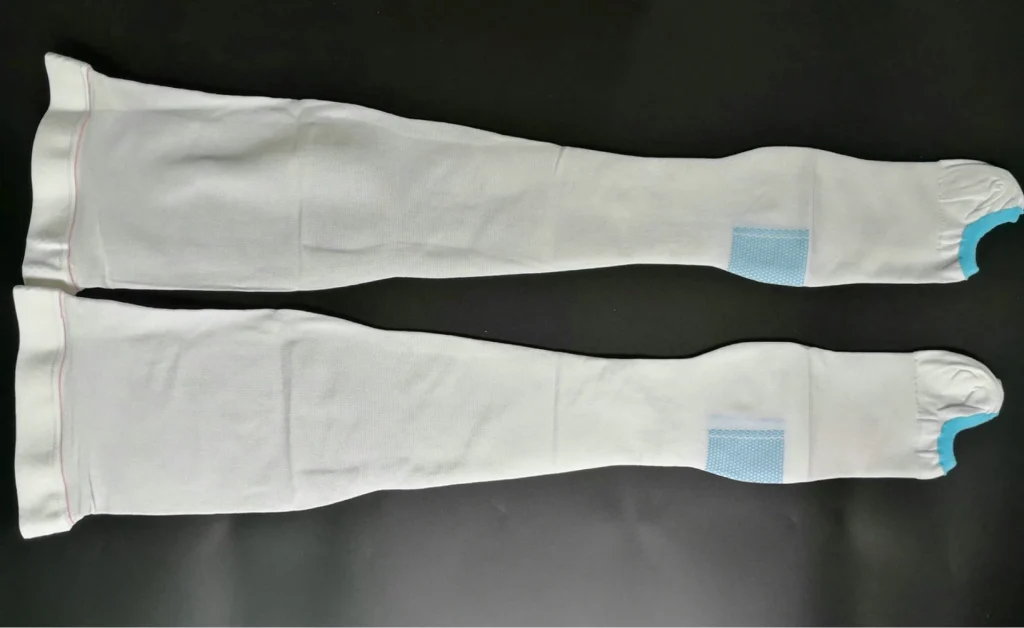
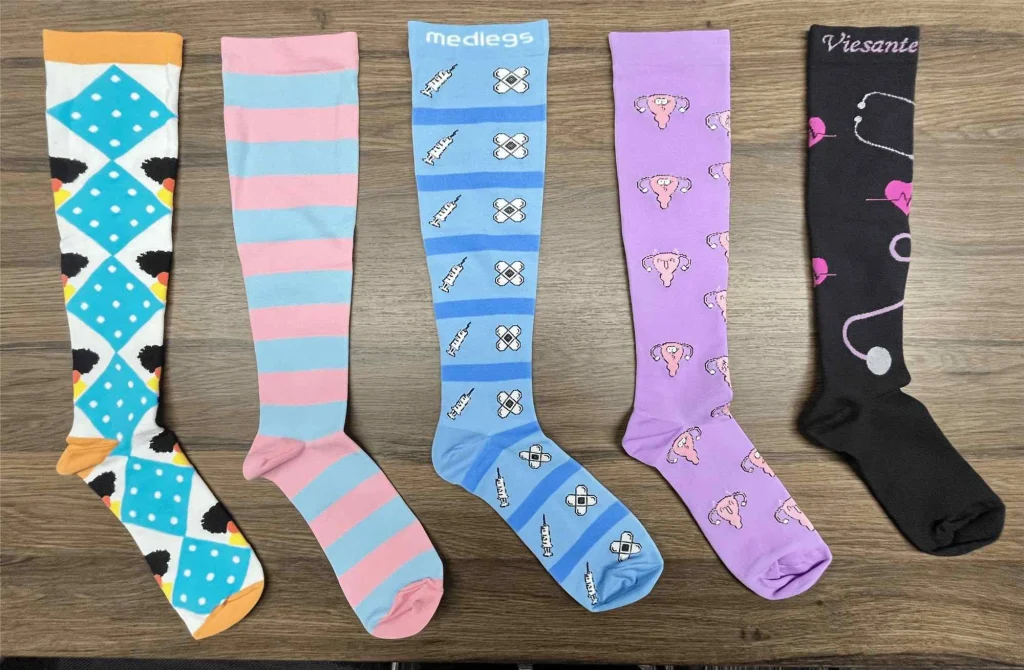
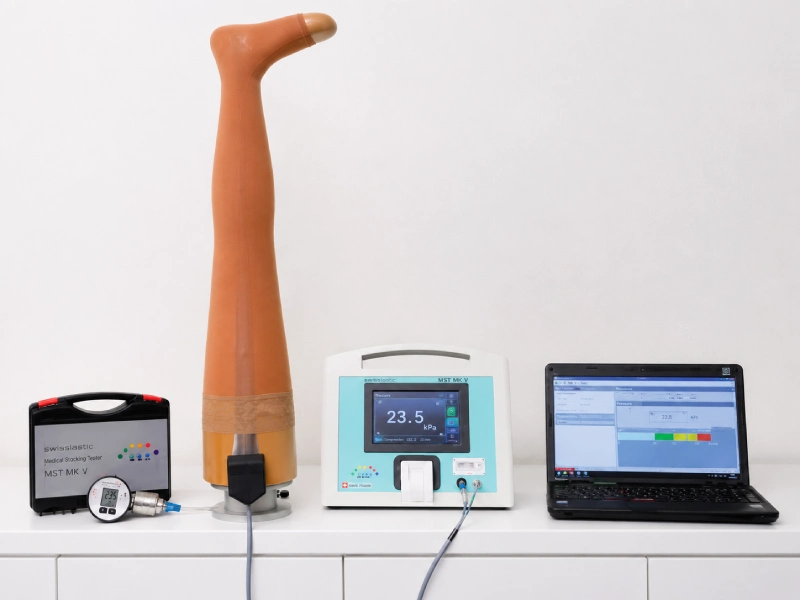
These are two different builds, not two pressure settings of the same product. On our own knitting floor, a garment meant for extended reclining wear runs a lower and flatter gradient, a wider non-binding welt, and a hand-linked toe that will not raise a pressure point across eight motionless hours — the same specification we hold on medical compression lines, where the pressure profile has to be verified on a tester rather than estimated from the yarn. Taking a daytime 20–30 mmHg sock and relabelling it a sleep sock does not produce that garment.
So when one source says compression at night is dangerous and another says hospitals do it every day, both are correct. They are describing different products.
If you are developing a line meant for overnight or extended wear, the specification is not a smaller number on the same sock. It is a flatter gradient, a wider welt, a hand-linked toe, and a yarn chosen to sit against skin for eight hours. Our yarns are certified to OEKO-TEX® Standard 100, and our compression and medical lines carry FDA Class I registration and ISO 13485:2016. What we will not do is take a 20–30 mmHg daytime sock and call it sleepwear.
When a Doctor Does Prescribe Overnight Compression
Overnight compression is real medicine in a short list of situations, all of them supervised.
Post-surgical immobility. After hip, knee or abdominal surgery, patients who cannot walk are at raised clot risk. Anti-embolism stockings are worn continuously — day and night — until mobility returns.
Lymphedema, during intensive therapy. Lymphedema management often uses round-the-clock compression to hold fluid balance, usually with night-specific garments rather than standard socks.
Post-thrombotic syndrome. Following a DVT, some protocols extend compression into the night.
Venous leg ulcers. Wound-care teams frequently keep compression on continuously while an ulcer heals.
What these have in common is a diagnosis, a prescribed pressure, and someone checking the leg. None of them is a reason for a healthy person to sleep in a 20–30 mmHg sock.
Pregnancy, Post-Surgery and Overnight Flights
Three cases where the answer is not simply “no”.
Third trimester. Mild overnight compression is sometimes suggested for night cramps and swelling. Worth raising with your provider — and specifically so after a caesarean, where post-operative protocols apply.
The first weeks after surgery. Follow the discharge instruction, not general advice. If you were sent home in anti-embolism stockings, they are meant to stay on.
Overnight flights. This is the one case where compression through a “sleep” period is widely recommended — but note that you are seated, not lying down. Gravity is still loading your veins, and 15–20 mmHg is standard. A red-eye is a long day of sitting, not a night in bed.
What to Check the Morning After
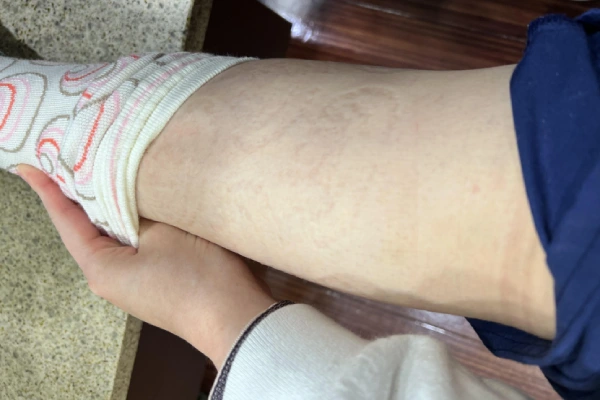
If you do wear compression overnight, inspect the leg when the socks come off. You are looking for:
- Indentations that do not fade within about twenty minutes
- Colour changes — dusky, blue or unusually pale skin, particularly at the toes
- New numbness or tingling, especially on the outer calf just below the knee
- Skin breakdown at the cuff, the heel or the toe seam
Any of these means take them off and leave them off until someone has looked at the leg. Pain during the night is not something to wait out until morning.
Safer Alternatives That Don’t Involve Wearing Anything
For the ordinary case — heavy legs at the end of the day, mild ankle swelling — the alternatives outperform sleeping in socks.
Elevate. Six to twelve inches under the lower legs, roughly a 15–20° incline, using a wedge or a contoured leg pillow rather than pillows stacked under the knees.
Compress before bed, not during. Sixty to ninety minutes with the legs raised in the evening, then take the socks off to sleep. This captures most of the benefit with none of the overnight risk, and for anyone asking this question without a diagnosis it is the alternative worth trying first.
Ankle pumps and a short evening walk move more fluid than any garment does.
Watch late-evening salt and keep hydration steady across the day rather than loading up at night.
FAQ Section
Why should you not wear compression socks at night?
Because the problem they solve is gravity, and lying down removes it. Your legs are already level with your heart, so a healthy person gains little. Add eight hours of unmonitored pressure, a cuff that can dig in and a sock that can roll, and the risk side of the equation grows while the benefit side shrinks.
Is it dangerous to sleep in compression socks every night?
At 8–15 mmHg, for a healthy person, usually not — but it is also not doing much. It becomes risky if you have arterial disease, neuropathy, fragile skin or uncontrolled heart failure, or if you are wearing a 20–30 mmHg daytime sock overnight.
What mmHg is safe to sleep in?
8–15 mmHg is the range most people can wear overnight without supervision. 15–20 mmHg is fine for a nap but worth asking a clinician about for a full night. Above 20 mmHg, only on prescription.
Can compression socks cut off circulation overnight?
A correctly sized over-the-counter sock is unlikely to stop circulation in a healthy leg, but it can reduce it meaningfully — and much more so in a leg with undiagnosed peripheral artery disease. A sock that has rolled or bunched behind the knee is the more common problem.
Why is my leg numb in the morning after wearing compression socks?
Most often sustained pressure over the fibular nerve on the outside of the knee, usually because the sock rolled down and folded. Stop wearing them overnight, and see a clinician if it recurs.
Are there compression socks made specifically for sleeping?
Yes, and they are built differently: lower and flatter pressure gradient, wide non-binding welt, seamless or hand-linked toe, breathable yarn to limit moisture. They are not daytime socks relabelled.
Should I sleep in compression socks after surgery?
Follow your discharge instructions. If you were given anti-embolism stockings, they are designed for continuous wear while you are immobile — that is a different garment from a retail compression sock.