

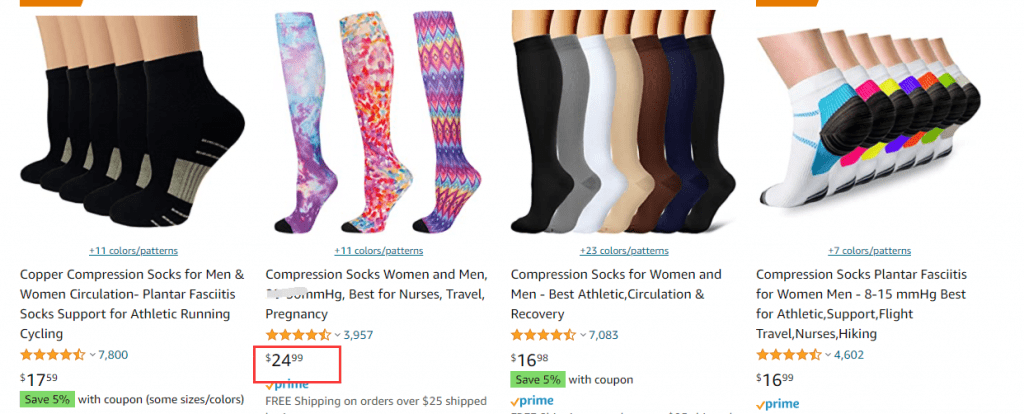
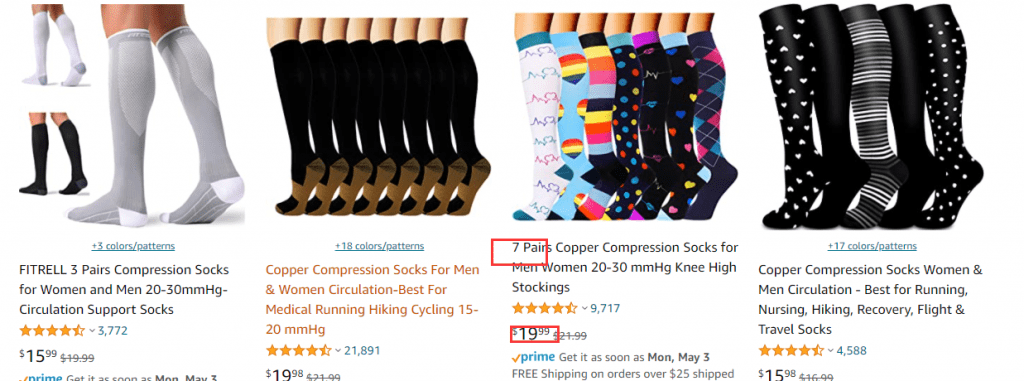
This guide is written for sourcing managers, brand owners, and importers building compression sock product lines at MOQ 500+ pairs — not for consumers comparing pharmacy brands at retail. If you’re trying to figure out whether a $5 supplier quote is realistic, why one factory’s price is $0.40 higher per pair than another’s, or how to spec a product that hits a specific retail margin, this guide is for you.
The short answer: compression sock factory costs range from approximately $0.60 to $2.50+ per pair (FOB China) depending on six manufacturing decisions: yarn material, knitting needle count, spandex grade, terry construction, sock weight, and toe-linking method.
The data and price ranges below come from our factory in Jiaxing, China — a Swisslastic-tested, FDA Class I and ISO 13485:2016 certified manufacturer producing 14.6 million pairs annually across compression hosiery and protective gear product lines.
Quick Cost Breakdown (TL;DR for Sourcing Managers)
| Cost Factor | Budget Spec | Standard Spec | Premium Spec | Cost Delta / Pair |
| Yarn (base) | Polypropylene | Nylon | Coolmax / Merino | $0.50 → $1.40 |
| Needle Count | 144N | 168N | 200N+ | +$0.03 → +$0.15 |
| Spandex Grade | Generic spandex | Lycra (Invista) | Reinforced denier Lycra | +$0.05 → +$0.10 |
| Terry Construction | None (flat knit) | Foot terry | Full pattern terry | +$0.10 → +$0.30 |
| Toe Linking | Rosso | Faked seamless | Hand-linked seamless | +$0.05 → +$0.10 |
| Sock Weight (per pair) | 50g | 65–75g | 80–95g | proportional to yarn |
| Estimated Factory Cost | $0.60–0.80 | $1.00–1.40 | $1.80–2.50+ | (FOB, MOQ 1,000+) |
Prices are illustrative for a standard 15–20 mmHg knee-high compression sock at MOQ 1,000 pairs. Actual quotes vary with order volume, customization, packaging, and market conditions.
Factor 1: Yarn Material — The Foundation of Cost
What It Is
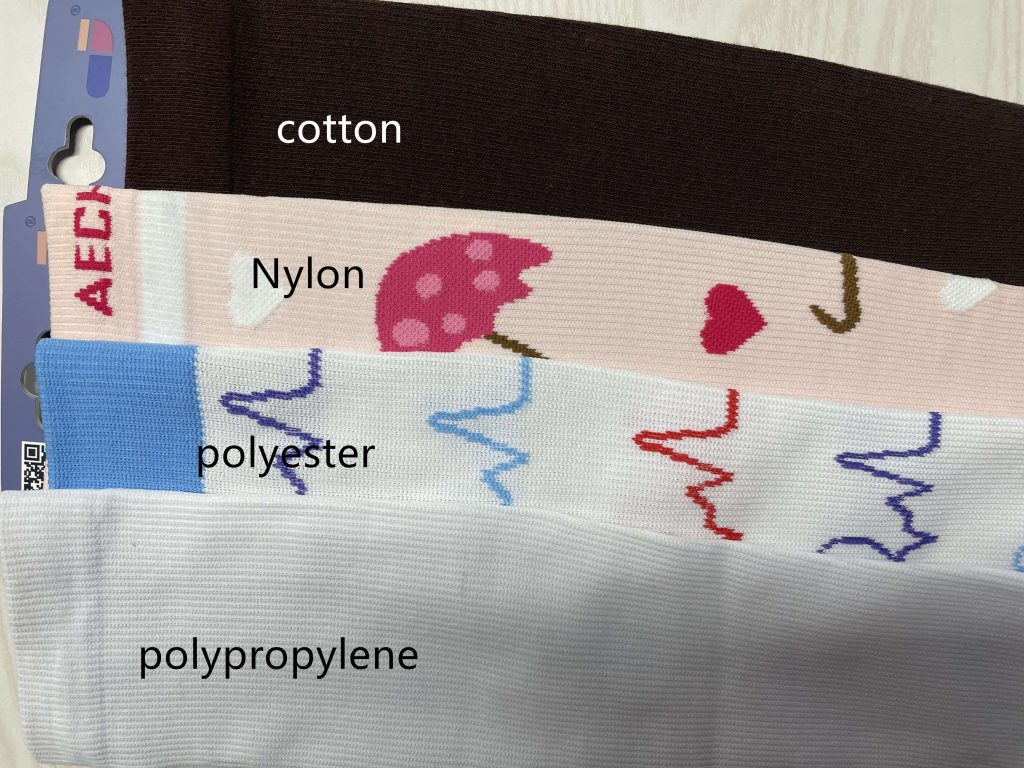
The base yarn determines roughly 40–60% of the unit cost and dictates the sock’s hand-feel, durability, breathability, and end-user perception. Compression socks are virtually always blended — the choice is which fiber dominates.
Cost ranking (high to low): Coolmax / Merino Wool > Microdenier Nylon > Standard Nylon > Cotton > Polyester > Polypropylene
For a complete breakdown of yarn types, performance characteristics, and recommended blend ratios for different product positioning, see our Compression Sock Materials Sourcing Guide.
Cost Impact
Based on a standard 60g-per-pair sock at MOQ 1,000:
- Polypropylene base: $0.50–0.65 per pair (yarn only)
- Nylon base: $0.80–1.00 per pair
- Cotton base: $0.80–1.10 per pair
- Coolmax / Merino base: $1.20–1.40+ per pair
Sourcing Manager’s Checklist
- Ask your supplier: “What’s the exact blend ratio? Can you disclose the yarn supplier name and provide the yarn certificate?”
- Request: A physical swatch card with labeled yarn samples for hand-feel verification before sampling
Factor 2: Needle Count — Where Most Buyers Get Misled
What It Is
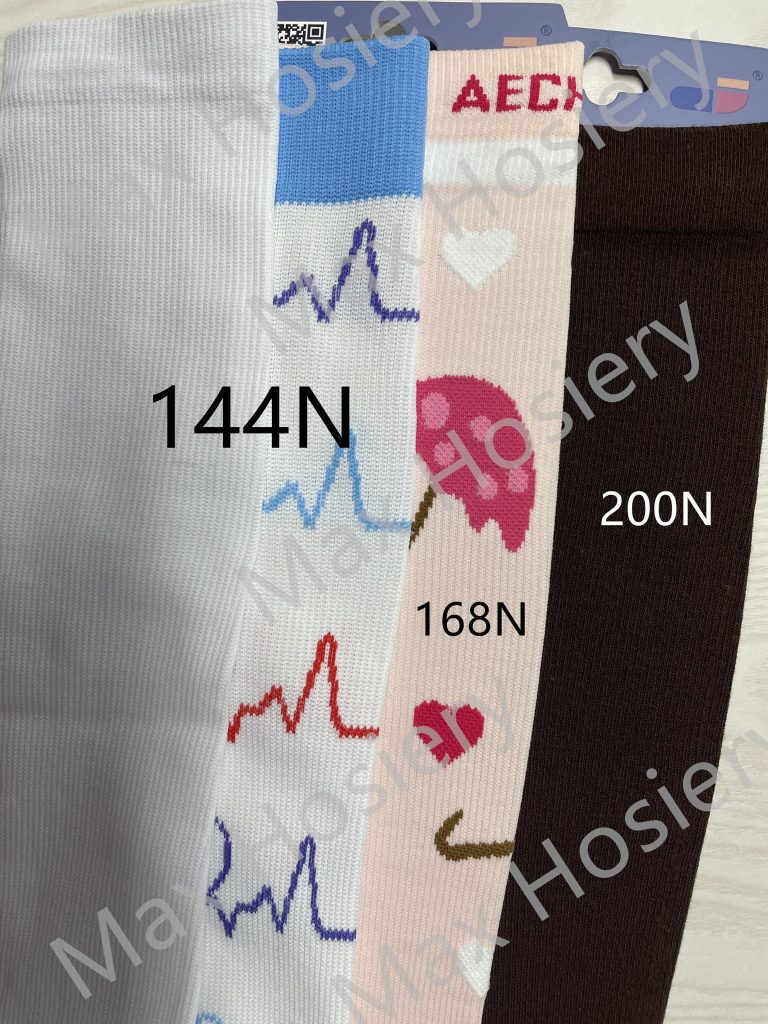
The “needle count” refers to the number of needles in the cylinder of the knitting machine — common counts in compression sock production are 144N, 168N, and 200N+. More needles = finer knit pattern, smoother hand-feel, but slower production speed.
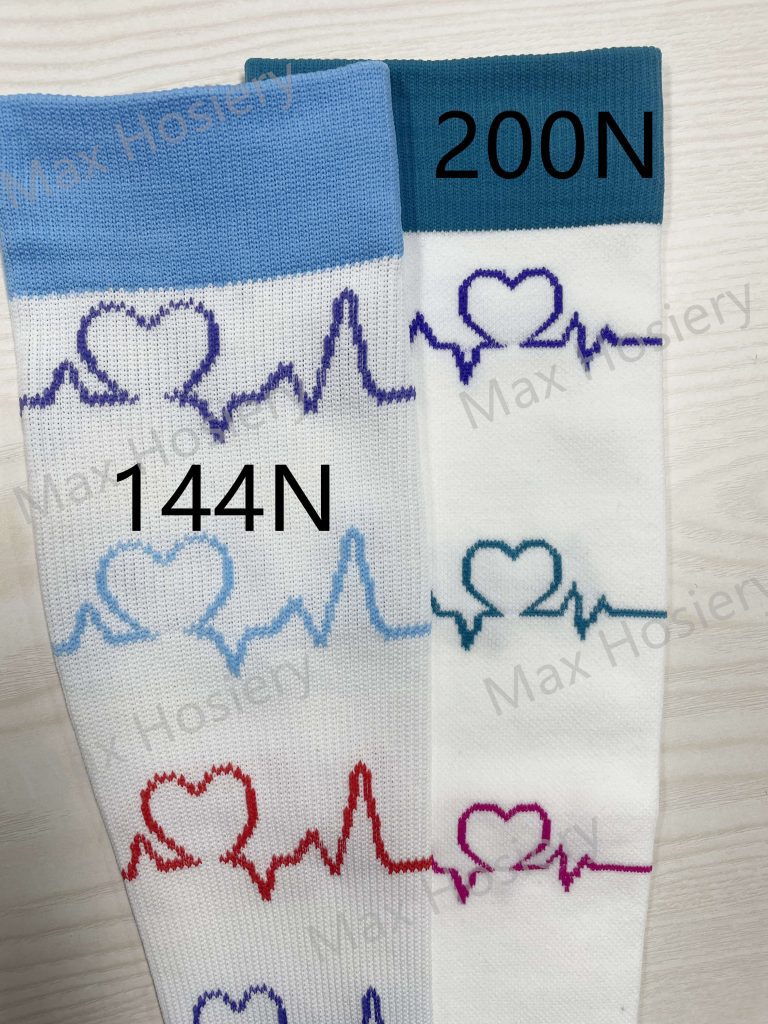
For technical detail on needle count and gauge selection, see our Sock Needle Count Guide.
Cost Impact
- 144N (budget tier): baseline
- 168N (standard for our factory): +$0.03–0.08 per pair
- 200N+ (premium / fine pattern): +$0.10–0.15 per pair
For plus-size compression socks (3XL–8XL), we run 220N or 240N machines, which carry additional cost due to specialized equipment.
Sourcing Manager’s Checklist
- Ask your supplier: “What needle count machine will this order run on? Can I see the machine specifications and a production-floor photo?”
- Request: A photo or video of your specific design coming off the production line — needle count is verifiable visually by counting stitches per centimeter
- Red flag: Quote claims 168N or 200N but pricing is significantly below market floor — this is one of the most common spec-substitution tactics in low-cost factories
Factor 3: Spandex / Elastic Grade — Why “Lycra” Isn’t Always Lycra
What It Is
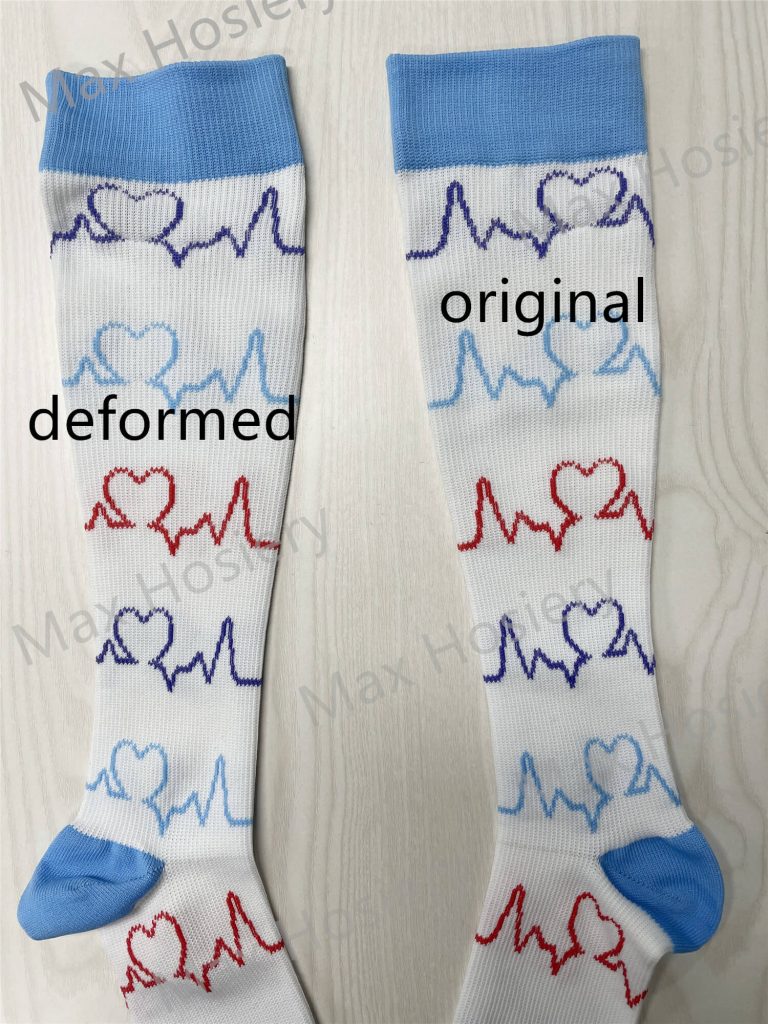
Spandex (also called elastane) is what gives compression socks their pressure performance and shape recovery over time. Lycra is the brand name owned by Invista (formerly DuPont) — it is not a generic term. Genuine Lycra-blended socks retain compression performance 6–12 months longer than generic spandex under daily wear.
For more on how spandex percentage and elastic systems affect compression sock construction, see our Compression Sock Composition Guide.
Cost Impact
- Generic spandex: included in base yarn cost
- Genuine Invista Lycra: +$0.05–0.10 per pair depending on blend percentage
- Higher denier Lycra (for 30+ mmHg medical applications): +$0.10–0.15 per pair
Our factory uses Invista Lycra by default for all compression sock production unless a customer specifically requests a lower-cost alternative for a budget-tier product line.
Sourcing Manager’s Checklist
- Ask your supplier: “Can you provide the Invista Lycra fiber certificate or batch traceability number for this order?”
- Request: Mid-production photos showing the Lycra fiber spool/cone with original Invista labeling
- Red flag: Supplier claims “Lycra” but cannot produce certificate documentation, or unit pricing is below the math — at current Lycra wholesale pricing, a “Lycra-blend” sock under approximately $0.95 per pair (MOQ 1,000, mid-tier specs) doesn’t reconcile
Factor 4: Terry Construction
What It Is
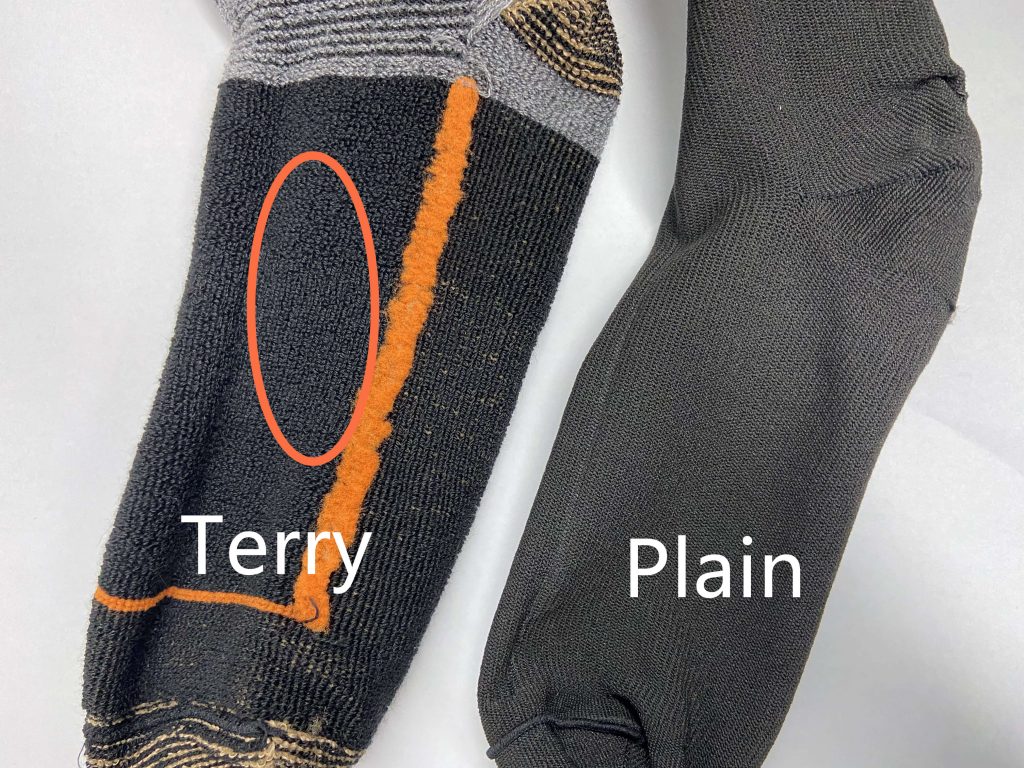
Terry refers to looped yarn knitted into the sock’s interior, creating cushioning and absorbency. Compression socks may use terry on the foot bottom only (cushioning), the entire foot (athletic), or as decorative pattern (premium positioning).
For a deeper look at sock construction methods, see our overview of 5 Basic Sock Structures.
Cost Impact
- No terry (flat knit): baseline
- Foot terry only: +$0.10–0.15 per pair
- Full terry pattern: +$0.20–0.30 per pair
Terry adds yarn weight (10–25g per pair), which compounds the per-pair yarn cost calculation. This is why a “terry foot athletic compression sock” sits in a meaningfully different cost tier than a “flat dress compression sock” of the same yarn.
Sourcing Manager’s Checklist
- Ask your supplier: “Where exactly is terry placed? Can you mark it on the design file with terry density specified?”
- Request: A pre-production physical sample showing terry placement, density, and loop height
- Red flag: Initial sample has full terry foot but production samples switch to partial terry — yarn savings tactic that’s hard to detect from the outside
Factor 5: Sock Weight — The Specification Buyers Forget to Lock In
What It Is
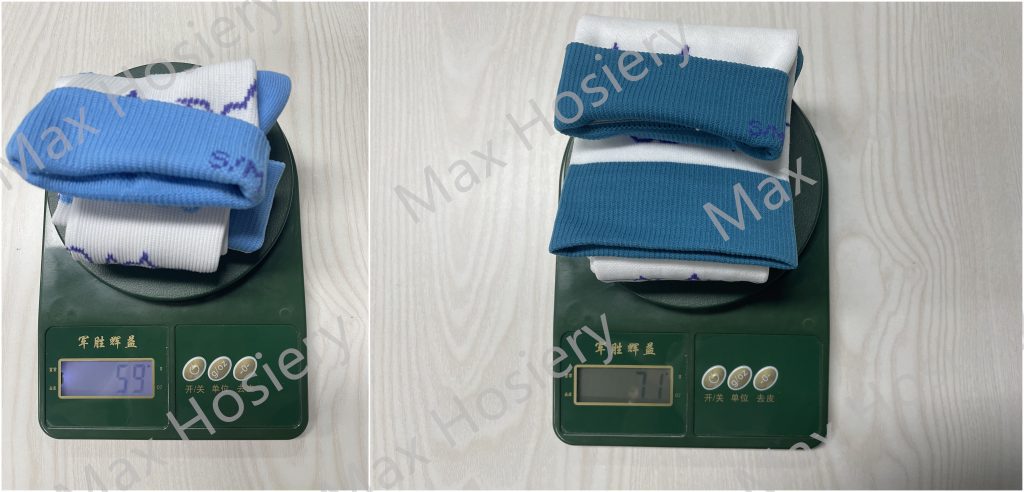
Sock weight (typically expressed in grams per pair) is one of the most overlooked cost variables. A 60g sock and an 80g sock can look identical in product photos but differ 20–30% in unit cost — and noticeably in durability and compression longevity.
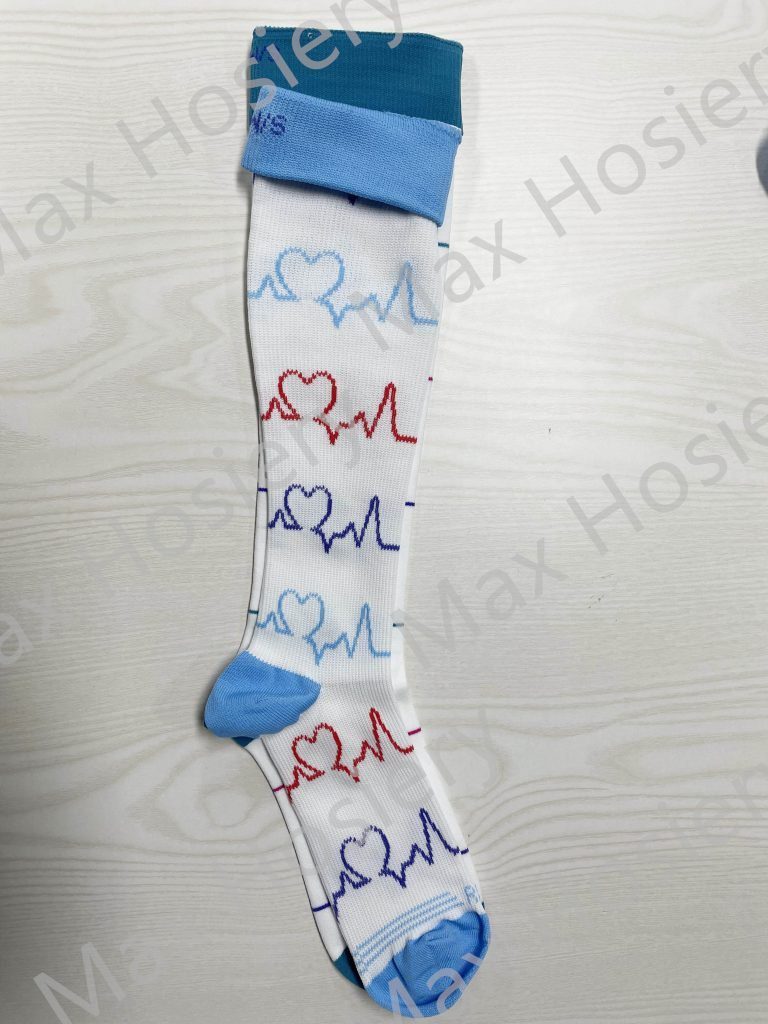
For correct sizing and measurement methodology, see our guide on How to Measure Sock Size.
Reference Weights (per pair, knee-high adult sizing)
- Lightweight / dress compression: 50–60g
- Standard flat compression sock: 65–75g
- Adult terry-foot compression sock: 80–95g
- Athletic / heavy-duty compression: 95–110g
Cost Impact
Weight scales linearly with yarn consumption. A 30% weight increase ≈ 25–30% yarn cost increase, depending on the yarn type. For a 10,000-pair order, this is the difference between $8,000 and $10,400 in yarn cost alone.
Sourcing Manager’s Checklist
- Always specify in your RFQ: Target weight per pair with tolerance — e.g., “65g/pair ±3g”. Never accept a quote without this locked in.
- Request: Calibrated weight measurement on the sealed sample, plus batch sampling documentation during production
- Red flag: Sample is 80g but production socks come in at 60g (saves yarn at the customer’s expense). Random batch weight verification is essential — and easy to do with a basic kitchen scale.
Factor 6: Toe Linking — The Detail That Defines Premium
What It Is
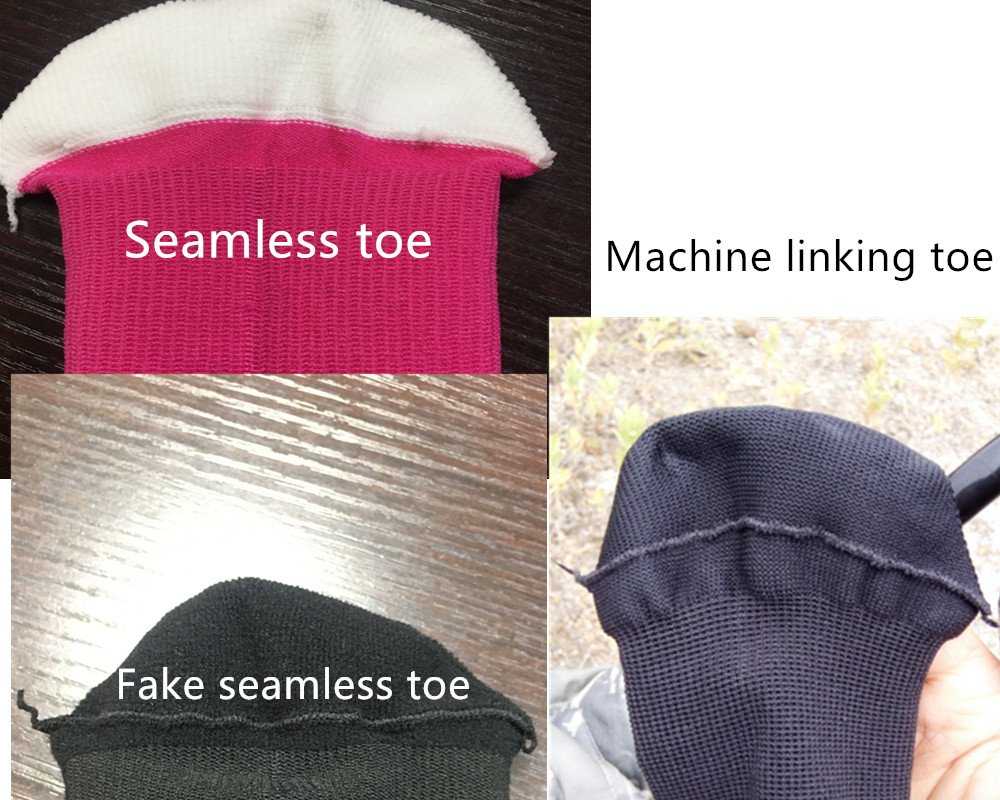
Toe linking is the method of closing the toe of the sock. There are three industry methods, in ascending order of cost and quality:
- Rosso (machine-overlocked seam) — visible bumpy seam on the inside, lowest cost
- Faked seamless (machine-linked, smoother appearance) — looks similar to true seamless from the outside
- True hand-linked seamless — each loop manually linked, completely flat interior with no friction point
For visual comparison and detail, see our article on Is Seamless Toe Necessary?
Cost Impact
- Rosso: baseline (lowest)
- Faked seamless: +$0.03–0.05 per pair
- True hand-linked seamless: +$0.05–0.10 per pair
By 2027, our factory plans to upgrade all knitting lines to integrated rotary machines. Existing OEM customers will receive hand-linked toe finishing at no additional cost during the transition — a meaningful upgrade for any brand currently sourcing at the rosso or faked-seamless tier.
Sourcing Manager’s Checklist
- Ask your supplier: “Is the seamless toe machine-linked or hand-linked? Can I see a cross-section photo of the toe interior?”
- Request: Multiple toe samples — first sample, mid-production, final shipment — to verify consistency
- Red flag: “Seamless” claim with rosso pricing math. The cost differential is small enough that some suppliers downgrade silently after sample approval.
Cost Tier to Retail Strategy: Choosing the Right Spec
The six factors above don’t exist in isolation — they should match your retail strategy. Here’s how compression sock specs map to retail positioning:
Tier 1 — Drugstore / Mass Retail ($8–15 retail)
- Spec: Polypropylene or Polyester base + 144N + generic spandex + rosso toe + 50g weight
- Factory cost: $0.60–0.80 / pair (FOB)
- Best for: Private label for chain pharmacies, dollar stores, e-commerce commodity listings
- Tradeoffs: Lower durability (3–6 months of regular use), basic compression accuracy, higher return rates
- MOQ economics: Margin only works at 5,000+ pair orders
Tier 2 — DTC / Mid-Market ($20–35 retail)
- Spec: Nylon base + 168N + Invista Lycra + faked seamless toe + 65–75g weight
- Factory cost: $1.00–1.40 / pair (FOB)
- Best for: Amazon brands, DTC websites, sports specialty retail, athleisure
- Tradeoffs: Best balance of cost, quality, and brand-defensible margin for most brands & buyers — this is where the majority of our OEM volume sits
- MOQ economics: Viable at 1,000–2,000 pair orders
Tier 3 — Medical / Premium ($35–60 retail)
- Spec: Microdenier nylon, Coolmax, or Merino + 200N + reinforced Lycra + true hand-linked seamless + 80–95g weight
- Factory cost: $1.80–6.00+ / pair (FOB)
- Best for: Medical compression brands, premium athletic, healthcare brands (hospital supply, clinical), high-end DTC
- Tradeoffs: Higher MOQ for premium yarns (Coolmax, Merino) due to yarn supplier minimums; longer lead times for testing and certification documentation
- MOQ economics: Justifiable at 500+ pair orders
For a real-world example of how product-tier decisions translate into a finished compression line, see our Maternity Compression Socks development page.
About Our Manufacturing Capacity & Compliance
This section exists because B2B buyers consistently ask for it — and most factories don’t disclose it. Transparent answers help serious buyers shortlist faster.
Production Capacity
Our Jiaxing facility currently produces 14.6 million pairs annually across compression hosiery and protective gear lines. In December 2026, we will complete relocation to a new manufacturing facility featuring expanded floor space, additional knitting machinery, and partially upgraded equipment — increasing both annual capacity and product range capability. By 2027, all knitting lines will be upgraded to integrated rotary machines. View our company profile.
Compression Testing Equipment
All compression socks are tested on a Swisslastic MST MK V pressure-testing system (Switzerland-manufactured), the industry-standard equipment for verifying mmHg gradient distribution. Each production batch receives a pressure distribution report before shipping.
mmHg Order Distribution (FY2025)
Based on our actual factory order data:
| mmHg Level | Share of Our OEM Orders |
| 8–15 mmHg (preventive care) | 12% |
| 15–20 mmHg (everyday support) | 40% |
| 20–30 mmHg (firm support) | 43% |
| 30–40 mmHg (medical) | 5% |
The 15–30 mmHg range accounts for 83% of our production volume — these are the highest-volume, most-validated specs in our pipeline. For detailed compression level selection by end-user segment, see our Compression Level Selection Guide.
Compliance & Certifications
- FDA Class I (General Controls) — for US-market compression hosiery, classification and listing requirements depend on the product type, intended use, and marketing claims. Our team can support documentation discussions for suitable OEM projects.
- ISO 13485 (Medical Device Quality Management System)
- OEKO-TEX® Standard 100 (textile safety certification — relevant for EU retail)
- EU MDR: We do not currently hold MDR certification. For brands targeting EU markets that require MDR compliance (e.g., medical compression sold as therapeutic devices), we can discuss compliance roadmap options based on order volume and project timeline.
View full certification documentation →
Sourcing Red Flags: 5 Tactics That Inflate “Cheap” Quotes
These are the most common ways low-cost suppliers compress quotes that look attractive on paper but cost you in returns, complaints, and reorders. Watch for them.
The “Lycra” Without Documentation
A factory quotes “Lycra” or “DuPont elastic” but cannot produce the Invista certificate or batch traceability. Genuine Lycra is a registered trademark with documented supply chain. If they can’t show paper, it’s generic spandex — and your sock will lose compression noticeably faster.
The Hidden MOQ Penalty
Initial quote is attractive, but the supplier’s quote sheet doesn’t include MOQ tiers. After you place a 1,000-pair sample order, a 30–50% price increase appears for “low-quantity production setup.” Always demand a full MOQ price ladder upfront — 500 / 1,000 / 3,000 / 5,000 / 10,000.
The Sample-vs-Production Weight Switch
Pre-production sample is 80g per pair. First production batch comes in at 55g. This is one of the highest-frequency cost-cutting tactics — and the easiest to detect with batch weight sampling using a calibrated scale.
The Needle Count Substitution
Quote specifies a 168N or 200N machine, but the supplier silently runs the order on a 144N machine. The pattern looks slightly coarser, but most third-party QC inspectors miss this entirely. Verify by counting stitches per centimeter on a finished sock and comparing to your approved sample.
The “Seamless Toe” Downgrade
First sample has true hand-linked seamless toe. Production batch has machine-linked “faked seamless” — the visual difference from outside is minor, but the inner experience is noticeably different for medical and athletic end-users who feel the toe seam under load.
The pattern across all five: spec-substitution tactics that exploit the gap between specification and verification. Robust sourcing protocol = signed spec sheet + batch sampling + pre-shipment inspection. Don’t skip any of three.
Frequently Asked Questions
What’s the typical wholesale cost for compression socks from a Chinese manufacturer?
For OEM orders at MOQ 1,000+ pairs, factory costs range from $0.60 (budget polypropylene with basic specs) to $2.50+ per pair (premium Merino or Coolmax with reinforced Lycra and hand-linked seamless toe). The most common B2B production tier — nylon base, 168N, Invista Lycra, faked seamless toe — runs $1.00–1.40 per pair FOB China at MOQ 1,000.
How do budget and premium compression socks differ in manufacturing cost?
The cost gap between a $0.60 budget sock and a $2.50 premium sock comes from six compounding factors: yarn quality (polypropylene vs Coolmax can differ 3×), needle count (144N vs 200N+), spandex grade (generic vs Invista Lycra), terry construction, sock weight, and toe-linking method. Each factor compounds, which is why premium specs cost roughly 4× budget specs at the unit level.
Why do compression sock wholesale prices vary so much between suppliers?
Quote variance usually reflects three things: spec assumptions (some suppliers default to budget specs unless told otherwise), included services (testing, certification, sampling, packaging), and supplier integrity (whether they hold the spec promised at sample stage). A quote $0.30 below market floor almost always means a hidden spec downgrade.
What MOQ should I expect for OEM compression socks?
Industry MOQ for OEM compression socks ranges from 500 to 3,000 pairs per design. At our factory, MOQ starts at 500 pairs per design per size combination, with meaningful price improvements at 1,000+ and 3,000+ pair tiers. Premium yarns (Coolmax, Merino) may carry higher MOQ due to yarn supplier minimums.
What certifications should I require from a compression sock manufacturer?
For US retail: FDA Class I registration if marketing as medical compression, plus ISO 13485:2016 (medical device QMS) as a signal of serious manufacturing controls. For EU retail: OEKO-TEX® Standard 100 minimum, plus EU MDR if selling as therapeutic medical devices (typically 20+ mmHg with explicit medical claims). For both markets, always request original certificates with verifiable issuer numbers — not just claim screenshots.
Why have compression sock prices increased recently?
Three factors drive the trend through 2025–2026: yarn raw material costs (nylon and spandex feedstock prices have fluctuated with petrochemical markets), labor costs in China’s coastal manufacturing regions (annual increases of 5–8%), and tightening compliance requirements (especially for EU markets requiring MDR documentation). Brands that locked in 2022 pricing should expect 8–15% increases on reorders.
How long does compression sock OEM production take?
Standard lead time is 25–30 days for orders under 10,000 pairs after sample approval. Larger orders (10,000–50,000 pairs) typically take 35–50 days. Sampling adds 3–7 days before production start. Sea freight from China to US/EU adds 25–40 days; air freight 5–7 days.
What’s the minimum I should pay for a “real” Lycra compression sock?
Below approximately $0.95–1.00 per pair FOB China at MOQ 1,000 pairs, the math doesn’t reconcile with genuine Invista Lycra at standard blend percentages and basic mid-tier specs. Quotes below this floor with Lycra claims should trigger immediate documentation requests — certificate, batch number, and yarn supplier invoice.
Ready to Talk Specs and Pricing for Your Brand?
If you’re past the research stage and ready to discuss your compression sock product line — including spec recommendations, sample development, and a tailored quote — book a 30-minute sourcing consultation directly with our team.
We’ll cover:
- Your target retail price and margin requirements
- Recommended spec configuration to hit your unit economics
- Realistic MOQ and lead time for your launch timeline
- Compliance and certification requirements for your target market
- Sample timeline, cost, and what to send us to start
Book a 30-minute sourcing consultation →
This guide reflects manufacturing realities at Max Hosiery (Hangzhou Zhongzhi Industry) as of 2026. Pricing examples are illustrative and based on average orders at MOQ 1,000+ pairs EXW China; actual quotes vary with order volume, customization, packaging, and market conditions.